
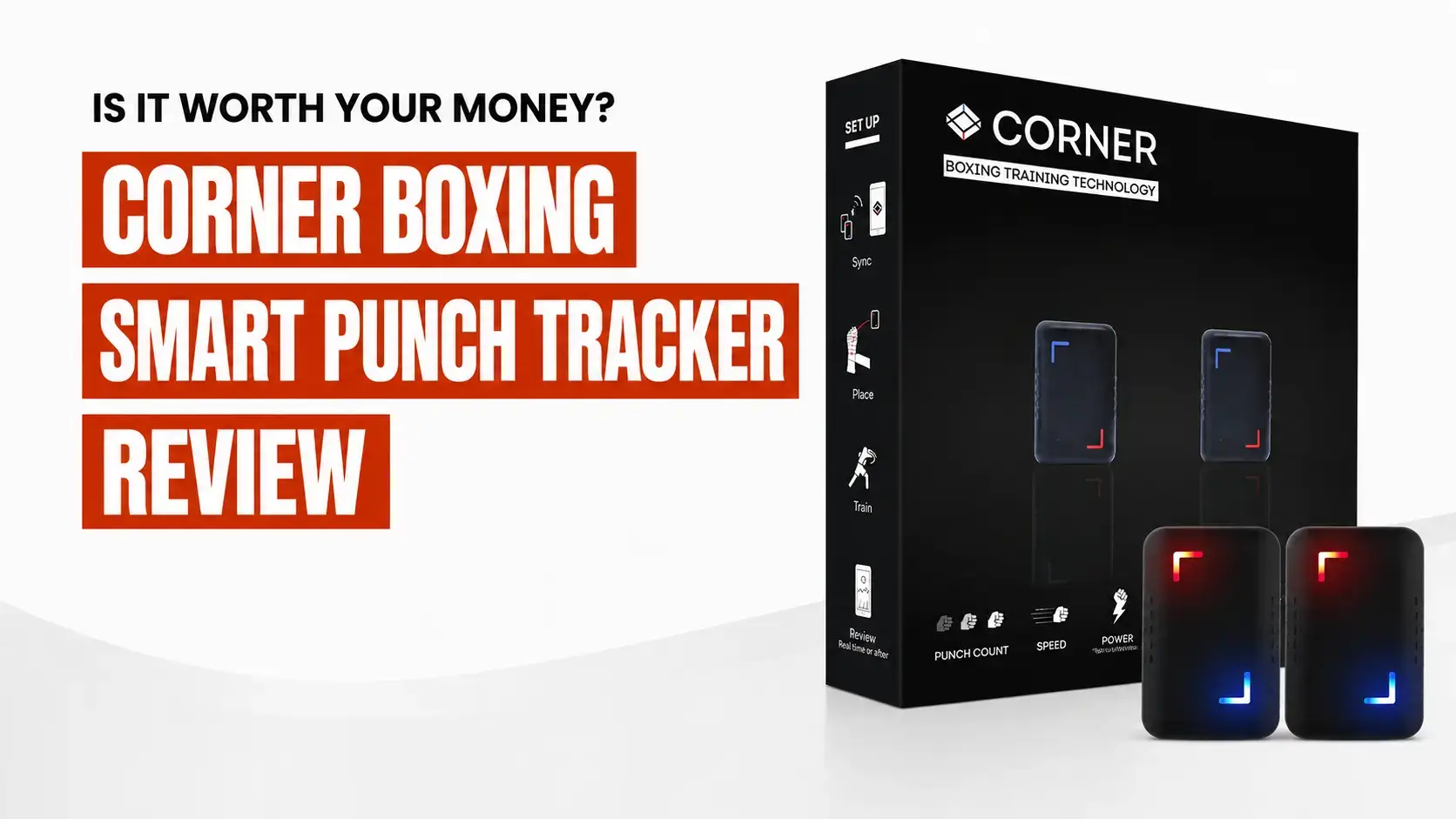
The Corner Boxing Smart Punch Tracker is best for regular heavy bag users who want punch count, work rate, speed, power trends, and left-right hand feedback. It is useful for motivation and progress tracking, but connection issues and missed punches are the main risks. I would not buy it if you hate Bluetooth setup or only train casually.
I like boxing gear that gives me useful feedback, not just another screen full of numbers. And Corner boxing smart punch tracker caught my attention for similar reasons.
It is built to track punch count, speed, power, work rate, punch types, and progress through the Corner app. On paper, that sounds perfect for heavy bag training, home workouts, and anyone who wants to know if they are actually improving.
But I also know punch trackers can be hit or miss. If the connection drops, punches are missed, or the data feels random, the whole thing becomes frustrating fast.
So, in this review, I am looking at Corner with a practical eye, what it does well, where it falls short, and if it is worth buying if you want to train with clearer feedback. Let’s start!
Table of Contents
Key Features and Specifications Overview
The main reason I would look at Corner punch tracker is that it turns a boxing session into trackable data. Instead of finishing a round and guessing if I worked harder than last time, I can check stats inside the Corner app.
It is not just a general fitness tracker, but made for boxing-style training, especially heavy bag work, home boxing sessions, gym rounds, and MMA-style striking workouts.
Core Functionalities
1. Punch count
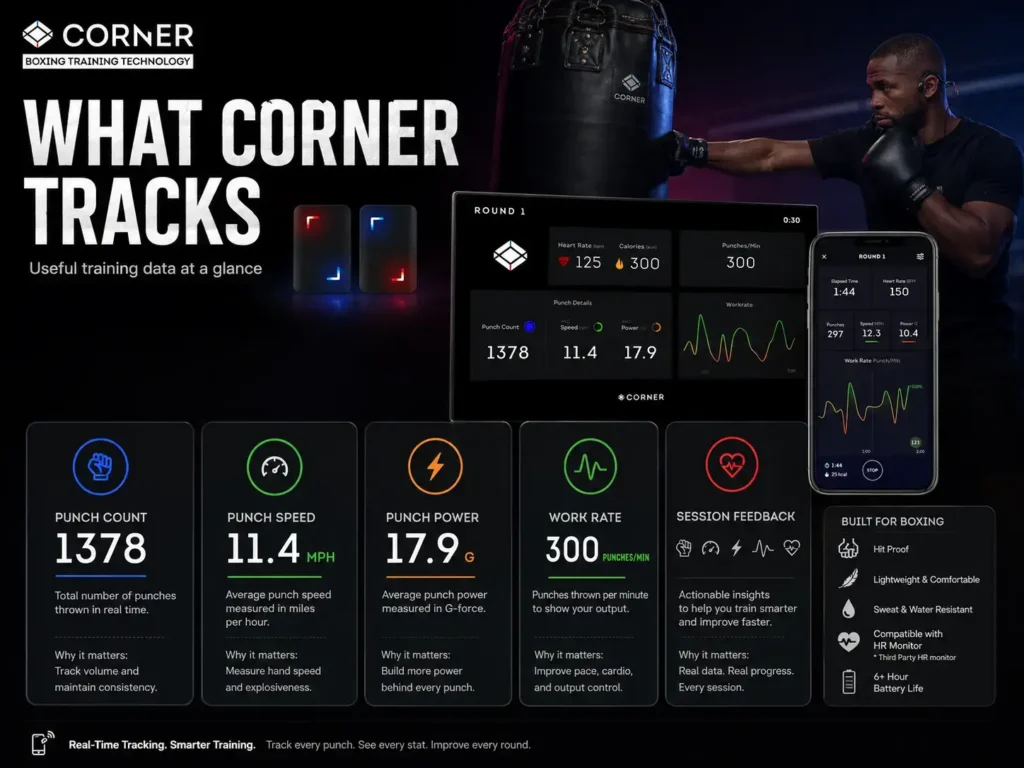
Punch count is the most useful metric here. It tells me how much volume I actually threw during a round or full workout.
For most people, this is the number that will matter first. If I throw 120 punches in round one but drop to 75 punches in round three, that tells me something about my conditioning, pace, and focus. It also makes bag work more measurable, which is useful when I train alone.
Punch detection seems strong when the trackers connect properly and are placed correctly. The trackers picked up punches accurately, especially on a heavy bag. But I would not treat the count as perfect in every situation. I also noticed missed punches and poor detection sometimes.
2. Speed tracking
Corner tracks punch speed in real time, which helps me see if I am maintaining sharpness or slowing down as the round goes on.
It is useful because speed is not only about throwing one fast punch. It is about staying fast when tired. If my average speed drops hard in later rounds, that may point to fatigue, poor breathing, or wasted movement.
I would use speed tracking more as a trend than an exact lab-grade number. If the app shows my average speed improving over several weeks, that is useful. If it shows one punch as slightly faster than another, I would not overthink it.
3. Power analysis
Corner also tracks punch power, which gives a rough idea of impact output. For training, it can help me compare left versus right hand, check which punches carry more force, and see if I lose power across rounds.
It can be helpful, but I would be careful with it. Power tracking from wrist sensors is not the same as measuring direct impact from the bag. It is better for spotting patterns than proving exact force.
For example, if my cross always scores higher than my jab, that makes sense. If my left hook drops in power after round two, that gives me something to work on. But I would not judge my whole boxing ability from one power score.
4. Punch type recognition
Corner can break down punch types such as jabs, crosses, hooks, and uppercuts. It shows if I am relying too much on one hand or one kind of punch.
For boxing fitness, this helps keep workouts balanced. For skill training, it gives me a better idea of how varied my session really was.
Still, punch type recognition can be harder than simple punch counting. If my form is loose, if I slap punches, or if the tracker shifts under wraps, the data can become less reliable.
5. Work rate and consistency
Work rate is one of the better training metrics because it shows how much effort I keep putting out during the round. I like this because boxing is not just about one hard punch, but repeating quality work under fatigue.
If my punch count, speed, and power all fall in later rounds, the data tells me I am fading. That can help me adjust conditioning, pacing, and rest periods.
It is where Corner can be genuinely helpful for heavy bag training. It gives me numbers that show if I am staying active or just moving around without doing much work.
6. App integration
The Corner app is where the tracker data becomes useful. It can show real-time stats, workout history, goals, leaderboards, on-demand classes, round timers, and heart-rate monitor support.
I like that Corner can be used for basic tracking without needing a paid membership for your own sessions. The subscription side is more about classes, premium content, and community features.
That makes the product more flexible. If I only want to track my own bag sessions, I do not need to think of it as a class-only fitness product.
7. Connectivity
Corner uses Bluetooth to connect the wrist trackers to the app, and I had problems with sensors not pairing, losing connection, or stopping mid-workout.
My practical advice is to update the app, charge both trackers fully, keep the phone close, reduce extra Bluetooth device clutter, and test pairing before starting a timed workout.
Technical Specifications at a Glance
| Feature | Detail |
|---|---|
| Product type | Smart wrist punch trackers for boxing and MMA training |
| Tracking metrics | Punch count, speed, power, work rate, punch types, combinations, intensity, left-right hand comparison |
| Connectivity | Bluetooth 4.0 / Bluetooth Low Energy |
| Compatibility | iOS 10 or higher and Android 5.1 or higher, based on available product listing details |
| Battery life | Up to 6 hours, based on available product listing details |
| Charging | Micro-USB charging cable |
| Sensor type | 3-axis accelerometer |
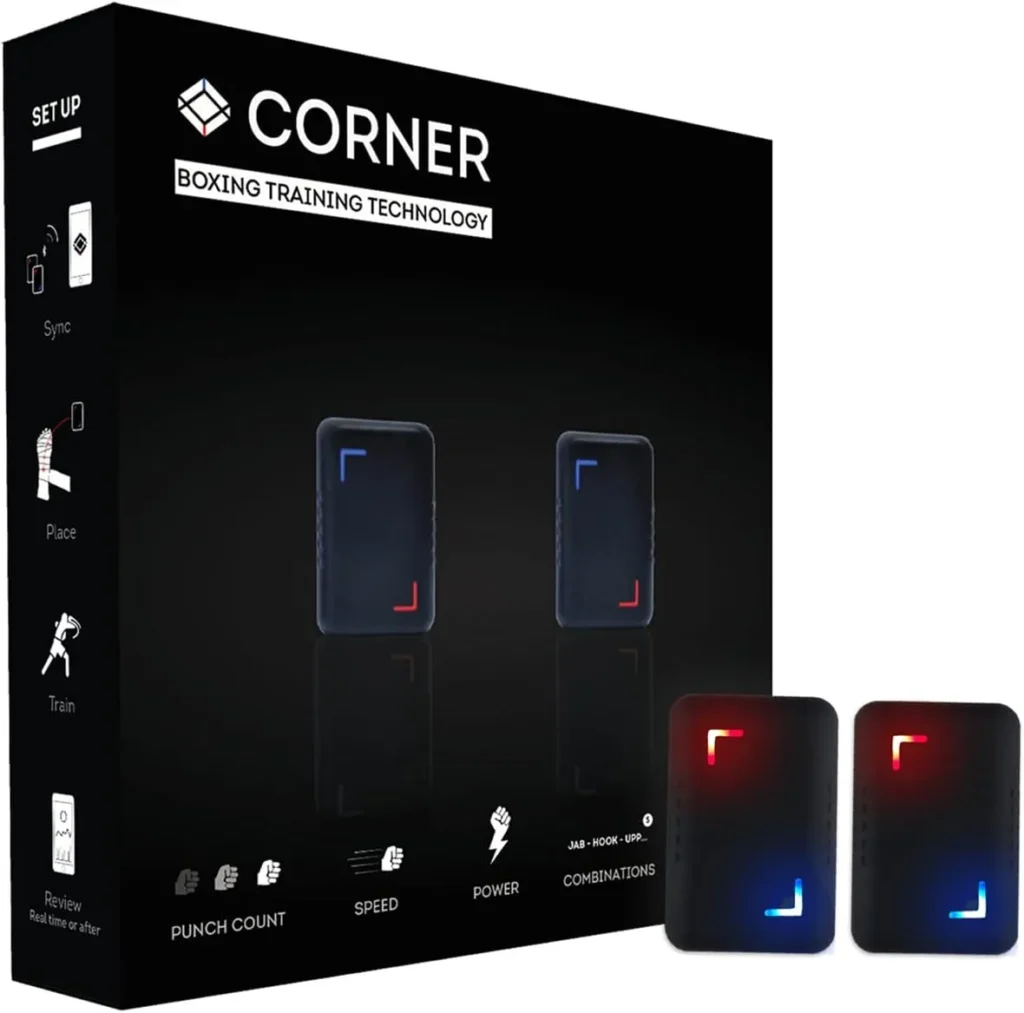
| Included in box | 2 Corner trackers, 2 Corner wristbands, 1 micro-USB charger |
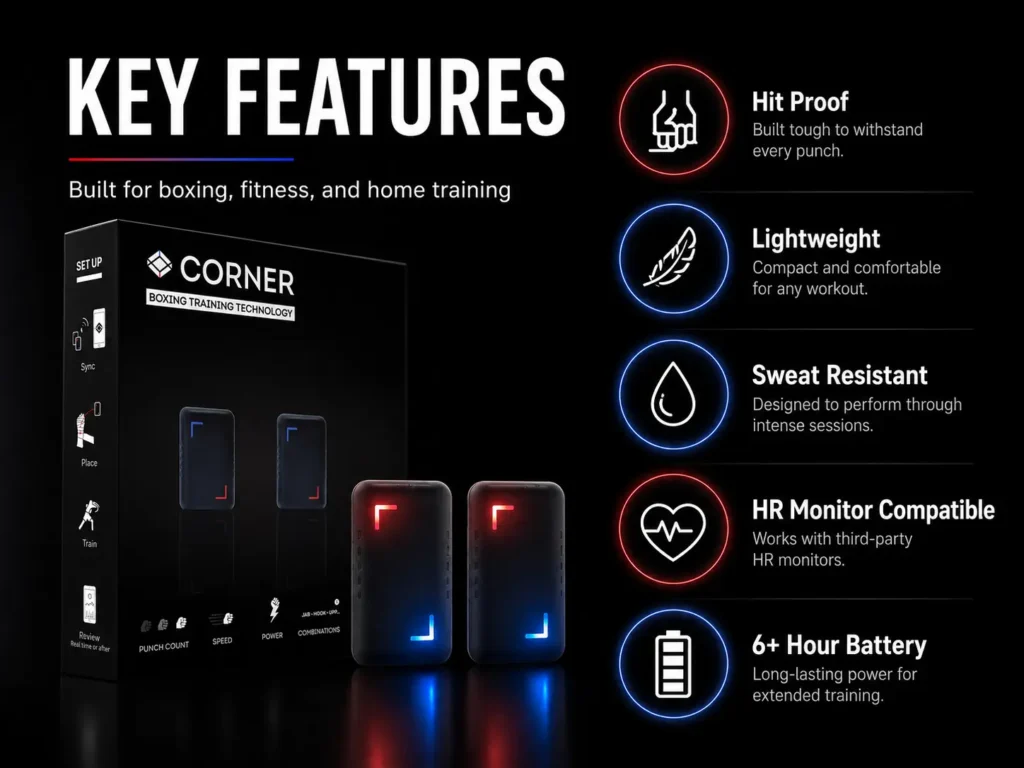
| Build claims | Hit proof, sweat and water resistant, lightweight, comfortable |
| App features | Real-time stats, saved sessions, goals, timers, leaderboards, on-demand classes, heart-rate monitor support, TV metric casting |
| Subscription | Not required for tracking your own sessions, premium membership is for added classes and features |
| Best use case | Heavy bag training, boxing fitness, home workouts, gym boxing sessions |
| Main concern | Pairing issues, connection drops, and missed punches. |
Design, Build Quality, and Comfort
The Corner trackers are small wrist sensors designed to sit inside the included wristbands or under hand wraps. They are lightweight, comfortable, and easy to wear inside the armbands or hand wraps.
The design is simple and practical. These are not made to look flashy but to sit on the wrist, collect data, and stay out of the way.
The box includes two trackers, two wristbands, and a micro-USB charger. I like that the set includes two trackers because left-right comparison is one of the most useful parts of the product. If I only had one sensor, the data would feel limited.
Materials and Durability
The trackers as hit proof, sweat resistant, water resistantand comfortable. For boxing, those claims matter because the trackers will deal with sweat, hand wrap pressure, glove movement, and repeated impact vibration.
I would still treat them with care. Sweat resistant does not mean waterproof. I would not throw them loose in a gym bag with wet wraps. After training, I usually wipe the trackers down, let the wristbands dry, and charge them before the next session.
That small maintenance habit matters because sweat and moisture can shorten the life of any wearable device.
Comfort During Training
Comfort is one of Corner’s better points. The trackers are small that most users should not feel much interference during bag work.
For best comfort, I would place the trackers securely in the wristbands or wrap them firmly under hand wraps so they do not slide around. A loose tracker can affect both comfort and accuracy.
If the tracker moves while punching, the app may read the motion poorly. If it sits too tight, it can feel irritating under gloves.
Does It Affect Punching Form?
For most users, it should not affect punching form much if placed correctly. The tracker is small and sits near the wrist, so it should not change how the glove lands or how the hand moves.
But if you are very sensitive to gear under wraps, you may notice it at first. I would test it in a light session before using it in a hard workout.
My simple rule is this, if I keep thinking about the tracker during the round, the fit is wrong.
Setup Process and Companion App Experience
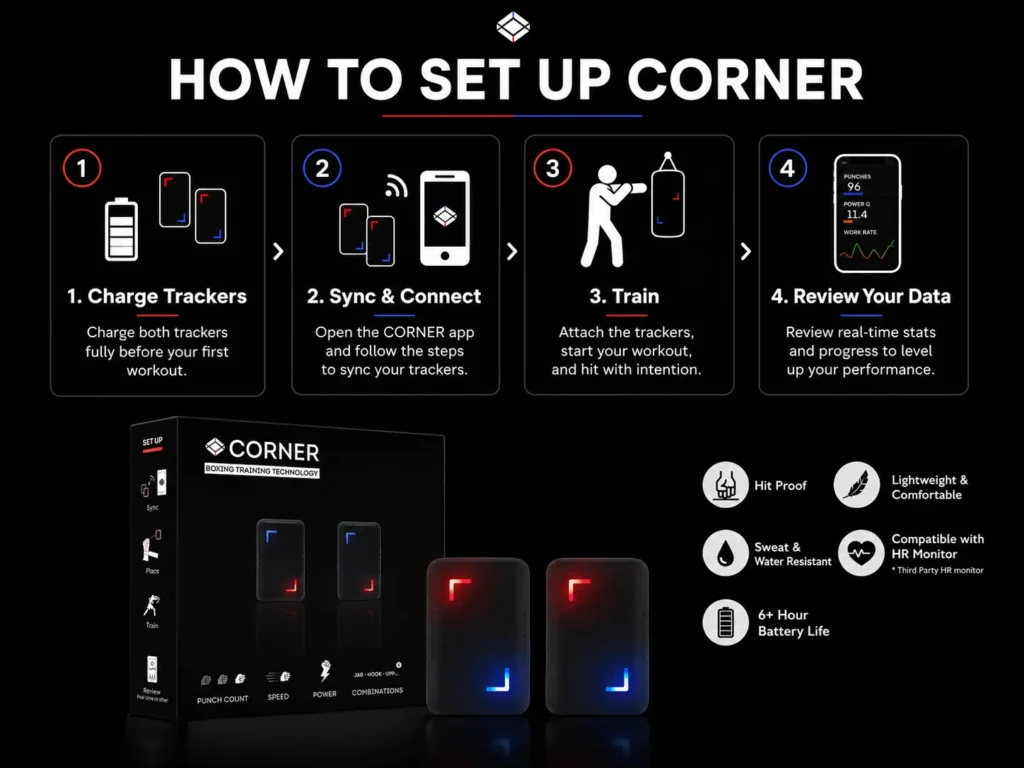
Charge the trackers, place them in the wristbands or wraps, open the Corner app, connect through Bluetooth, choose your workout mode, and start training. Start with a short test round before doing a full workout.
The common issues I faced were pairing problems, sensors not connecting, one tracker working while the other failed, connection drops, and missed punches.
If that happens, try these fixes first:
- Charge both trackers fully.
- Update the Corner app.
- Restart the phone.
- Turn Bluetooth off and back on.
- Disconnect extra Bluetooth devices nearby.
- Keep the phone close during the session.
- Re-seat the trackers in the wristbands.
- Test with simple jabs and crosses before starting the round.
If one tracker keeps failing while the other works, that may be a device issue, not a setup mistake.
The Corner App Experience
The app is the main control center. It shows punch stats, workout history, timers, goals, leaderboards, classes, and live training data.
For basic use, I like the idea of Quick Start and interval-style training. That means I can use Corner for my own bag sessions without needing to follow a class every time.
The app also supports heart-rate monitor connection, which can add heart rate and calorie data if you use a compatible device.
Data Visualization and Workout Logs
The best part of the app is that it gives context after each round. I can see total punches, average speed, average power, work rate, and hand balance.
It turns a boxing workout into something I can review. Instead of only saying “good session,” I can look at the numbers and ask better questions.
Data Interpretation Playbook
Here is how I would actually use the data.
| Data Point | What It May Mean | What I Would Do |
|---|---|---|
| Punch count drops each round | Conditioning or pacing issue | Start slower, build round stamina, add interval work |
| Speed drops but punch count stays high | You may be arm-punching while tired | Focus on clean form, breathing, and shorter combinations |
| Power drops late in the session | Fatigue is affecting output | Add strength work and improve rest timing |
| One hand has much lower output | Left-right imbalance | Add rounds focused on the weaker hand |
| Hooks or uppercuts are rarely counted | Form, angle, or tracker placement may be off | Check placement and slow down technique work |
| High punch count but low power | Volume is good, impact may be light | Mix in power rounds with lower punch targets |
| High power but low work rate | You may be loading up too much | Add faster combinations and active recovery rounds |
The key is not to chase every number at once but pick one focus per session.
For example, one day I might focus on keeping punch count stable across rounds. Another day I might focus on improving left-hand output. That makes the data useful instead of overwhelming.
Overall Experience
When Corner works well, it can make bag training much more engaging. It pushed me harder, helped me track progress, and made home training feel more structured.
The weak point is reliability. Pairing and connection issues show up, and for a product at this price, setup should not feel like part of the workout.
My honest take is this, the app and trackers can be very useful for people who enjoy data and want more motivation during boxing workouts. But if you get frustrated quickly with Bluetooth devices, or if you expect perfect tracking from day one, Corner may test your patience.
For the best experience, I would keep the app updated, test the connection before each workout, place the trackers carefully, and use the data as a trend over time rather than judging every punch like a lab result.
Performance Analysis: Accuracy, Speed, and Power Tracking
After using the Corner punch tracker, I found its biggest value in how it makes bag work easier to measure. Punch count was the most useful metric for me because it showed if I was keeping my output up or fading as the rounds went on. Clean jabs, crosses, and basic one-two combinations were easier to trust than hooks, uppercuts, fast flurries, or loose shots when I was tired.
I liked the speed and power tracking, but I would not treat those numbers as exact lab results. They are better for spotting trends across my own sessions. If my speed dropped in later rounds or one hand showed weaker power, that gave me something clear to work on.
Connectivity is the part I would watch closely. When both trackers connected properly, the live feedback felt useful and motivating. But if the sensors shift, the app is outdated, or Bluetooth drops, the data can become frustrating.
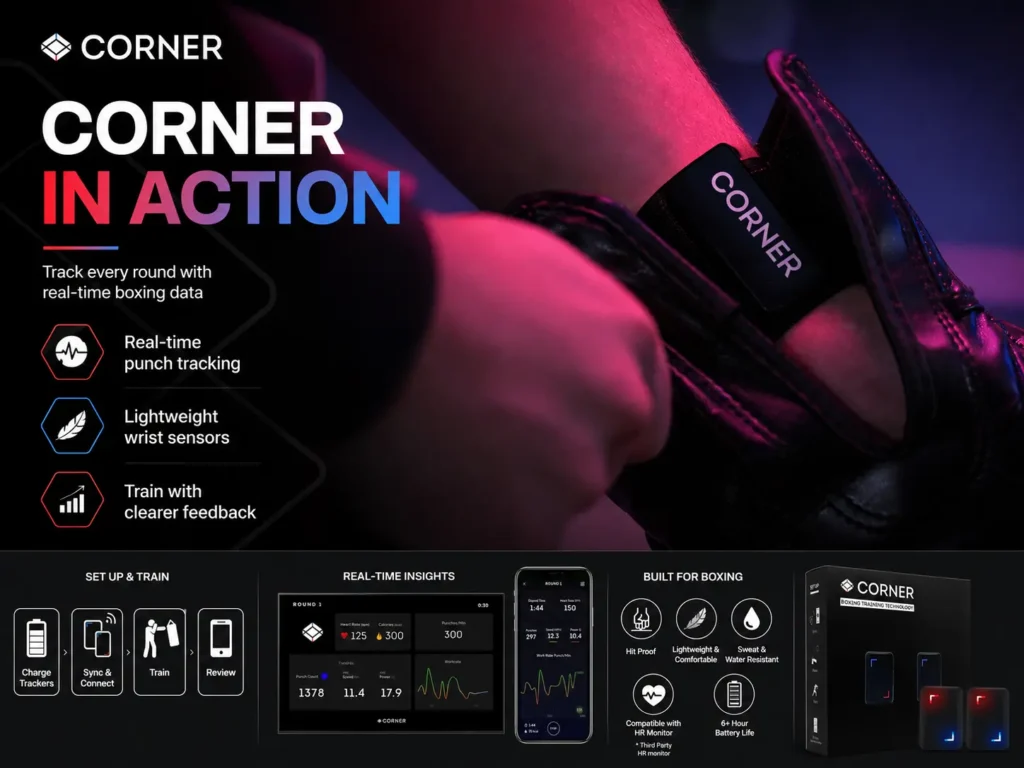
How I Would Use Corner in Training
I would not use Corner for every boxing goal, but for specific training blocks.
For HIIT rounds, I would track punch count and work rate. The goal would be to keep output high without falling apart.
For heavy bag power rounds, I would watch power trends but keep my form clean.
For speed rounds, I would use lighter punches, sharper combinations, and check whether speed drops late.
For conditioning, I would compare round one, round two, and round three to see how much my output falls.
For weak-hand work, I would use the left-right data and build rounds around the weaker side.
The mistake would be chasing every number at once. I would pick one target per session.
For example:
- Today, keep punch count steady across all rounds.
- Tomorrow, improve left-hand output.
- Next session, keep speed from dropping in the final round.
That is how the data becomes useful.
The Premium Membership: Is It Worth It?
Corner does not require a paid membership just to track your own sessions.
The personal training features are included with the tracker purchase. The Premium side is mainly for Corner On Demand classes and added workout structure. It is more useful if you want class-style guided training.
It adds access to Corner on demand classes, boxing workouts, HIIT-style sessions, strength-focused sessions, and a more structured training flow. It also ties into leaderboards and community features for people who like competing against others.
At the time of testing, Corner’s site listed Premium subscription options, including a monthly option and a one-year membership. Prices can change, so check the official Corner site or app before buying.
My advice to buy Corner for the trackers, not for the subscription. Try the free tracking first. Add Premium only if you actually use the classes.
How It Compares to Competitors
Corner sits in a small group of boxing punch trackers that includes Hykso and StrikeTec.
All three aim to track punch data from wrist-worn sensors, but they do not feel exactly the same.
Corner vs. Hykso vs. StrikeTec
| Feature | Corner | Hykso | StrikeTec |
|---|---|---|---|
| Main focus | Boxing and MMA workout tracking with classes and goals | Punch volume, punch velocity, punch type, and progress tracking | Boxing and MMA sensors with speed, power, endurance, punch accuracy, and punch type |
| Best for | Home bag workouts, fitness boxing, app-led training | Fighters who want punch output and velocity data | Users who want a sensor and app system with training tools |
| Key strength | Strong mix of tracking, app workouts, goals, and community features | Strong reputation for punch tracking and high data sampling claims | Wide performance categories and long battery claims |
| Main concern | Bluetooth reliability and missed punches in some user reviews | Availability and current buying options can vary | Website and product ecosystem feel less current in some areas |
| Subscription | Personal tracking does not require Premium, On Demand does | Depends on current Hykso setup and availability | App can be used free in limited ways, sensors needed for performance data |
| Best data use | Trends in punch count, work rate, speed, power, and left-right balance | Punch volume, type, and velocity tracking | Speed, power, endurance, punch accuracy, and performance history |
Corner makes the most sense for users who want a balance of punch tracking, guided workouts, goals, and home training motivation.
Hykso may be a better fit for people who care more about punch output and velocity tracking, as long as current seller availability and app support are reliable.
StrikeTec is worth considering for users who want a wider sensor platform with speed, power, endurance, punch accuracy, and app-based performance history.
Still, all punch trackers should be used with realistic expectations. These devices can be helpful for training feedback, but they are not research-grade tools for measuring exact punch force or speed. The best way to use them is to track patterns over time, not to prove who hits harder.
Pros and Cons
- Tracks useful boxing data, including punch count, speed, power, work rate, punch types, combinations, and left-right hand balance.
- Makes heavy bag training easier to measure, especially if you want to track progress instead of guessing after each session.
- Real-time feedback can help you stay motivated, throw more consistently, and push harder during solo workouts.
- Good fit for home boxing, gym bag work, boxing fitness, and MMA-style striking drills.
- Small and lightweight trackers, so they should not feel bulky when placed correctly under wraps or wristbands.
- The app gives workout history, goals, timers, leaderboards, and session stats in one place.
- Personal session tracking does not appear to require a paid Premium membership.
- Helpful for spotting habits, such as fading late in rounds, overusing one hand, or losing power when tired.
- Bluetooth reliability is the biggest concern, with possible pairing issues, connection drops, or one tracker failing to connect.
- Punch detection may not always be perfect, especially with hooks, uppercuts, fast flurries, or loose tracker placement.
- Speed and power numbers are better for tracking personal trends, not exact lab-level measurements.
- The price may feel high for casual users who only box once in a while.
- It will not teach proper boxing form by itself, so coaching or video review is still important.
- Not ideal for people who dislike app setup, Bluetooth pairing, updates, or wearable fitness devices.
Conclusion and Final Recommendation
The Corner boxing smart punch tracker is a useful training tool.
What I like most is that it gives boxing-specific data that a normal fitness tracker cannot. Punch count, speed, power, work rate, combinations, and left-right hand balance can all make training more focused. If I am hitting the bag alone, that kind of feedback can help me push harder and stay honest about my output.
The best part is the motivation. Corner can turn a normal heavy bag session into something I can measure and improve. I can see if I threw more punches than last time, my speed dropped late, if one hand is doing more work, and if I am keeping a steady pace.
The weak point is reliability. You may face pairing issues, connection drops, or missed punches. That matters because a tracker should not waste workout time. At this price, I would expect the setup and connection to feel dependable.
I also would not put too much weight on the power score. It is useful as a personal trend, but it is not the same as a direct force test. The smarter way to use Corner is to track patterns over time, not judge every single punch like a perfect measurement.
I would rate the Corner Boxing Smart Punch Tracker 3.8 out of 5.
It gets strong points for motivation, boxing-specific data, comfort, app features, and personal tracking without needing a subscription. It loses points for reported connection problems, mixed punch detection feedback, and the high price for casual users.
Should You Buy It?
I would call it a buy for regular heavy bag users, boxing fitness users, and intermediate boxers who want more feedback from training.
I would call it a wait-and-see if you are worried about Bluetooth issues, app reliability, or the total cost.
I would pass if you only box casually, do not care about workout data, or expect the tracker to replace coaching.
- Corner is strongest for punch count, work rate, motivation, and progress tracking.
- It is best for heavy bag training, home workouts, and boxing fitness sessions.
- The app and tracker data can help train with more structure.
- Personal tracking does not appear to require Premium membership.
- Premium is mainly worth it if you want guided classes and extra workout structure.
- Connection issues and missed punches are the main risks.
- Power and speed data are useful, but treat them as trends, not exact lab results.
- It is not a replacement for coaching, video review, or proper technique work.
- The product makes the most sense for people who train often enough to use the data weekly.
What I Would Like to See Improved
I would like Corner to improve Bluetooth stability, punch type recognition, and clearer in-app troubleshooting. I would also like stronger battery visibility, easier calibration tips, and better guidance for reading the data.
A simple in-app checklist before each workout would help a lot. Something like tracker placement, battery check, connection check, and test punches before the round starts.
That would reduce frustration and help users get better results from the product.
Final Word
The Corner Boxing Smart Punch Tracker is not just for counting punches. Its real value is helping see what happens after the gloves go on.
If you use the data properly, it can show where you fade, which hand needs work, how consistent output is, and if your training is moving in the right direction.
That is the real edge here, not chasing the biggest power number, but training with better feedback.
Disclosure: This post contains affiliate links. As an Amazon Associate, I earn from qualifying purchases. It means that if you click on an Amazon link on this site and make a purchase, I may earn a small commission at no extra cost to you. Thank you for your support!