
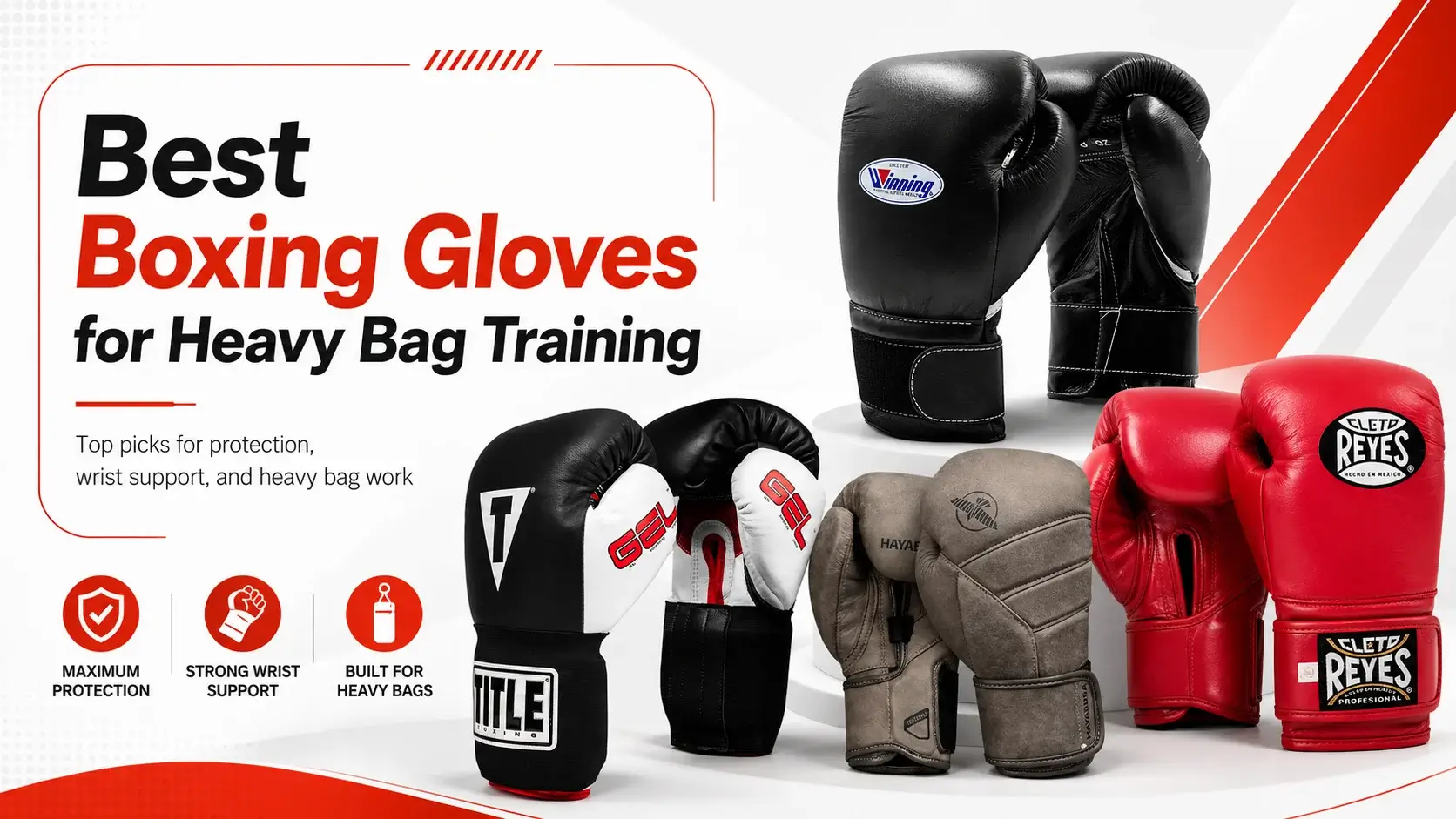
A heavy bag does not forgive bad gloves.
If the padding is too thin, your knuckles feel it. If the wrist support is weak, your hand bends when you land at a bad angle. If the glove is too loose, your fist slides inside and rubs against the lining until every round starts feeling rough.
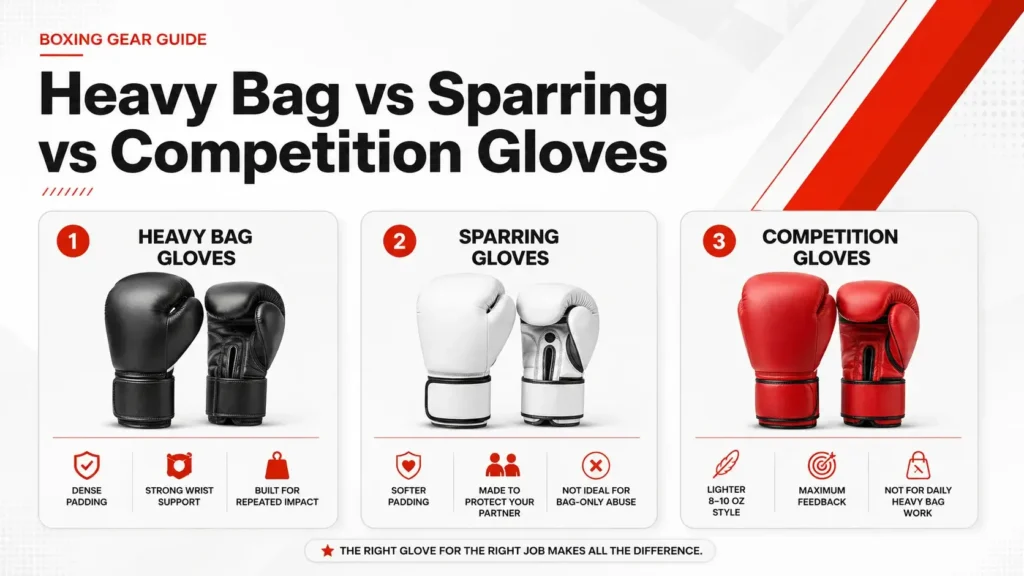
That is why you need to choose heavy bag gloves differently from sparring or fight gloves. Sparring gloves are made to protect another person. Competition gloves are lighter and built for speed and feedback. Heavy bag gloves need to handle repeated impact against a dense target without letting your hand take the punishment.
In this guide, I’m keeping things practical, and will help you choose a glove that matches your training volume, bag type, hand size, and punching style.
If you train once or twice a week, you probably do not need the most expensive pair. If you train daily or hit hard, you need better padding, stronger wrist support, and a glove that can survive sweat and bag friction. Hand wraps matter too. Proper wraps help spread force across the knuckles and support the small bones of the hand.
Here are my top picks:

Full-grain leather
Great for regular bag work
Good padding depth
Great price-to-protection balance
Key Takeaways
- Heavy bag gloves need denser, more resilient padding than sparring gloves. Competition gloves (8oz–10oz) fail on the bag and increase long-term trauma risk. For most adult heavy bag training, 14 oz to 16 oz is the safer range.
- Hayabusa T3 LX is the safest all-around choice for regular heavy bag training because of its strong wrist support, secure closure, and protective padding.
- Winning Professional MS500 is the premium choice for serious boxers who care more about hand safety than price.
- Venum Elite is a smart starting glove for fitness boxing, light bag sessions, and regular beginner training.
- Do not skip wraps. Gloves protect from the outside, but wraps help stabilize the hand inside the glove.
- Beginners should avoid pure horsehair-padded gloves; they transmit more shock and require advanced technique to use safely.
Table of Contents
Heavy Bag Glove Buyer’s Guide
A heavy bag is not gentle on your hands. It does not move like a sparring partner, and it does not soften the shot for you. Every round sends impact back into your knuckles, wrists, and forearms.
You need to buy the right glove for how often you train, how hard you punch, and how heavy your bag is.
What Makes a Heavy Bag Glove Different from Sparring or Competition Gloves?
Heavy bag gloves are built for repeated impact against a dense target. You might throw hundreds of punches in one session, and the padding has to handle that without flattening too quickly.
Sparring gloves are different. Their job is to protect your training partner. They usually feel softer and more padded, which is useful when you are landing controlled shots on another person. But that softer padding can compress faster when used again and again on a heavy bag.
Competition gloves are even worse for bag training. Fight gloves are often 8 oz or 10 oz, with less padding than training gloves. They are made for speed, feedback, and fight use, not long bag sessions. Using them on a heavy bag can leave your knuckles sore and may increase injury risk, especially if your punching form is not clean.
Wrist support is just as important as padding. When your wrist bands on a tired hook or a badly placed cross, the force can travel into the small bones of the hand.
Hand and wrist injuries are common in boxing, and research on elite boxers found carpometacarpal instability and boxer’s knuckle among the more common hand and wrist injuries in that group. Cleveland Clinic also explains that a boxer’s fracture involves the fifth metacarpal, the bone that connects the pinkie side of the hand to the wrist.
Padding Technologies and What They Mean for Your Hands
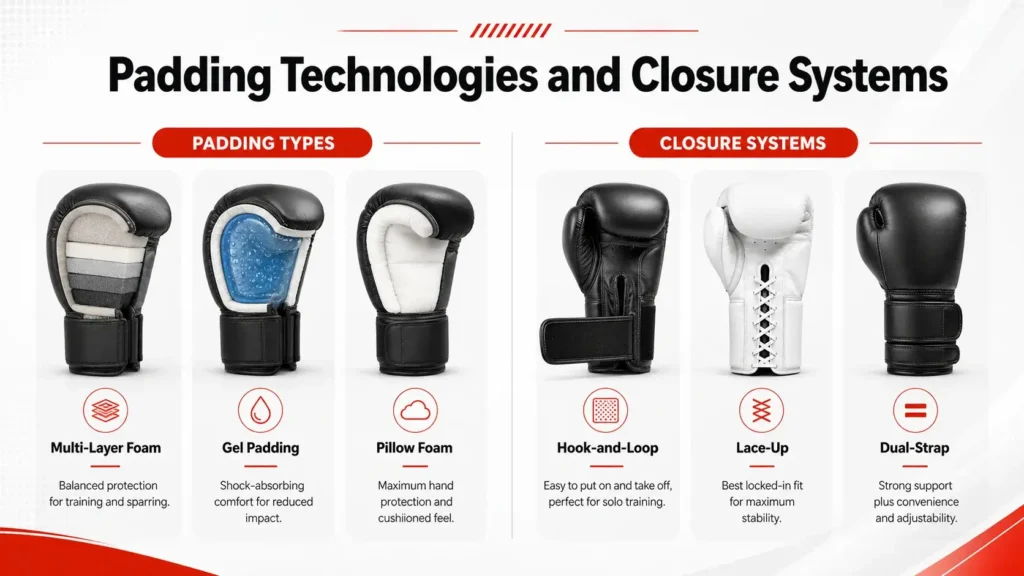
Multi-layer foam is the safest starting point for most heavy bag users. A firmer layer helps absorb impact, while a softer outer layer keeps the glove comfortable enough for longer rounds. It is better than a thin, basic foam layer that feels fine at first but packs down quickly.
Gel padding can feel very comfortable out of the box. It helps reduce the sting from bag work, especially for casual users. The trade-off is that gel-heavy gloves can feel bulky or heavy, and some may lose that fresh cushioned feel over time.
Latex foam is usually firmer and gives more punch feedback. It can be good for experienced punchers who want to feel where the shot lands. It is less forgiving than softer foam, so beginners with sore knuckles may prefer something more protective.
Soft pillow-style padding, like what people expect from Winning training gloves, puts hand protection first. You give up some sharp feedback, but your hands usually feel better after high-volume rounds.
Closure Systems for Solo Training
Hook-and-loop closure is the most practical choice for solo heavy bag work. You can put the gloves on and take them off without help. The important part is how secure the strap feels once your wrist is wrapped.
A weak strap can shift during rounds, especially when sweat builds up. Before buying, strap the glove on, make a fist, and press your knuckles into a bag or firm surface. If the strap moves too easily, it may not hold up well during harder rounds.
Lace-up gloves give the most secure wrist fit, but they are not convenient if you train alone. You need someone to tighten them properly. Loose laces defeat the whole point.
Dual-strap systems are a good middle ground. Hayabusa’s T3 LX, for example, uses Dual-X interlocking straps and Fusion Splinting, which are made to improve wrist support and alignment. This type of closure is useful if you want more wrist control without needing a coach to lace your gloves every session.
Construction Red Flags to Check Before Buying
An attached thumb is safer than a loose thumb design. It helps keep the thumb in a better position if a punch lands badly. Most proper boxing training gloves now use attached thumbs for this reason.
Stitching matters too. Check the thumb area, palm edge, and wrist seam. These spots take a lot of stress during bag work. Loose threads or single weak seams are signs that the glove may not last.
Material is another big point. Real leather usually lasts longer under bag friction and sweat, while cheaper synthetic materials can crack or peel sooner. That does not mean every synthetic glove is bad, but daily heavy bag users should expect leather to age better.
The inside lining matters more than people think. A good lining should feel secure and should not bunch up around your fingers. Sweat can break down cheap lining fast, so dry your gloves after each session instead of leaving them in a gym bag.
Takeaways
- Heavy bag gloves need stronger padding and better wrist support than sparring gloves.
- Do not use 8 oz or 10 oz fight gloves for regular heavy bag training.
- Multi-layer foam is the safest choice for most users.
- Hook-and-loop is easiest for solo training, but the strap must hold firmly.
- Lace-up gloves give better wrist fit, but they are less practical alone.
- Real leather usually lasts longer than cheap synthetic material.
- Attached thumbs, strong stitching, and a clean inner lining are worth checking before you buy.
Sizing and Fit Guide for Heavy Bag Work
A glove can have great padding and still be wrong for you if the fit is off. Too tight, and your hand goes numb. Too loose, and your fist slides inside the glove every time you punch.
The right fit should feel firm, not painful. Your hand should stay in place, your wrist should feel supported, and you should still be able to make a full fist with wraps on.
How to Measure Your Hand and Pick Glove Weight
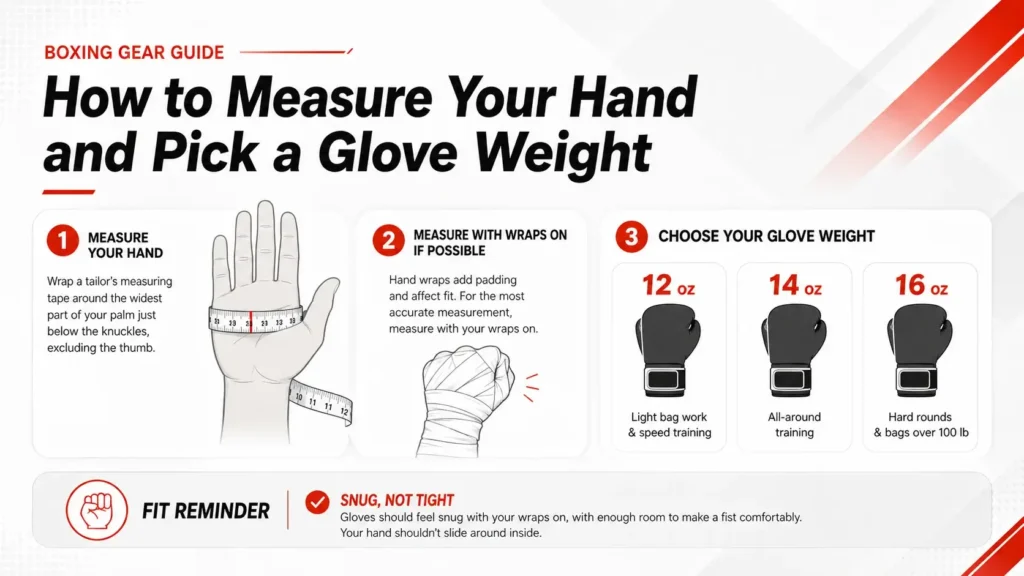
Use a tailor’s tape and wrap it around the widest part of your palm, just below the knuckles. Do not include the thumb. This gives you your hand circumference.
Measure with hand wraps on if possible. That is how your hand will sit inside the glove during real training. A glove that feels perfect without wraps may feel too tight once you wrap your hands properly.
Body weight charts can help, but they are not perfect. Hand size, punching power, bag weight, and training frequency matter too. A lighter boxer with wide hands may need more room, while a heavier person with narrow hands may not need the biggest glove.
For most adults doing heavy bag work, 14 oz and 16 oz are the safest starting points. A 12 oz glove can work for lighter technical rounds, but it is not my first pick for a dense heavy bag or hard punching.
The 100-Pound Bag Rule
The Simple Rule
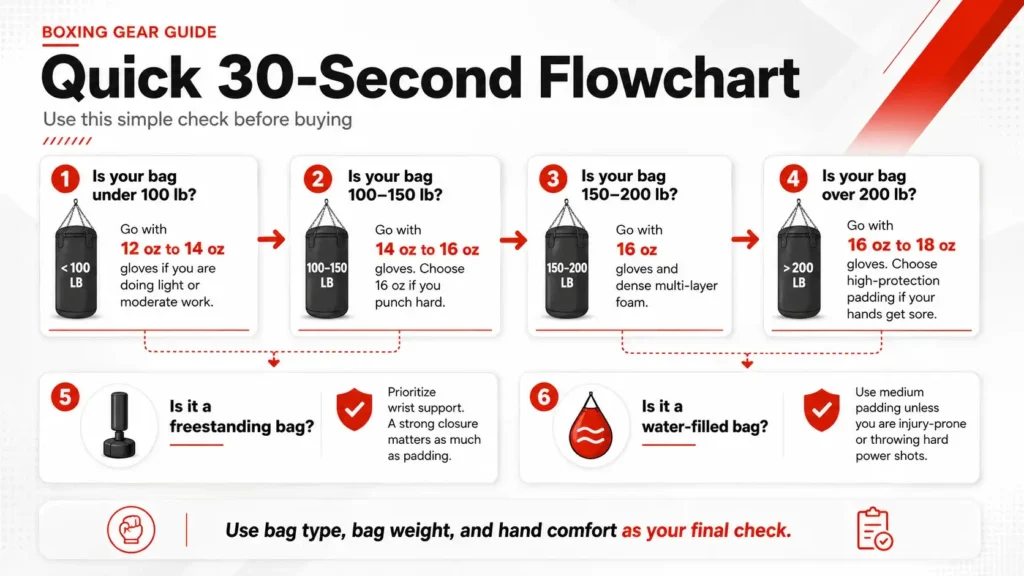
If your bag weighs over 100 pounds, treat 14 oz as the minimum and consider 16 oz if you hit hard.
A heavy, dense bag sends more force back into your hand than a lighter bag. That extra mass can punish your knuckles and wrists if you are using a small glove with thin padding.
It does not mean every person needs 16 oz gloves all the time. If you are doing speed, light technique work, or short rounds, 12 oz or 14 oz may feel better. But if your sessions include hard rounds on a heavy bag, more padding is the safer choice.
Important Fit Rule
If your knuckles hurt after normal bag rounds, do not ignore it. Check your wraps, glove size, punching form, and bag weight before blaming the glove alone.
Hand Wraps Are Mandatory, Not Optional
Gloves protect your hands, but wraps help hold everything together inside the glove. They support the wrist, reduce hand movement inside the glove, and add protection over the knuckles.
Hand wraps help support and stabilise the hand and wrist during impact, including the metacarpal bones and wrist. Properly wrapped hands can help disperse force across the knuckles and limit the spread of the metacarpal bones.
For most adults, 180-inch wraps are the better choice for heavy bag work. They are ideal for most boxers over 125 lbs because the extra length helps secure the wrist and protect the knuckles.
Wraps should feel firm, not numb. You want a solid fist with no loose gaps. If your fingers tingle, the wrap is too tight. If your hand slides inside the glove, the wrap is too loose or the glove fit is wrong.
With sizing and glove basics clear, the next step is choosing the pair that fits your training style.
Venum Boxing Hand Wraps

Features:
- 180-inch length gives better wrist and knuckle coverage.
- Elasticated cotton fabric feels flexible, breathable, and easy to wrap.
- Hook-and-loop closure keeps the wrap fastened during training.
- Machine washable, so you can clean them after sweaty sessions.
Venum Boxing Hand Wraps are a simple, low-cost add-on that can make your glove fit feel more secure. These are a solid beginner-friendly wrap for hand protection.
Best Boxing Gloves for Heavy Bag Training: The Reviews
You know your size and you know what your heavy bag sessions look like. Now it comes down to the glove that matches your training habits.
A boxer hitting the bag once or twice a week does not need the same glove as someone doing hard rounds almost every day. So, your glove should match the training requirements.
If you want the safest all-around pick for regular heavy bag training, the Hayabusa T3 LX is the strongest choice for wrist support. If hand protection matters more than price, the Winning MS500 is the safer long-term buy.
Casual Training, 1-2 Sessions Per Week
If you hit the heavy bag once or twice a week, you need enough padding to protect your knuckles, a closure that stays put, and a glove that does not feel awkward during basic rounds. You do not need to spend pro-level money yet.
1. TITLE Gel Intense Heavy Bag Gloves
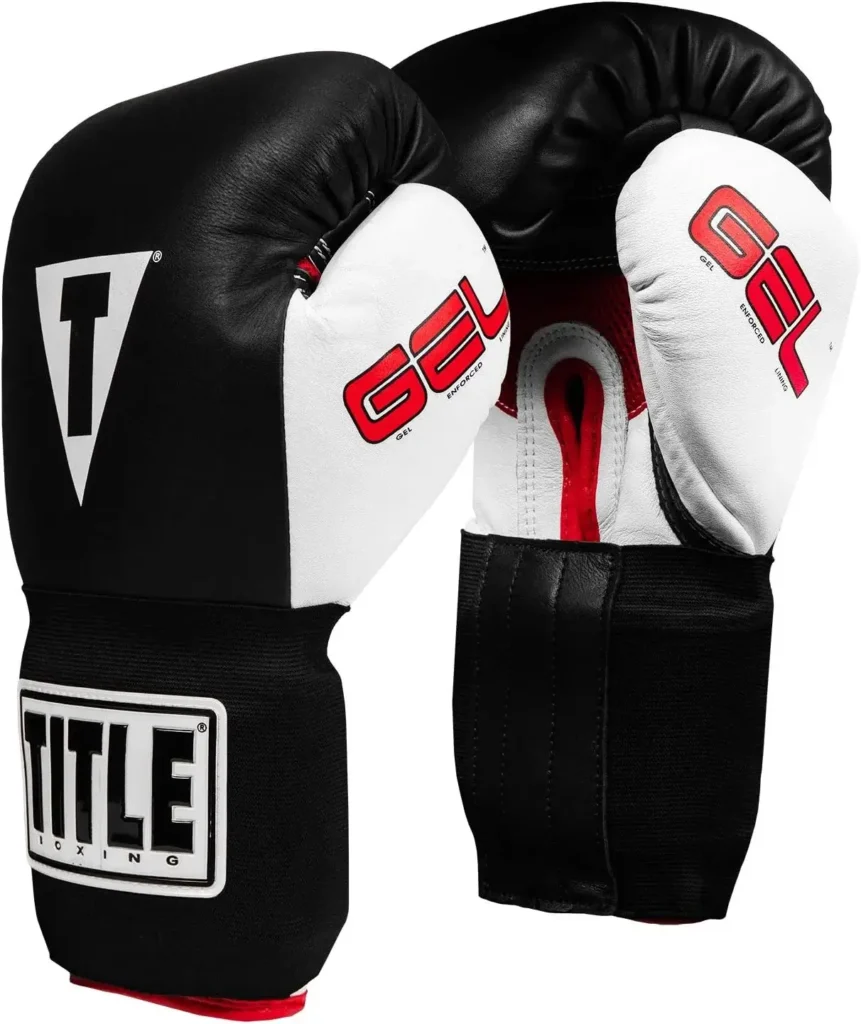
The TITLE Gel Intense is a good pick for casual heavy bag work because it feels protective right away. The main feature is the gel enforced lining with multi-layer foam padding. That gives the glove a soft, cushioned feel without making the punch feel completely dead. The pasted product details also list a 360-degree wraparound hook-and-loop strap, removable cuff sleeves, a moisture-wicking liner, and leather material, so this should not be described as a synthetic leather glove.
For a beginner or fitness boxer, that comfort matters. Some gloves need a break-in period before they stop feeling stiff. This one feels friendly from the start. If you are throwing at 50-70% power and training once or twice a week, it gives enough protection for normal heavy bag rounds.
With time, the gel padding may soften a little, but it won’t feel flat against a standard heavy bag. The main thing to watch is weight. The gloves feel heavier than expected, and that can make longer rounds more tiring.
Ideal user: A beginner or fitness boxer doing light-to-moderate bag work.
Projected lifespan: Around 12-18 months with casual use.
Pros: Comfortable from day one, gel padding helps reduce knuckle sting, and the wraparound strap gives decent wrist support.
Cons: Feels a bit heavy, padding may soften over time, and it is better for casual use than hard daily bag work.
2. Venum Elite Boxing Gloves
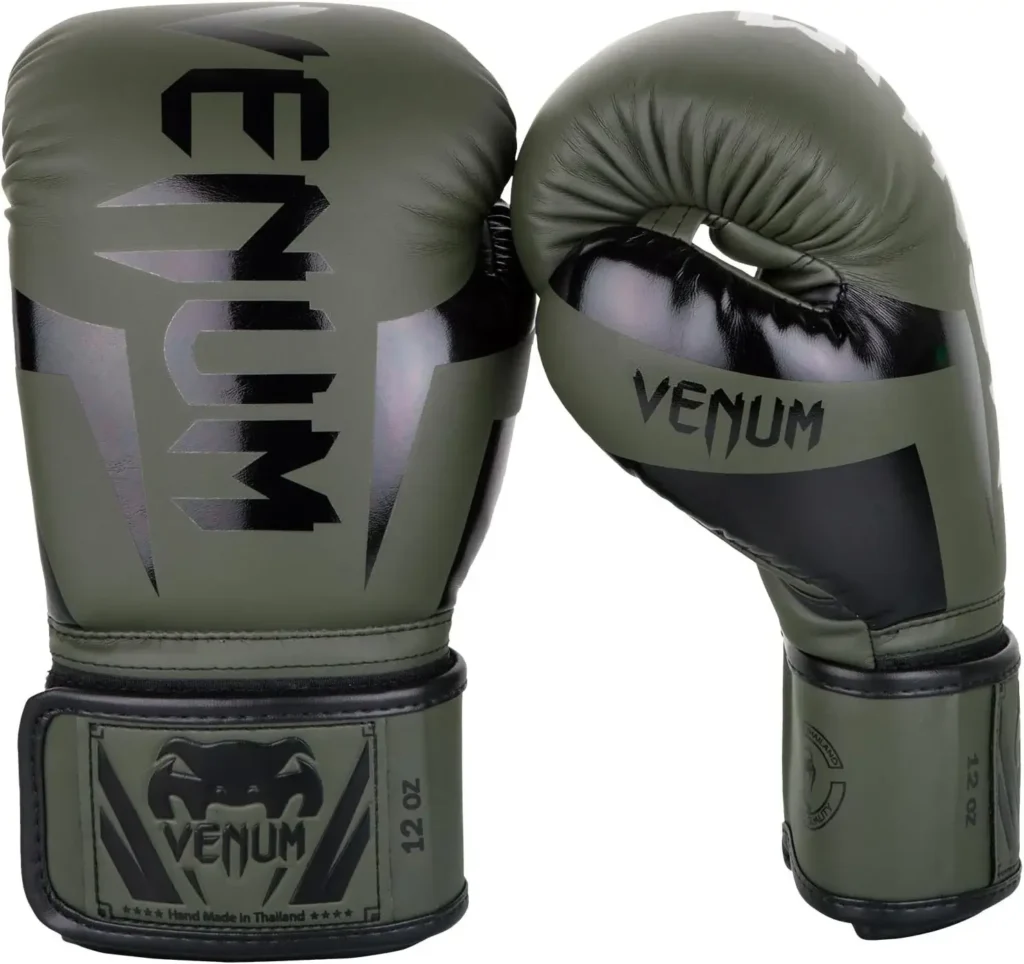
The Venum Elite is a smart upgrade for someone who wants one glove for heavy bag work, mitts, boxing fitness, and kickboxing. It sits above cheap beginner gloves but still keeps the price reasonable. The key details are Skintex synthetic leather, triple-density foam, a reinforced palm, mesh panels, attached thumb, and a long hook-and-loop cuff.
For heavy bag training, the triple-density foam is the main reason it works. It gives better impact control than basic single-layer foam, especially if you are still learning how to punch cleanly. The long cuff also helps the wrist feel more supported than shorter beginner gloves.
This glove is not as protective as Hayabusa or Winning, and it does not have the leather feel of Fairtex or Cleto Reyes. But for the price, it is one of the more practical choices for beginners who plan to train more than once a week.
The main issue is odor control. The mesh helps, but if you leave the gloves in a gym bag after training, they can still hold sweat.
Ideal user: A beginner or intermediate boxer training 2-4 times per week.
Projected lifespan: Around 1-2 years with normal use.
Pros: Good value, triple-density foam, long cuff support, and works well for beginners doing regular training.
Cons: The gloves can hold odor if not dried properly.
Daily Training, 3-5 Sessions Per Week
If you train most days, glove quality starts to matter much more. Foam compression, weak stitching, and loose wrist support show up fast when you are hitting a heavy bag several times a week.
3. Hayabusa T3 LX Leather Boxing Gloves
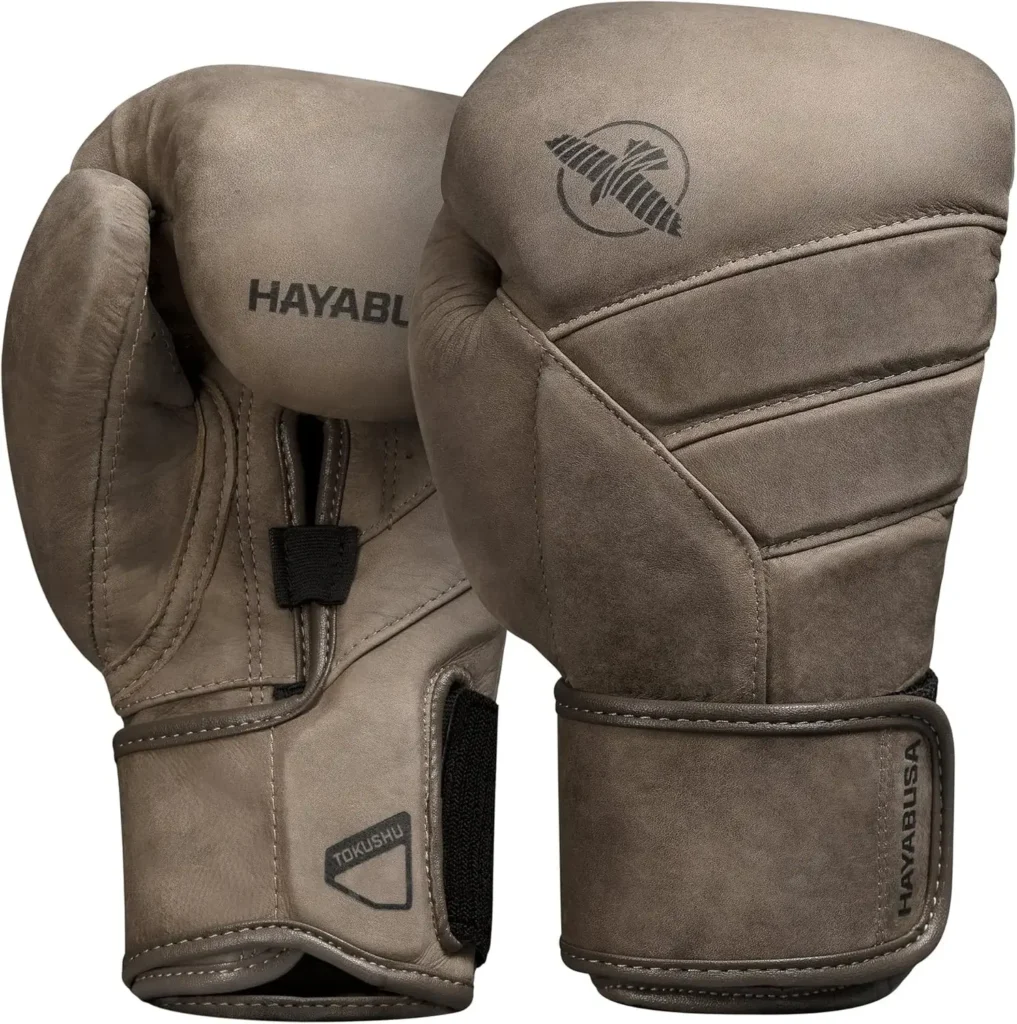
The Hayabusa T3 LX is the best pick here if wrist support is your biggest concern. Hayabusa uses full-grain leather on the LX version, Dual-X interlocking wrist straps, Fusion Splinting, Deltra-EG multi-layer foam, and a temperature-regulating lining.
That wrist support is what makes the T3 LX stand out for heavy bag work. A normal hook-and-loop glove can still let the wrist bend if your punch lands badly. The T3 LX feels more locked in because the two straps work together and the splinting helps keep the wrist aligned.
The padding is protective but not overly soft. That is good for daily training because very soft padding can feel nice early and then compress faster. The T3 LX gives enough cushion for repeated rounds without making every punch feel dull.
The foam may compress slightly with time, which is normal after daily rounds, but knuckle protection stays consistent. The Dual-X straps won’t loosen during hard rounds.
Ideal user: A technical boxer who throws volume and wants serious wrist stability.
Projected lifespan: Around 2-3 years with regular care.
Pros: Excellent wrist support, full-grain leather, secure Dual-X closure, and strong protection for daily heavy bag rounds.
Cons: Expensive, slightly stiff at first, and may feel too locked-in for users who like more wrist movement.
4. Fairtex BGV1 Boxing Training Gloves
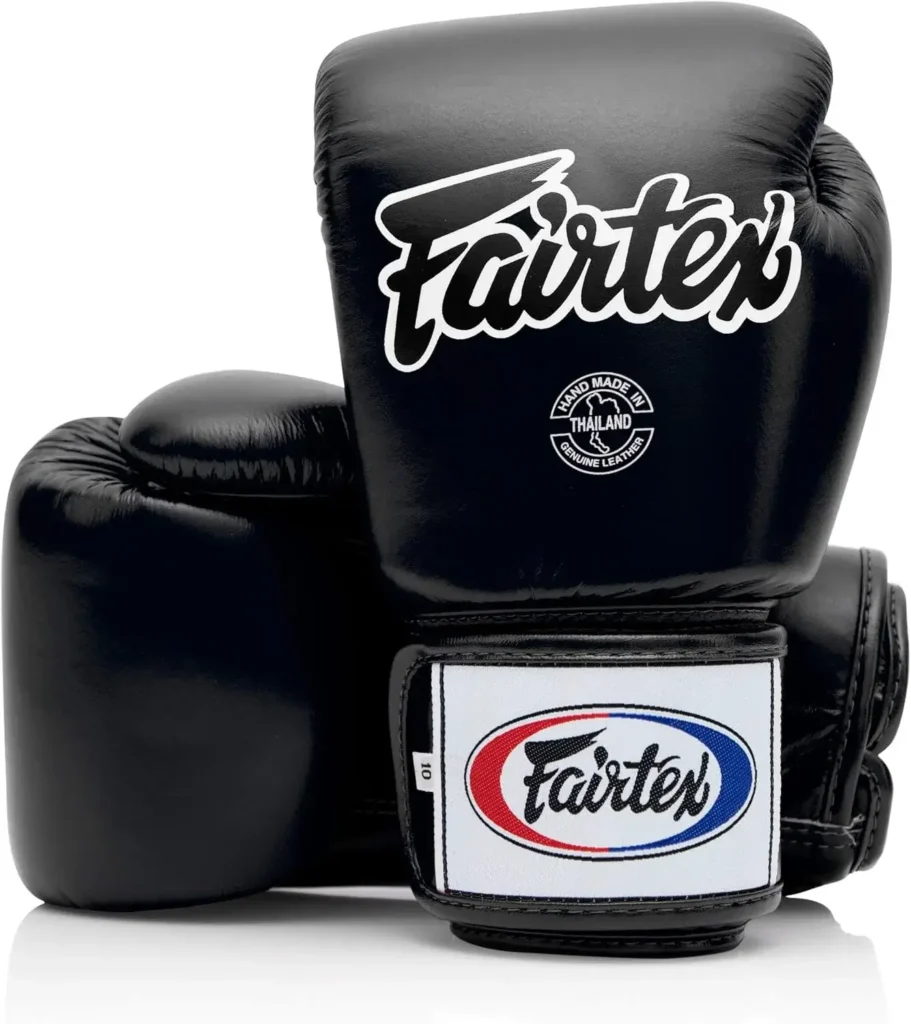
The Fairtex BGV1 is a tough, simple, leather glove that works well for heavy bag training, especially if you also train Muay Thai or kickboxing. There is premium leather, a tight-fit hand compartment, Fairtex foam padding, hook-and-loop closure, and handmade Thailand construction.
The BGV1 has a compact feel. It does not feel like a big pillow around your hand. That is good if you like a snug glove and want clean feedback from the bag. It may not be the best fit if you have large hands or like extra room inside the glove.
For heavy bag work, the padding does a good job with regular rounds. The leather also breaks in nicely and tends to last longer than synthetic materials. The trade-off is wrist support. The BGV1 has a shorter cuff, which is common in Muay Thai gloves. That helps with clinch work and movement, but it does not lock the wrist as strongly as Hayabusa.
With time, the foam may soften a little but still protects the knuckles. The leather shapes to the hand without losing structure. Stitching stay clean. For power punchers, the wrist support will feel lighter than the T3 LX.
Ideal user: A daily trainee who wants a durable leather glove for bag work, pads, and striking practice.
Projected lifespan: Around 3-5 years with care.
Pros: Durable leather build, snug fit, three-layer foam protection, and great for boxing, Muay Thai, and bag work.
Cons: Short cuff gives less wrist support, and the tight hand compartment may not suit larger hands.
5. Ring to Cage C17 2.0 Gloves
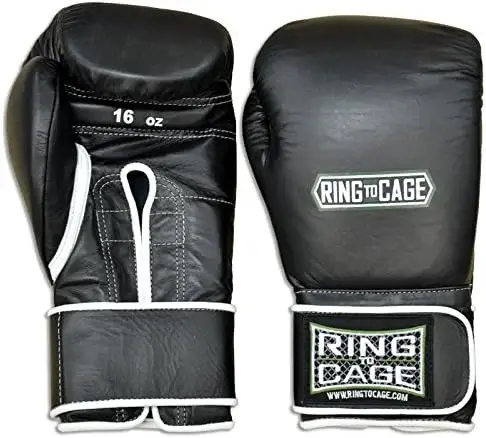
The Ring to Cage C17 2.0 is the value pick for people who want strong hand protection without paying Winning prices. It is a Japanese-style training glove made with genuine high-grade cowhide leather. There are 12 oz, 14 oz, 16 oz, and 18 oz options, hook-and-loop or lace-up versions, a tapered wrist design, a thicker nylon lining, and 1.5 inches of impact-absorbing foam. It is made with genuine high-grade cowhide leather.
The glove makes sense for daily bag work because the padding is built around protection first. It does not give the sharpest punch feedback, but that is not always a bad thing. If your knuckles get sore easily, or you are doing long rounds on a heavy bag, that extra cushion can be useful.
The fit feels more forgiving than some compact boxing gloves. Most users should be able to wear wraps without feeling cramped. The leather also helps the glove feel better over time.
Over days, the padding will keep its shape and won’t bottom out. Palm stitching will stay tight. The only thing worth watching is the hook-and-loop closure. The velcro can lose grip over time if it gets full of sweat, lint, and dust.
Ideal user: A regular trainee who wants strong knuckle protection at a mid-range price.
Projected lifespan: Around 3-4 years with regular use.
Pros: Strong knuckle protection, genuine cowhide leather, good padding depth, and a fair price for regular training.
Cons: Velcro may wear before the glove shell, and wrist support is not as strong as Hayabusa.
Competitive and Power Punching, 6+ Sessions Per Week
If you hit the bag hard almost every day, glove choice becomes a safety decision. At this level, weak padding can punish your hands fast.
6. Cleto Reyes Bag Gloves with Hook and Loop Closure
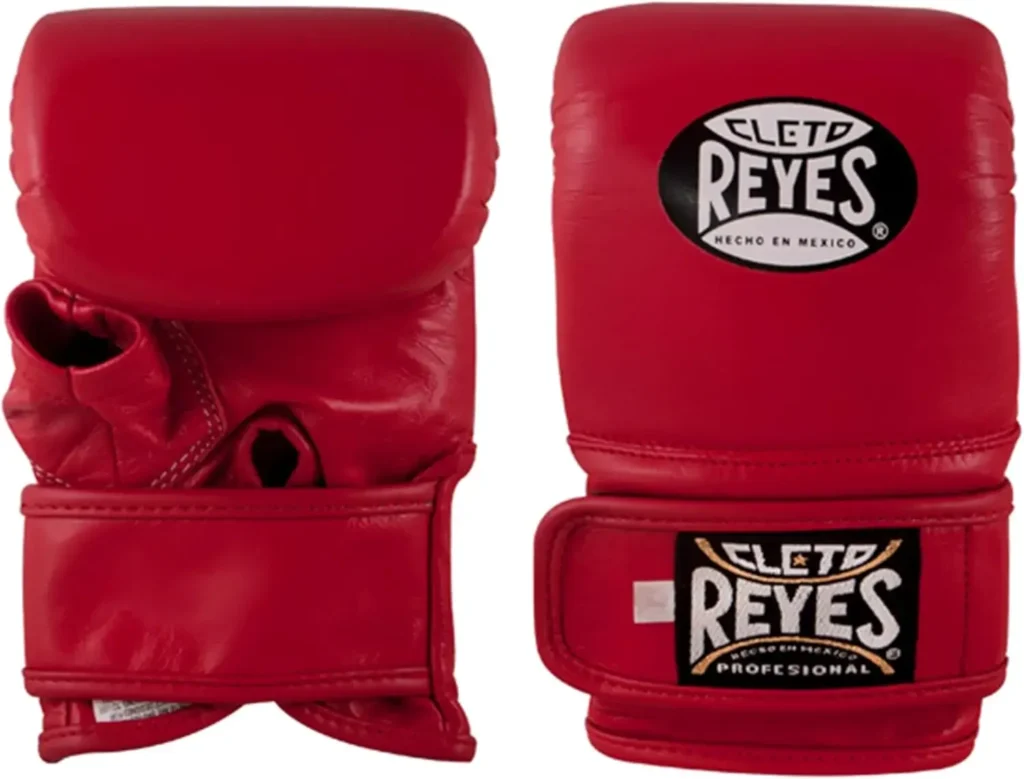
The Cleto Reyes Bag Gloves are for experienced punchers who like feedback. These are not soft beginner gloves. They have cow leather, a smooth pre-curved design, lightweight latex foam padding, water-resistant lining, and hook-and-loop closure. The bag gloves are handmade in Mexico with premium leather.
On the heavy bag, these gloves feel more direct than protective. When you land clean, the feedback feels sharp and satisfying. When your punch lands badly, your hand knows it. That can help experienced boxers clean up punch placement, but it is not forgiving for beginners.
These are bag gloves, not sparring gloves. The padding is made for bag feedback, not partner safety. Over days, the shell holds up well, the stitching stays solid, and the glove keeps its shape. The padding may become more direct over time, which some punchers will like and others will not. The hook-and-loop closure is useful for solo training, but it may not feel as locked in as Hayabusa or lace-up Winning gloves.
Ideal user: An experienced boxer who wants punch feedback on the heavy bag.
Projected lifespan: Around 3-5 years for the leather shell, with the padding feel changing over time.
Pros: Premium leather, sharp punch feedback, lightweight latex foam, and made for heavy bags, mitts, and speed bags.
Cons: Not beginner-friendly, not for sparring, and less forgiving on sore or injury-prone hands.
7. Winning Professional MS500 Gloves
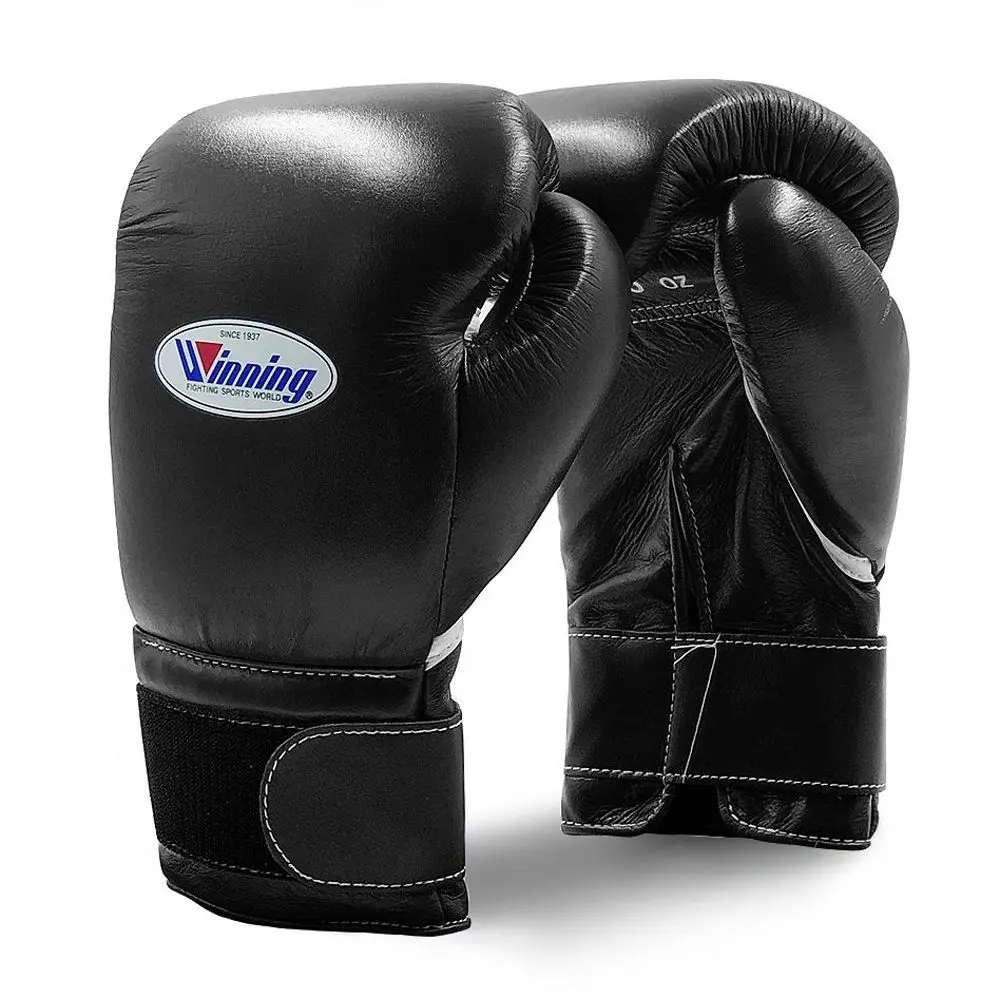
The Winning Professional MS500 is the safest premium pick for serious heavy bag work if your main goal is hand protection. The MS200 is an 8 oz glove, while the MS500 is the 14 oz Winning pro glove, made in Japan.
The reason boxers pay this much for Winning is simple: the glove is built to protect the hand. It has a softer, more protective feel than punch-feedback gloves like Cleto Reyes. It helps your knuckles, joints, and wrists surviving high-volume rounds.
For heavy bag training, the MS500 makes the most sense for advanced users, injury-prone athletes, or anyone training hard several days a week. The 14 oz size gives more padding than an 8 oz fight glove while still feeling cleaner than a bulky 16 oz glove. For even more protection, some users may prefer the MS600 in 16 oz, but the MS500 is the better middle ground for many boxers.
The padding will stay plush and won’t collapse. The leather may show light creasing. Stitching stays clean. The lace-up closure gives a better wrist fit than any basic hook-and-loop glove, though it is less convenient if you train alone.
Ideal user: A high-volume boxer, injury-prone athlete, or serious heavy bag user who wants maximum hand protection.
Projected lifespan: Around 5+ years with proper care.
Pros: Best hand protection, made in Japan, 14 oz size suits serious training, and lace-up closure gives strong wrist support.
Cons: Very expensive, less convenient for solo training, and the softer feel gives less punch feedback.
Side-by-Side Comparison
Here is the quick comparison between different models:
| Glove Model | Weight / Size Options | Material | Closure Type | Padding Style | Price Tier | Best For |
|---|---|---|---|---|---|---|
| TITLE Gel Intense Heavy Bag Gloves | Commonly 12–16 oz | Leather | Hook-and-loop | Gel enforced lining with multi-layer foam | Budget to mid-range | Casual bag work, comfort, beginners |
| Venum Elite Boxing Gloves | 8, 10, 12, 14, 16 oz | Skintex synthetic leather | Hook-and-loop | Triple-density foam | Mid-range | Beginners, fitness boxing, regular light training |
| Hayabusa T3 LX Leather Boxing Gloves | 12, 14, 16 oz | Full-grain leather | Dual-X hook-and-loop | Deltra-EG multi-layer foam | Premium | Daily bag work, wrist support |
| Fairtex BGV1 Boxing Training Gloves | 8, 10, 12, 14, 16 oz | Premium leather | Hook-and-loop | Fairtex foam system / three-layer foam | Mid-range | All-around boxing, Muay Thai, regular bag work |
| Ring to Cage C17 2.0 | 12, 14, 16, 18 oz | Cowhide leather | Hook-and-loop or lace-up | 1.5-inch impact-absorbing foam | Mid-range | Knuckle protection at a fair price |
| Cleto Reyes Bag Gloves with Hook and Loop Closure | 10, 12 oz | Cow leather | Hook-and-loop | Lightweight latex foam | Premium | Heavy bag feedback, experienced punchers |
| Winning Professional MS500 Gloves | 14 oz | Leather | Lace-up | Soft protective training padding | Ultra-premium | Maximum hand protection, serious training |
Bag-Matching: Pair Your Setup to the Right Glove
Your heavy bag is not just a target. It changes how much protection your hands need.
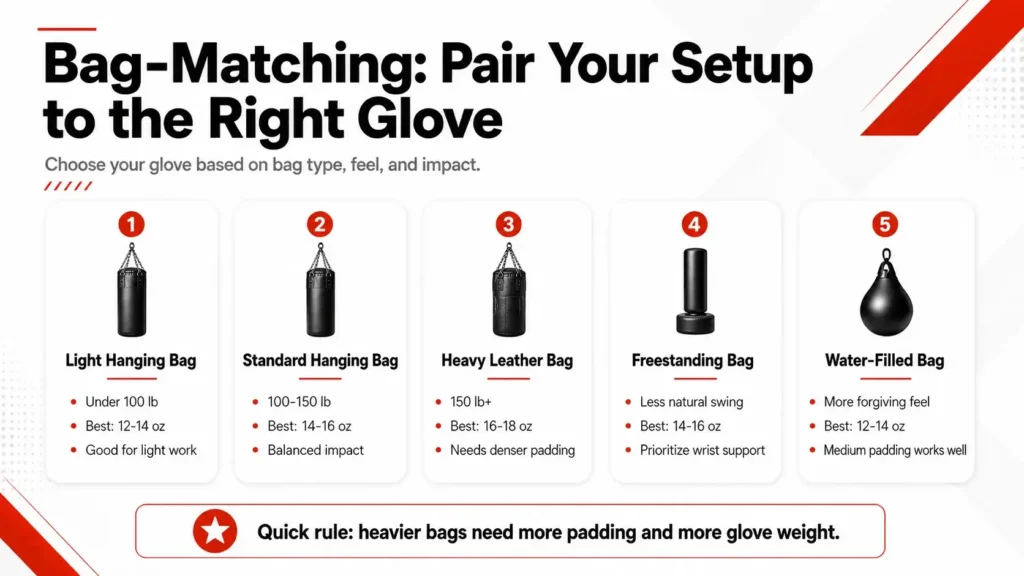
A lighter bag, a dense leather bag, a water-filled bag, and a freestanding bag all feel different when you punch them. That means your glove choice should not be based on body weight only. Your bag type, bag weight, fill density, hand size, and punching power all matter.
Boxing glove size can affect hand injury risk during heavy bag training, so it is worth getting this part right.
- Use 12 oz to 14 oz gloves for lighter bags and lighter technique work.
- Use 14 oz to 16 oz gloves for most regular heavy bag training.
- Use 16 oz to 18 oz gloves for dense, heavy bags or hard power rounds.
- Water-filled bags are more forgiving, so you can focus more on feel and wrist alignment.
- Freestanding bags need stable wrist support because the base can shift under hard shots.
- If your knuckles hurt after normal rounds, move up in glove size or padding density.
Quick Glove and Bag Matching
| Bag Type | Bag Feel | Recommended Glove Size | Best Padding Type | Best Match |
|---|---|---|---|---|
| Light hanging bag under 100 lb | Softer, more movement | 12 oz to 14 oz | Medium foam | Venum Elite, TITLE Gel Intense |
| Standard hanging bag 100–150 lb | Balanced impact | 14 oz to 16 oz | Multi-layer foam | Hayabusa T3 LX, Fairtex BGV1 |
| Dense hanging leather bag 150–200 lb | Firm impact | 16 oz | Dense multi-layer foam | Hayabusa T3 LX, Ring to Cage C17 2.0 |
| Very heavy leather bag 200 lb+ | Wall-like impact | 16 oz to 18 oz | Dense foam or high-protection foam | Ring to Cage C17 2.0, Winning MS500 |
| Freestanding bag | Base movement, less natural swing | 14 oz to 16 oz | Medium to dense foam with strong wrist support | Hayabusa T3 LX, Venum Elite |
| Water-filled bag | More forgiving impact | 12 oz to 14 oz | Medium foam with good wrist support | Fairtex BGV1, Venum Elite |
| Hard power rounds | High shock return | 16 oz to 18 oz | High-protection foam | Winning MS500, Hayabusa T3 LX |
Hanging Leather Bags, 150 lb to 300 lb
A hanging leather heavy bag can feel very different depending on its weight and fill. A 150-pound bag gives firm resistance, but a 250-pound or 300-pound bag can feel much closer to hitting a wall.
The heavier and denser the bag, the more shock comes back into your hands. If your glove padding is too thin or too soft for that setup, your knuckles and wrists take more of the impact.
For a 150-pound hanging bag, 14 oz to 16 oz gloves are usually a safe range for most adults. If you hit hard, choose 16 oz. For 200-pound bags and above, I would not go below 16 oz for serious rounds. If your hands are injury-prone or you are doing long power sessions, 18 oz can make sense.
Dense multi-layer foam is usually the safer choice for these bags. It keeps its shape better under repeated impact and gives your hand a stronger buffer. Soft padding can feel nice at first, but if it compresses too easily, your knuckles will feel it.
Important Rule
If your bag is over 100 pounds and you hit with real power, treat 14 oz as the minimum. For hard rounds, 16 oz is the better starting point.
Synthetic and Freestanding Bags
Synthetic hanging bags usually feel softer than old-school leather bags, but that does not mean you can ignore protection. Soft fill can still punish your hands if the glove is loose, too light, or already worn out.
Freestanding bags need a different thought process. They do not swing like a hanging bag. They sit on a base, and many bases are filled with water or sand. Century’s Wavemaster, for example, has a base that can be filled with sand or water and weighs around 250 pounds when filled with water. The larger Wavemaster 2XL Pro is listed at around 270 pounds when filled with water.
Because the base can move or shift during hard shots, wrist support matters a lot. A loose glove can let your wrist bend when your punch lands at a bad angle. For this kind of bag, I like 14 oz to 16 oz gloves with a secure closure.
Hayabusa T3 LX is the safest pick here if wrist support is your top concern. Venum Elite works for lighter freestanding bag sessions, especially for beginners and fitness boxing. If you punch hard, skip thin gloves and use something with stronger padding.
Water-Filled Bags
Water-filled bags absorb impact differently from traditional filled bags. They provide a more forgiving target with less strain on the hands, fists, wrists, elbows, and shoulders.
That forgiving feel is helpful, especially if your joints get sore after bag work. But you still need a glove that lets you feel your punch. If the glove is too padded and the bag is already soft, you may lose too much feedback.
For most water-filled bags, 12 oz to 14 oz gloves with medium-density foam are enough for technique and fitness rounds. If you hit hard or your bag is large and heavy, move to 14 oz or 16 oz.
Fairtex BGV1 works well here because it gives decent feedback without feeling too thin. Venum Elite is also fine for lighter sessions. Winning MS500 is still excellent for protection, but it may feel too soft if you want a crisp response from the bag.
Heavy Bag Glove Maintenance
Even the right glove breaks down faster if you treat it badly. Sweat, moisture, and storage habits can ruin a glove long before the outside looks worn.
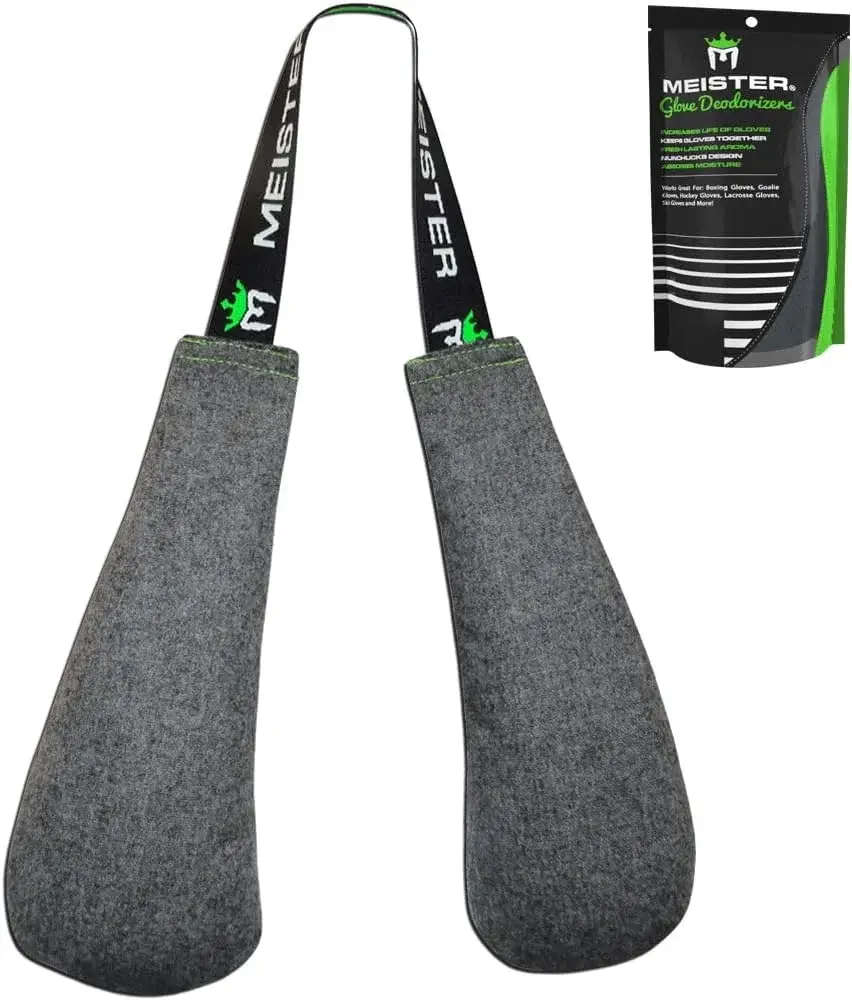
The biggest mistake is leaving gloves zipped inside a gym bag after training. Open gloves after each use so air can circulate and help prevent moisture and bacteria buildup. There are glove drying and deodorizing accessories made to absorb moisture, reduce odor, and help gloves stay dry between uses.
Meister Glove Deodorizers for Boxing
Features:
- Cologne, cedarwood, fresh linen, and lavender scents
- Prevents glove breakdown from moisture
- Quality flannel and premium aromatic, absorbent fillings
- Absorbs unwanted moisture and odor
These deodorizers are a simple way to keep boxing gloves fresher between training sessions. You place them inside your gloves after use, and they help absorb moisture and reduce odor overnight.
Daily Drying and Deodorizing Routine
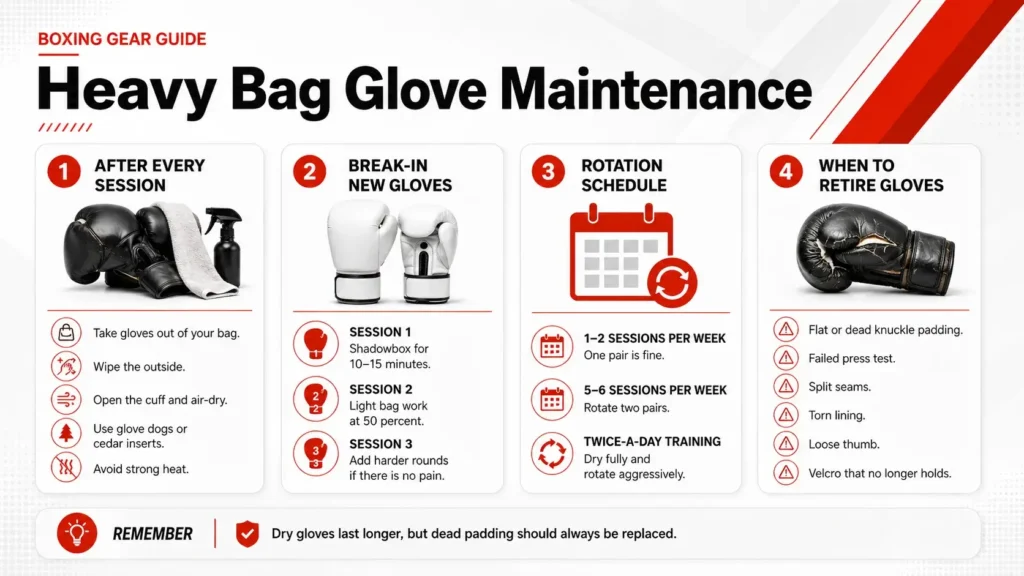
After every session, take your gloves out of your bag as soon as you can. Wipe the outside with a dry cloth, then open the cuff so air can reach the inside.
Use glove deodorizers, glove dogs, cedar inserts, or a proper glove dryer if you train often. If you do not have any of those, crumpled newspaper can help absorb moisture for a short time. Replace it after each use.
V2 Boxing Glove Drying System

Features:
- Reduce odors after training
- Warm thermal air to prevent damage
- Timer function to control drying
- Simple to use as you just need to place your glove above.
This glove-care option uses warm airflow, a timer screen, and an air treatment cycle to help dry gloves faster and reduce odor after training.
Do not dry gloves on a radiator, with a hairdryer, or under strong heat. Too much heat can dry out leather and damage synthetic parts. A fan is much safer because it moves air without cooking the material.
For leather gloves, short air exposure is fine, but do not leave them baking in direct sun for hours. You need dry gloves, not cracked gloves.
Proper Break-In for New Leather Gloves
New leather gloves can feel stiff at first. Do not take them straight into full-power heavy bag rounds on day one.
Start with shadowboxing for 10-15 minutes. Make a fist, open and close your hand, and let the glove begin shaping around your wraps. In the next session, move to light bag work at about half power. Focus on clean straight punches and check for rubbing around the thumb, knuckles, or wrist.
By the third session, you can start adding harder rounds if the gloves feel settled. If you feel sharp pain, numbness, or hot spots, stop and adjust your wraps. A small break-in period is normal. Pain is not.
Leather usually molds to the hand better over time. Synthetic gloves may stay more rigid, so do not expect every glove to soften the same way.
Rotation Schedule for Daily Training
If you train once or twice a week, one good pair can be enough. Just dry it properly after every session.
If you train five or six days a week, two pairs are smarter. Rotate them so each pair gets more time to dry and recover between sessions. For example, use Pair A on Monday, Pair B on Tuesday, then Pair A again on Wednesday.
A glove that stays damp inside can break down faster and feel worse over time. Clean wraps also help. Hand wraps should dry fully before going back into your gym bag and should be washed regularly because they are the first defense against glove odor.
If you train twice a day, rotation matters even more. One pair sitting wet between sessions is not a good plan for your hands or your wallet.
Retirement Criteria
Do not retire gloves based only on how they look. Some gloves still look fine outside but have dead padding inside.
Use the press test. Push your thumb into the knuckle area of the glove. Healthy padding should feel firm and springy. If your thumb sinks in too easily, or you can feel where your knuckles sit through the glove, the padding is no longer doing its job.
Also check the seams. If the stitching is splitting near the thumb, palm, or striking surface, the glove is no longer safe for hard bag work. Once the padding starts showing, the glove should be retired.
Check the thumb too. If the attached thumb is loose, stretched, or separating from the glove body, stop using the glove for hard rounds. A bad thumb position can turn one missed hook into an injury.
And listen to your hands. If you suddenly start getting knuckle pain with gloves that used to feel safe, that is a warning sign. Check your wraps, your form, your bag, and the glove padding before pushing through more rounds.
Takeaways
- Match your glove to your bag, not just your body weight.
- Dense hanging bags need more padding than water-filled bags.
- Freestanding bags need strong wrist support because the base can move under impact.
- Dry your gloves after every session.
- Use clean wraps, and wash them often.
- Rotate gloves if you train most days.
- Retire gloves when the padding stops springing back, even if the outside still looks good.
Even a great glove has a limit. Your job is to choose the right one, dry it properly, and replace it before your hands pay the price.
Frequently Asked Questions
Can I Use Sparring Gloves on the Heavy Bag?
Sparring gloves are built to protect your partner, not your hands. Their padding is softer and more evenly distributed to cushion a human face. On a dense heavy bag, that foam compresses fast. After a few dozen rounds, the knuckle area flattens, and you’re essentially punching the bag with a thin layer of dead foam. Wrist support is also weaker.
Sparring gloves rarely have the rigid, layered closure a bag glove needs. Using one pair for everything is a false economy. You’ll ruin a $150 sparring glove in months and risk metacarpal bruising. A dedicated bag glove with denser, layered foam and a load-tested closure costs less than a hand injury.
Velcro Vs. Lace-Up: Which Works for Solo Training?
Lace-ups give the most precise wrist lock, but you can’t tighten them properly by yourself. If you train alone, a lace-up is a frustration, not an advantage. Velcro is the practical choice, provided it survives a load-test. Press the glove against the bag at hook and uppercut angles, hard. If the strap pops open or the closure shifts, the glove is unsafe for solo work.
A system like Hayabusa’s Dual-X closure passes that test consistently. Lace-ups only make sense if you have a dedicated home gym and a partner who can cinch them before every session. For everyone else, load-test every Velcro glove before you buy.
Why Do My Knuckles Still Hurt Through Thick Gloves?
Thick foam doesn’t help if it’s already dead. Foam compression is the most common culprit. Padding that once absorbed impact now transmits it straight to your metacarpals. But even fresh foam fails if your hand slides inside the glove. Negative space, those gaps between your hand and the interior, lets your knuckles shift and strike the shell at odd angles.
Improper hand wrapping creates the same problem. If the glove is too small, your knuckles press directly against the inner lining, no matter how thick the padding looks. And here’s the override rule: a 150-pound bag demands denser foam than a 100-pound bag. If your glove’s padding is too soft for the bag’s mass, pain is inevitable, even on day one.
How Often Should I Replace Heavy Bag Gloves?
Measure lifespan in rounds, not months. Mid-tier foam often breaks down after 200 heavy-bag rounds. A casual trainee hitting the bag twice a week might get 18 to 24 months. Daily trainers, logging five or six sessions a week, usually need a replacement every 6 to 9 months.
Competitive athletes who punish the bag daily may swap gloves every 3 to 4 months. Inspect the knuckle area: press your thumb deep into the foam. If it stays compressed and doesn’t rebound, the padding is dead. Check for lining tears and Velcro that no longer holds under load.
Are Premium Gloves Worth It for Beginners?
Do the cost-per-session math. A $100 glove used three times a week for two years costs about $0.32 per session. A $300 glove over the same span costs $0.96. The premium glove may last longer, but a beginner doesn’t need the marginal gains in feedback or leather quality. What you need is protection. Entry-level models with dense, layered foam and a load-tested closure protect your hands adequately without professional-tier pricing.
Upgrade when you’re hitting noticeably harder, training daily, or recovering from a hand injury. Until then, spend the extra money on wraps and a good deodorizer.
Are 10 oz Gloves Good for Heavy Bag?
10 oz gloves are okay for light bag work, but not ideal for regular or hard heavy bag training. You should choose 14 oz or 16 oz instead.
Final Verdict
The best boxing gloves for heavy bag training depends on how often you train, how hard you punch, and what kind of bag you use.
If you train once or twice a week, you do not need pro-level gloves. TITLE Gel Intense and Venum Elite make sense for casual bag work, beginner boxing, and fitness sessions. They give enough protection without asking you to spend too much.
If you train three to five times a week, move up in support and build quality. Hayabusa T3 LX is the strongest pick if wrist stability matters most. Fairtex BGV1 is better if you want a tough leather glove that also works for Muay Thai and general striking. Ring to Cage C17 2.0 is the value pick if knuckle protection matters but you do not want to pay Winning prices.
If you hit the bag almost every day or throw hard power rounds, be more careful. Cleto Reyes Bag Gloves are best for experienced punchers who want feedback, not beginners with sore hands. Winning MS500 is the better choice if your priority is hand protection and you are willing to pay for it.
For most readers, the safest overall pick is Hayabusa T3 LX. It gives strong wrist support, good padding, and a secure fit for regular heavy bag work.
No glove can save bad form, loose wraps, or worn-out padding. Choose the right size, wrap your hands properly, dry your gloves after every session, and replace them before your knuckles start warning you.
Disclosure: This post contains affiliate links. As an Amazon Associate, I earn from qualifying purchases. It means that if you click on an Amazon link on this site and make a purchase, I may earn a small commission at no extra cost to you. Thank you for your support!