
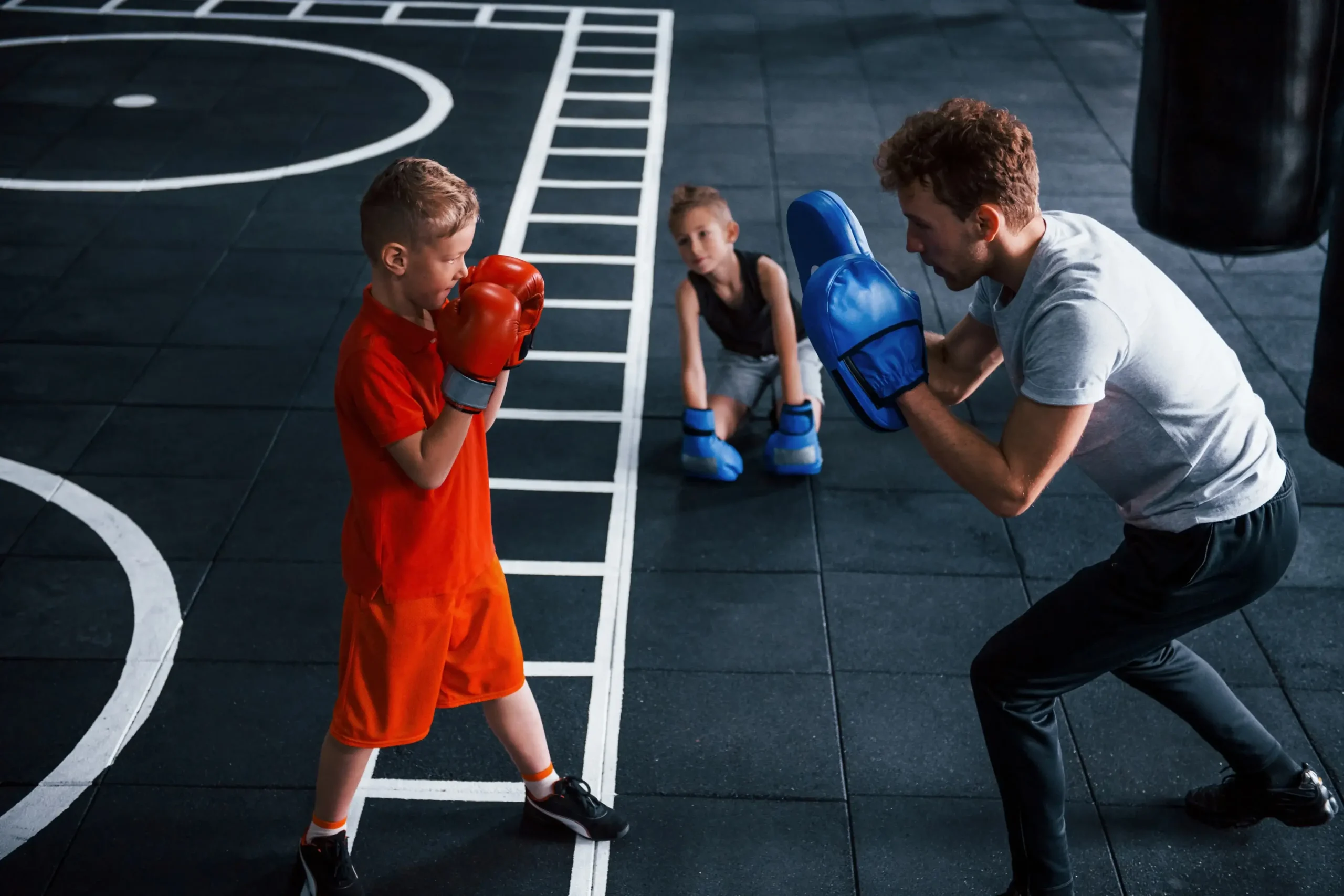
Boxing training for youth can start with stance, footwork, basic punches, defense, shadowboxing, bag work, and conditioning. Sparring does not need to be part of a beginner’s first weeks or months. A child can learn how to box, get fitter, and develop good technique without sparring. Let’s explore this in detail!
Table of Contents
What Does Youth Boxing Training Include?
Beginner training usually starts with movement. Kids learn where to place their feet, how to hold their hands, how to move without crossing their legs, and how to punch without losing balance.
A typical youth boxing session may include:
- Jump rope, light jogging, and mobility work
- Boxing stance and guard
- Forward, backward, and side-to-side footwork
- Basic punches such as the jab, cross, hook, and uppercut
- Simple combinations
- Blocking, slipping, rolling, and stepping away
- Shadowboxing
- Heavy-bag or mitt work
- Bodyweight conditioning
- Light stretching at the end
Beginners do better when they repeat a few skills correctly instead of rushing through a long list of combinations.
What Age Can Kids Start Boxing?
There is no single starting age that suits every child. Coordination, attention span, physical development, and the type of training all matter.
Younger children can begin with footwork games, balance drills, shadowboxing, jump rope, and basic movement. These activities introduce boxing skills without putting them into contact situations too early.
A child is better prepared for structured boxing when they can:
- Follow safety instructions
- Stop immediately when the coach gives a command
- Keep their balance while moving
- Control how hard they punch
- Train without turning every drill into a fight
- Tell an adult when something hurts or feels wrong
Being old enough to join a class does not automatically mean a child is ready to spar.
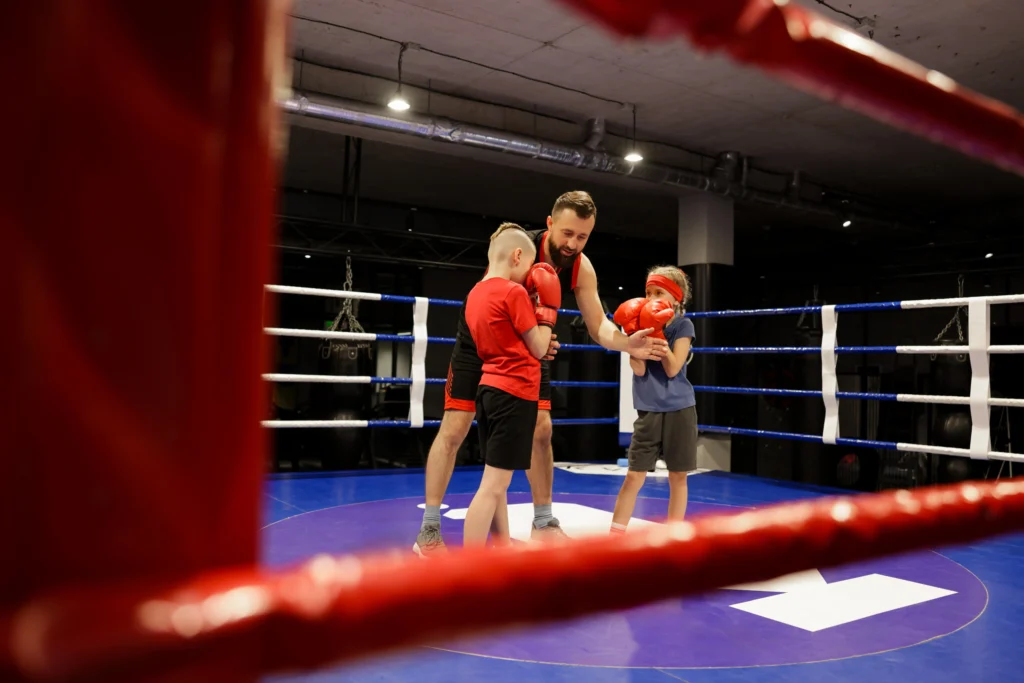
Benefits of Boxing Training for Youth
Boxing makes kids coordinate their hands, feet, eyes, balance, and breathing at the same time. Even a basic jab-cross becomes more difficult once movement and defense are added.
Physical Fitness
Jump rope, footwork, bag rounds, mitt work, and bodyweight exercises keep much of the body active. Training can include steady movement along with short periods of harder work.
Coordination
A boxer has to move the feet while keeping the hands in position and watching a target. Mitt and bag drills also require the hands to respond to visual cues.
Balance and Footwork
Kids quickly notice when poor foot position makes them stumble after a punch. Repeated stance and movement drills teach them to stay under control while changing direction.
Focus
Boxing drills require attention. A child may need to remember a combination, react to a coach’s cue, move to a new angle, and return the hands to guard.
Self-Control
Youth boxers learn to control speed, force, and movement. Partner drills also require them to follow instructions instead of trying to overpower the other child.
Confidence
Progress is easy to notice in boxing. A child who once struggled to jump rope or throw a balanced combination can see those skills improve through practice.
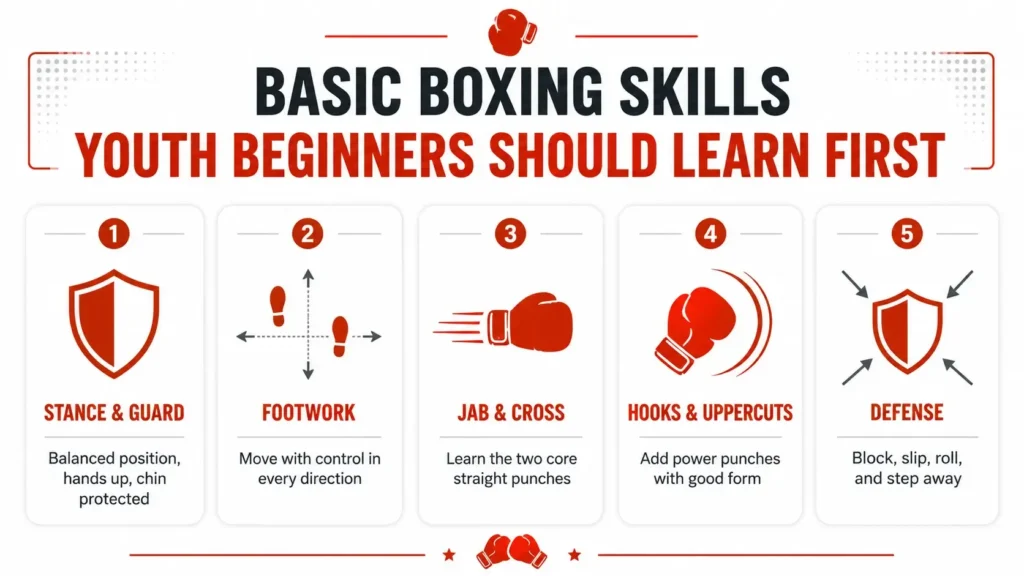
Basic Boxing Skills Youth Beginners Should Learn First
1. Stance and Guard
Everything starts with a balanced stance.
The feet should allow the boxer to move in any direction without getting tangled. The hands return to guard after each punch, and the chin stays protected.
Coaches may adjust the stance for an orthodox or southpaw boxer, but beginners should first learn to stay balanced and relaxed.
2. Footwork
Kids should learn how to step before they learn how to rush toward a target.
Useful beginner drills include:
- Stepping forward and backward
- Moving left and right
- Pivoting
- Circling a cone
- Moving around a marked square
- Maintaining stance while changing direction
Crossing the feet or bringing them too close together usually makes punching and defense harder.
3. Jab and Cross
The jab and cross give beginners plenty to practice.
These two punches teach distance, body rotation, balance, guard recovery, and simple combinations.
A young boxer should not be encouraged to swing as hard as possible. Clean technique comes first.
4. Hooks and Uppercuts
Hooks and uppercuts can be introduced after the child is comfortable with straight punches.
Both require more body rotation, and beginners often lose their balance when they try to generate too much force.
5. Defense
Defense belongs in beginner boxing from the start.
Useful skills include:
- High guard
- Catching or parrying a jab
- Slipping left and right
- Rolling under a hook
- Stepping out of range
- Moving after throwing a combination
Kids should learn that boxing includes avoiding punches, not just throwing them.
Boxing Drills for Kids and Teens
A good drill should teach one clear skill.
Shadowboxing
Shadowboxing is one of the easiest ways to practice without impact.
A beginner round could include:
- 30 seconds of footwork
- 30 seconds of jabs
- 30 seconds of jab-cross combinations
- 30 seconds of moving after each combination
Keep the pace slow enough that the child can maintain proper form.
Line or Ladder Footwork
A floor line or agility ladder can help with short, controlled steps.
Do not turn every ladder drill into a race. The aim is to keep the feet organized while moving.
Cone Movement Drill
Place four cones in a square and have the boxer move around them while staying in stance.
Once the movement looks steady, add a jab after each change of direction.
Heavy-Bag Work
Heavy-bag training gives young boxers a target for punches and combinations.
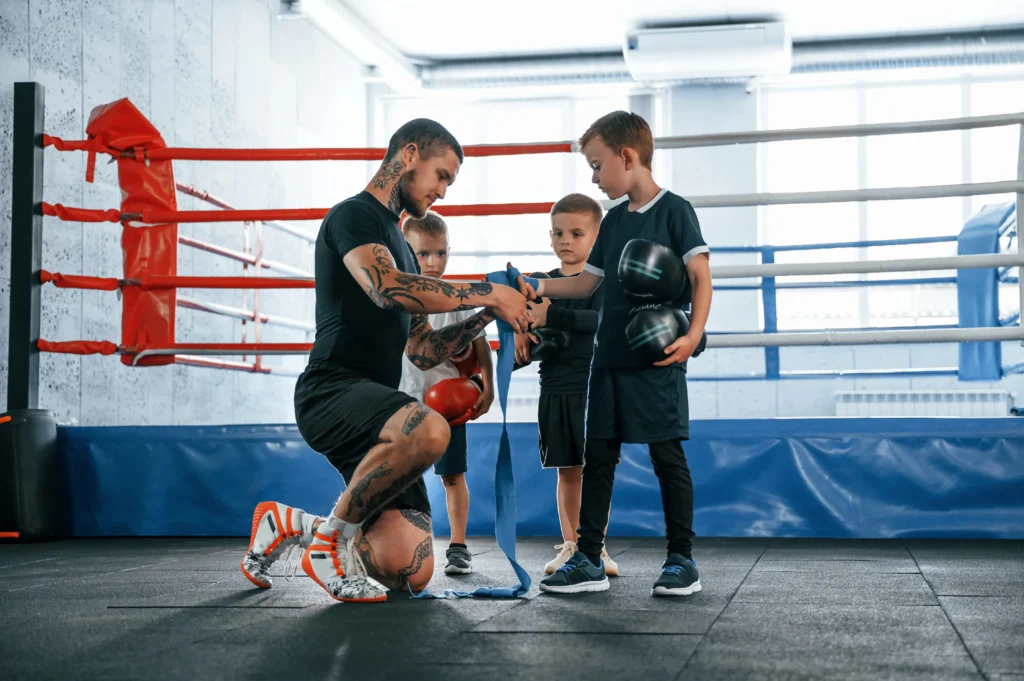
The bag should suit the child’s size and experience. Hand wraps and suitable gloves should be worn, and wrist position should be checked before harder punching begins.
Mitt Work
Coach-held mitts help with accuracy, timing, combinations, and reacting to instructions.
The coach also controls the pace, which makes mitt work useful for young beginners.
Slip-Line Drill
A rope or line placed around shoulder height can be used to practice slipping and rolling.
The child gets defensive practice without someone throwing punches at their head.
Jump Rope
Jump rope works on rhythm, foot control, and conditioning.
Kids who struggle at first can begin with short intervals rather than trying to jump continuously for several minutes.
Can Kids Practice Boxing at Home?
Yes. Home training works well for basic, non-contact practice.
Kids can work on:
- Shadowboxing
- Stance in front of a mirror
- Footwork around tape lines or cones
- Jump rope
- Bodyweight exercises
- Light bag work after learning proper technique
- Combinations assigned by their coach
Unsupervised sparring should stay out of home training.
Avoid games where children throw punches toward each other’s heads, try to grab objects from someone’s mouth while using boxing movements, or turn balance drills into makeshift sparring.
A bedroom, garage, or living room can work for footwork and shadowboxing. It should not become an unsupervised fight space.
How Often Should Youth Boxers Train?
Two or three sessions per week is a reasonable starting point for many beginners.
Training needs to fit around school, sleep, normal play, and any other sports the child participates in. Younger athletes do not need an adult fighter’s training schedule.
Variety also matters. Youth sports guidance encourages children to take part in different activities rather than specializing too early or training one sport year-round without enough recovery.
Watch for signs that training is becoming too much, including persistent soreness, unusual tiredness, poor sleep, irritability, falling school performance, or a child who suddenly dreads going to practice.
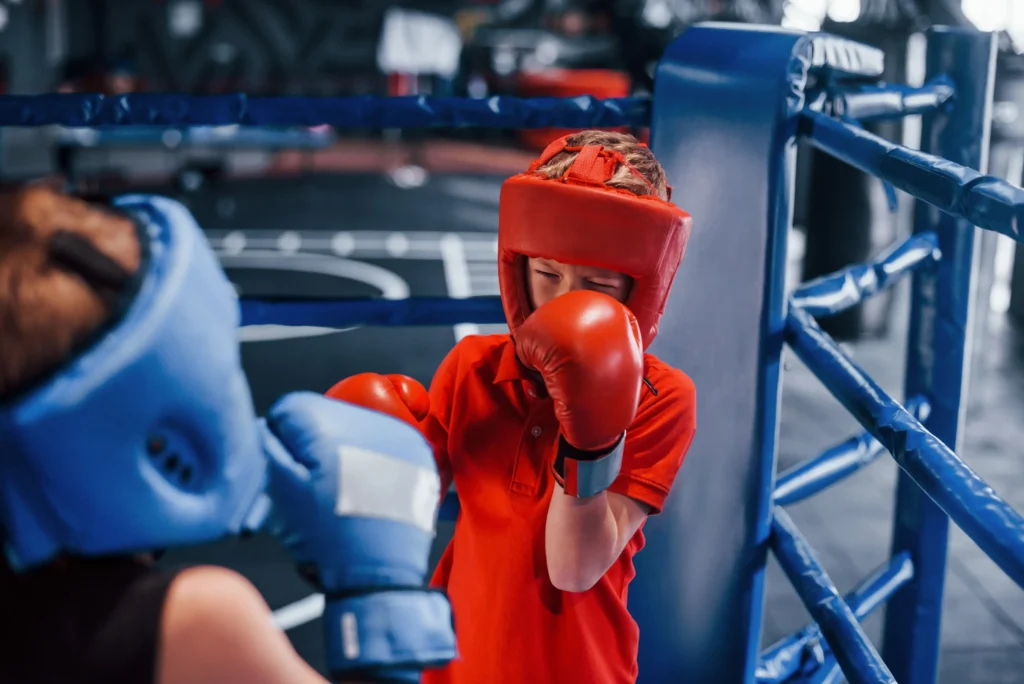
What Boxing Gear Does a Young Beginner Need?
Do not buy a complete competition setup before the first class. Ask the gym what it provides and what sizes the coach recommends.
Hand Wraps
Hand wraps support the hands and wrists during bag and pad work. Youth wraps may fit smaller hands more comfortably than long adult wraps.
Boxing Gloves
Gloves should fit the child’s hands and suit the type of training being done. Do not choose gloves based on age alone. Body size, hand size, training purpose, and gym rules all matter.
Mouthguard
A properly fitted mouthguard should be used when there is any chance of contact to the mouth or face. It should stay in position without the child constantly biting down to hold it there.
Training Shoes
Regular athletic shoes are usually enough for a beginner. Boxing shoes become more useful once a child trains regularly and needs footwear made for boxing movement.
Headgear
Headgear may be used or required for certain training and competition situations, but parents should not treat it as concussion-proof. No helmet or headgear can prevent every concussion.


What Parents Should Know About Sparring and Head Contact
Contact changes the risk level of youth boxing.
Boxing competition includes intentional punches to the head and body. Pediatric medical guidance has long raised concerns about children and adolescents participating in boxing because of the risk of head and facial injuries.
This is one reason parents should ask clear questions before allowing a child to spar.
Ask the coach:
- Why is my child ready to spar?
- How will the sparring partner be selected?
- How hard will contact be?
- What protective equipment is required?
- Who stops the round if one boxer loses control?
- How often does this program use youth sparring?
- What happens if a child shows signs of concussion?
Hard sparring should never be used simply to make young boxers “tougher.”
Repeated head impacts matter even when a child has not been diagnosed with a concussion.
If a concussion is suspected, the child should not simply shake it off and continue training. Return to sport should happen with medical approval and through a gradual progression. CDC guidance places full-contact practice near the end of that progression, after lighter activity and non-contact training have been completed without returning symptoms.
How to Choose a Youth Boxing Gym
Visit the gym and watch a youth class before paying for a long membership.
Look for:
- Classes divided sensibly by age and experience
- Coaches who can explain their qualifications
- Plenty of stance, footwork, defense, and technique work
- Close supervision during partner drills
- Clear rules around sparring
- Coaches who stop unsafe behavior immediately
- Equipment kept in usable condition
- A clear process for handling injuries
- Parents being allowed to ask questions
- Children who look focused rather than intimidated
A serious-looking gym is not automatically a good youth gym. Watch how coaches handle beginners and how quickly they try to move children toward contact.
Food, Water, and Weight Cutting
Young boxers need enough food and fluids for training, recovery, growth, school, and normal daily activity.
They should not copy the rapid weight-cutting methods sometimes used by adult fighters.
Fasting, restricting fluids, excessive sweating, saunas, laxatives, and other rapid weight-loss methods can create health problems for young athletes. Weight-class sports such as boxing can put extra attention on the scale, which makes repeated weight cycling worth watching closely.
Day-to-day nutrition can stay fairly simple:
- Eat regular meals
- Include carbohydrates for training energy
- Get protein through normal foods
- Eat fruits and vegetables
- Drink enough fluids before and after training
- Eat after harder sessions when hungry
If a coach wants a child to lose weight for a competition, involve the child’s pediatrician or a qualified sports dietitian before making major diet or hydration changes.
A Simple Beginner Youth Boxing Session
A beginner session does not need to be complicated.
- Warm-up: Light jump rope, movement, and mobility
- Footwork: Forward, backward, side steps, and pivots
- Technique: Jab, cross, and one short combination
- Defense: Guard recovery, slips, or stepping out of range
- Practice: Shadowboxing, mitts, or controlled bag work
- Conditioning: Short bodyweight exercises
- Cool down: Easy movement and stretching
Younger children often do better with shorter drills and more frequent changes of activity. Older teens can usually spend longer periods working on one skill.
Common Youth Boxing Training Mistakes
Chasing Punching Power Too Early
Young beginners often lose their stance and wrist position when told to punch as hard as possible.
Let clean movement develop before increasing force.
Sparring Before Defense Is Ready
Knowing how to throw a jab does not make a child ready for contact.
They should be able to keep their stance, protect themselves, follow instructions, and stay controlled under pressure first.
Buying Too Much Equipment
Many gyms have loaner equipment or their own glove and headgear requirements.
Take the first class and speak with the coach before buying everything.
Using Conditioning as Punishment
Push-ups, running, and bag rounds are training tools. They should not be used to humiliate a child for making a mistake.
Aggressive Weight Cutting
Young athletes are still growing. A lower number on the scale is not worth dehydration or unsafe dieting.
Copying Professional Fighters
A professional boxer’s training camp is built around an adult preparing for a bout.
Youth training needs to account for age, growth, recovery, school, experience, and why the child joined boxing in the first place.
What Should a Young Beginner Focus on First?
Start with stance, footwork, basic punches, defense, shadowboxing, controlled bag work, and general conditioning.
Choose the coach carefully. Ask how the gym handles sparring, partner matching, head contact, injuries, and weight.
A beginner’s first months should be spent learning how to move and box under control. There is no reason to rush a child into hard contact just to prove they are progressing.