

Buying boxing gloves for your kids look simple until you see 4 oz, 6 oz, 8 oz, youth sizes, adult sizes, bag gloves, sparring gloves and starter sets all mixed together.
You should not choose by age alone. Start with what your child will do, check body weight and hand circumference, use the brand’s own size chart, then test the gloves with hand wraps on.
For most younger children doing supervised pad work or bag drills, a well-fitting youth training glove with a hook-and-loop wrist strap is the sensible place to start.
The glove should feel snug, allow a natural fist, stay fixed at the wrist and leave room for wraps. It should not pinch the fingers or let the hand slide inside.
Table of Contents
What Size Boxing Gloves Does a Child Need?
These ranges are starting points, not fixed rules:
| Child’s age | Common starting range | Typical use |
|---|---|---|
| Under age 4 | Use only a coach-approved glove made for very small hands | Play-based, non-contact movement and soft mitt drills |
| Ages 4 to 5 | 4 oz is a common starting point | Light pad work and basic technique |
| Ages 6 to 8 | 6 oz, sometimes 8 oz for a larger child | Pads, light bag work and general classes |
| Ages 9 to 10 | 8 oz | General training and bag work |
| Ages 11 to 12 | 8 to 10 oz | General training, with the coach choosing for sparring |
| Teenagers | 10 to 12 oz or more | Based on body weight, hand fit, training type and gym rules |
Do not use this chart as a sparring or competition rule. Competition bodies can set their own glove requirements. England Boxing’s 2026 rules, for example, require 10 oz competition gloves at 65 kg or less and 12 oz above 65 kg. Read more about youth glove sizing here.
A Safety Note Parents Should Read First
Boxing gloves reduce direct stress on the hands and provide a padded striking surface, but they do not make blows to the head safe. A 2011 joint policy statement from the American Academy of Pediatrics and the Canadian Paediatric Society opposed boxing for children and teenagers because intentional blows to the head and face are central to the sport
That does not mean every child’s boxing class includes contact. Many young children attend non-contact sessions built around stance, footwork, fitness, bags and pads, and that’s completely safe.
Best Kids Boxing Gloves
| Product | Best for | Sizes | Outer material | Padding | Wrist closure and support | Main use |
|---|---|---|---|---|---|---|
| Venum Challenger 2.0 Kids | Best overall beginner glove | 4 oz, 6 oz, 8 oz | PU synthetic leather | Triple-density foam | Large hook-and-loop strap, good basic support | Pads, bags, boxing, kickboxing, Muay Thai |
| RDX Boxing Gloves | Best budget choice | 4 oz, 6 oz | Maya Hide synthetic material | Gel and EVA foam | Adjustable hook-and-loop strap, added outer-wrist foam | Pads, bags and beginner classes |
| Hayabusa S4 Youth | Best wrist support under $100 | 6 oz, 8 oz | PU engineered leather | Injection-moulded knuckle foam | Single strap with foam wrist splint | Pads, bags and martial arts classes |
| Venum Contender 1.5 XT Kids | Best for regular beginner classes | 4 oz, 6 oz, 8 oz | Semi-leather synthetic shell | Multi-density injected foam | Large hook-and-loop strap | Boxing, kickboxing and Muay Thai training |
| Everlast Prospect 2 Youth | Best affordable 8 oz glove | 8 oz only | Synthetic leather | Multilayer foam | Full wraparound hook-and-loop strap | General training, mitts and bag work |
| Ringside Youth Safety Sparring | Best leather youth sparring glove | 10 oz, 12 oz | Genuine leather | Four-layer foam | Full wraparound hook-and-loop cuff | Coach-approved youth sparring |
| Rival RS-FTR Future Sparring | Best compact sparring fit | 8 oz, 10 oz | PU synthetic shell | Moulded foam | Angled hook-and-loop wrist strap | Sparring for smaller hands and lighter boxers |
| Hayabusa T3 Kids | Best premium wrist protection | 6 oz, 8 oz | Vylar engineered leather | Five-layer foam | Two interlocking straps with four wrist splints | Frequent pads, bags and technical training |
1. Venum Challenger 2.0 Kids Boxing Gloves
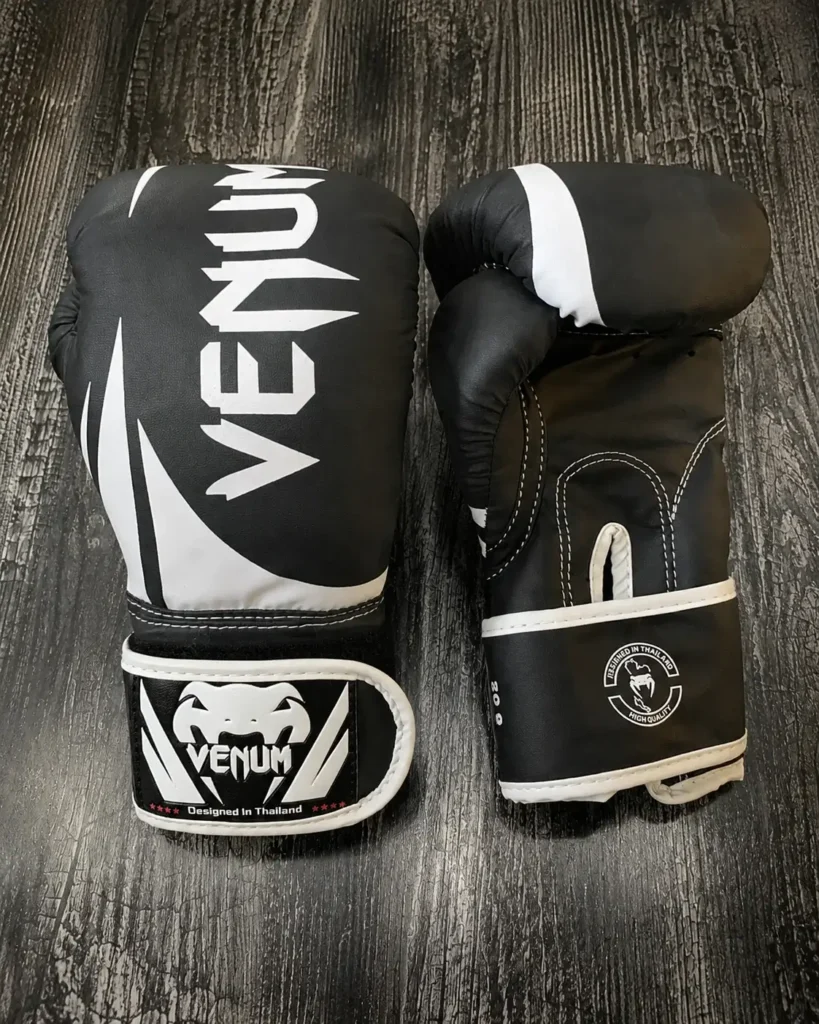
Best for: Overall beginner training
Available sizes: 4 oz, 6 oz and 8 oz
The Venum Challenger 2.0 is the most balanced beginner option. It gives younger children a proper youth-sized glove without feeling like a lightly padded toy.
The inner shape is curved for smaller hands, while the 4 oz, 6 oz and 8 oz range covers young beginners through to older children who need a little more glove weight.
Triple-density foam spreads impact across the padded area instead of placing all the pressure over the knuckles. It makes the gloves a good match for focus mitts, light bag drills and general boxing or kickboxing classes.
The padding feels better than what you normally get with low-cost children’s sets, but the glove is still light enough for a child to hold a guard without tiring too early.
The large hook-and-loop strap is easy for a child to manage. It closes firmly around the wrist and offers enough adjustment for hand wraps. The attached thumb keeps the thumb close to the fist, and the inner mesh helps heat and moisture leave the glove during longer sessions.
The PU shell is easy to wipe clean and should cope well with normal beginner use. It is not as hard-wearing as a well-made leather shell, especially when used several times each week on a firm heavy bag.
The wrist support is good for a standard youth glove, but it is not as firm as the splinted wrist on the Hayabusa S4. These are also general training gloves rather than dedicated sparring gloves. Read full review here.
Pros: Good size range, thick multi-layer padding, secure wrist strap, attached thumb, breathable inner mesh, easy for children to use
Cons: Synthetic shell wear with heavy use, not made for sparring
2. RDX Kids Boxing Gloves
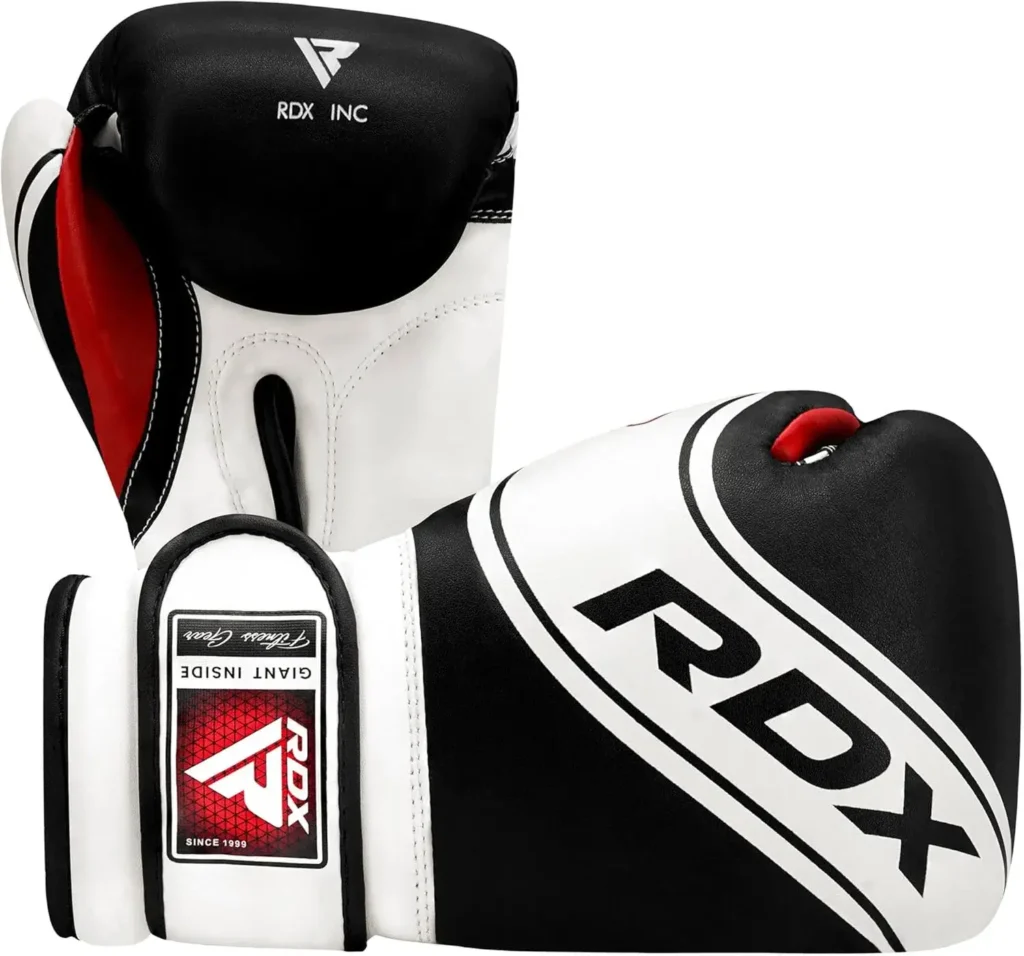
Best for: Budget-conscious beginners and younger children
Available sizes: 4 oz and 6 oz
The RDX Kids Boxing Gloves give parents a low-cost option without dropping to the thin padding found in many children’s boxing sets.
The 4 oz and 6 oz sizes make them useful for small hands, early boxing classes, kickboxing drills, focus mitts and controlled bag work.
The glove uses a synthetic Maya Hide shell rather than animal leather. It has a firmer feel than cheap vinyl and is simple to wipe after class. Gel and foam layers sit over the striking area to reduce the sharp feeling that can come from hitting pads or a bag.
The design also holds the thumb close to the fist, which is important for children who are still learning how to close their hands correctly.
The hook-and-loop closure is quick to open and close. It works well for younger children who need to put their own gloves on during class, although an adult may still need to tighten the second glove.
The moisture-managing lining helps with sweat, but the gloves still need to be opened and dried after every session.
The biggest strength is value. These feel and look like proper training gloves, not part of a toy boxing set.
Sizing needs care. Try them with wraps before using them on a bag. The 4 oz size suits very small hands, while the 6 oz gives more room and padding, but age alone should not decide the choice.
Pros: Strong value, good padding for the price, 4 oz and 6 oz options, easy closure, attached thumb, useful for pads and bag drills
Cons: Fit can feel small, no 8 oz option in this model, synthetic shell, should not be used for sparring without coach approval
3. Hayabusa S4 Youth Boxing Gloves
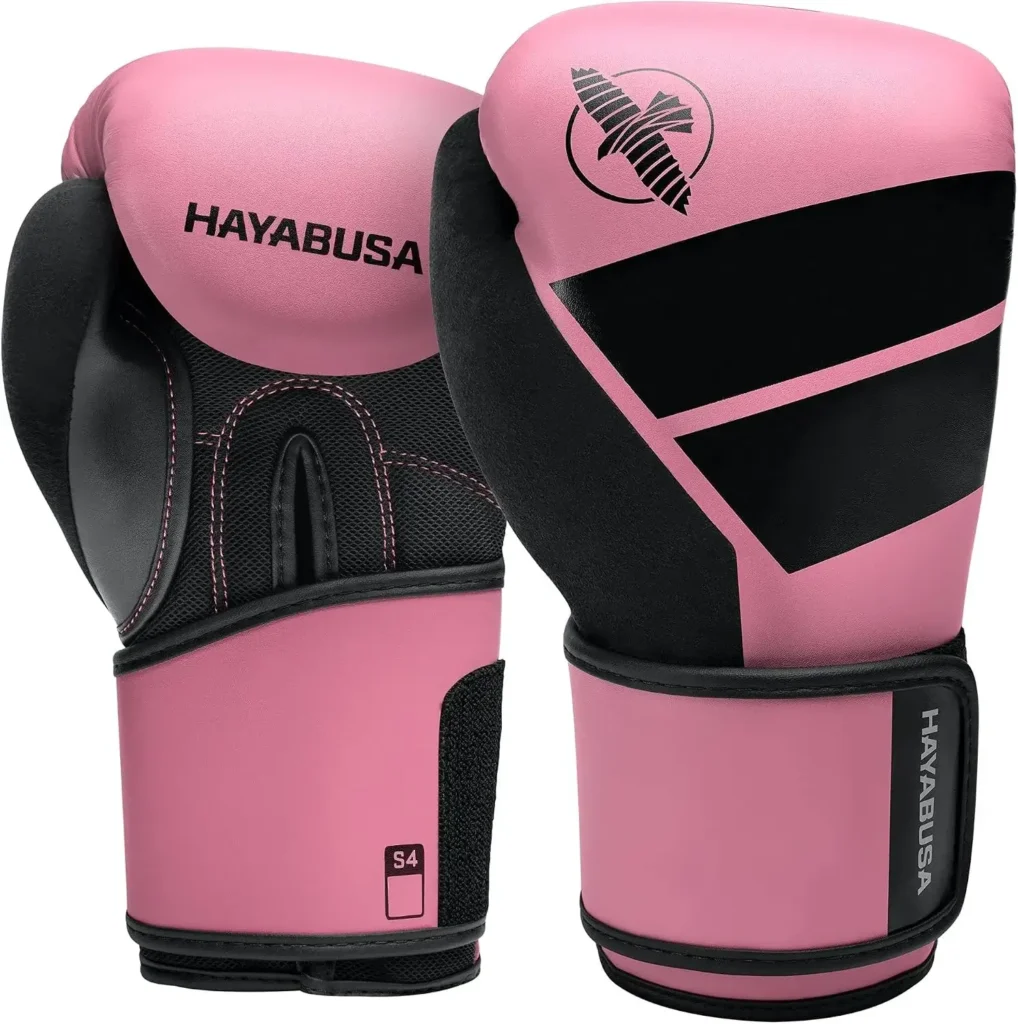
Best for: Wrist support and regular youth training
Available sizes: 6 oz and 8 oz
The Hayabusa S4 Youth is the strongest choice here for children who need extra wrist control. Many youth gloves simply add a strap to a small hand pocket. The S4 adds a foam splint that extends across the wrist joint, helping the hand and forearm stay in a straighter position during a punch.
That support is useful for beginners who are still learning not to bend their wrists on impact. It cannot correct poor form by itself, but it gives the wrist a firmer base than a basic cuff.
The single hook-and-loop strap pulls the glove close around the wrist without making it hard for a child to remove.
Injection-molded foam covers the knuckles. It has a consistent shape and does not leave obvious thin areas over the front of the fist. The inner hand pocket follows a natural fist position, with an attached thumb and a grip bar that helps the child close the hand properly.
The mesh palm improves airflow, while the smooth lining reduces rubbing around the fingers. There is also a soft thumb surface for wiping sweat during class. These small comfort features matter during longer boxing, kickboxing or martial arts sessions.
The 6 oz option suits smaller youth hands, while the 8 oz option gives older or larger children more padding. It is above basic starter gloves in price, so it makes most sense for a child who attends class regularly rather than one who is only trying boxing for a week or two.
Pros: Firm wrist structure, natural youth hand pocket, consistent knuckle foam, attached thumb, breathable palm, comfortable lining
Cons: Costs more than basic youth gloves, only sold in 6 oz and 8 oz, single strap rather than the T3 dual-strap system, not a dedicated sparring glove
4. Hayabusa T3 Kids Boxing Gloves
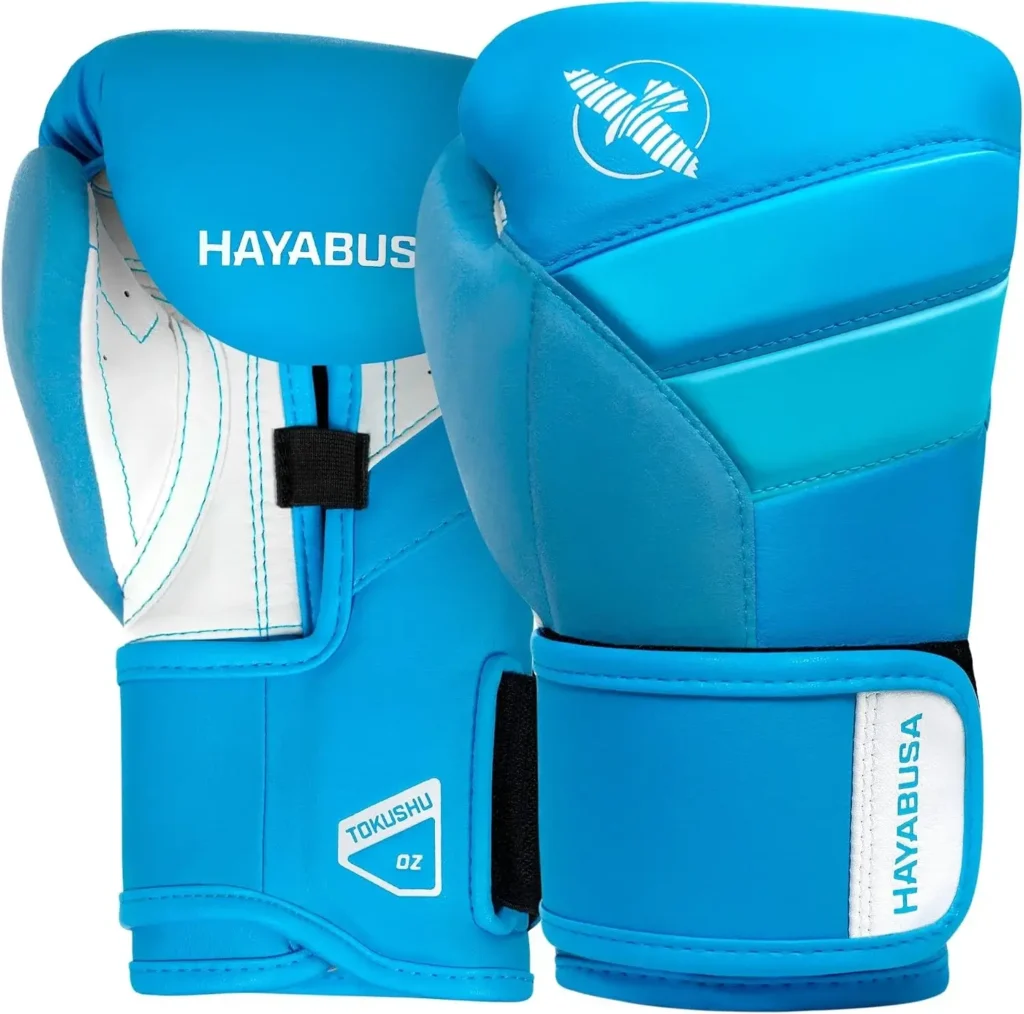
Best for: Frequent training and firm wrist support
Available sizes: 6 oz and 8 oz
Suggested age ranges: 6 oz for ages 6 to 10, 8 oz for ages 11 to 14
The Hayabusa T3 is a premium youth glove for children who train regularly and need more wrist control than a standard beginner glove can provide. Its biggest advantage is the wrist system.
Four padded splints run through the cuff, while two crossing straps secure the glove from both directions. This setup helps keep the hand and wrist in a straighter position when the child lands a punch.
The straps also give parents more control over the fit. You can tighten the lower section around the wrist, then use the second strap to secure the full cuff.
It works better than a single short strap when a child has narrow wrists or finds that normal youth gloves move during bag work. The glove should still be checked with wraps on, since the two straps cannot fix an inner hand pocket that is too large or too small.
Five layers of foam cover the knuckles. The padding feels thick and evenly formed, making the T3 suitable for pads, bag drills and regular boxing, Muay Thai or kickboxing classes.
The foam gives young hands more coverage than a cheap single-layer glove, but children still need correct punching form and suitable supervision.
The hand position is another strong point. An attached thumb keeps the thumb close to the fist, while the grip bar gives the fingers a clear place to close.
The shaped thumb section also reduces the awkward pulling feeling that can happen when a youth glove uses an adult-style hand pocket.
The outer shell uses synthetic Vylar material. It is made for repeated training and is easier to wipe clean than natural leather. A perforated palm allows some air to enter the glove, while the temperature-managing lining helps reduce the hot, sticky feeling that children often get during longer sessions. A soft microfiber area on the thumb gives the child a place to wipe sweat without using the main striking surface.
It’s high in price and makes sense for a child who trains several times a week and will benefit from the wrist structure, thick padding and stronger outer material.
Compared with the Hayabusa S4 Youth, the T3 has two wrist straps instead of one, four cuff splints and a more advanced foam setup. The S4 remains the better-value choice for normal beginner classes. The T3 is the better choice when wrist stability, repeated use and a close cuff fit matter more than price.
Pros: Excellent wrist support, two secure straps, five-layer knuckle padding, attached thumb, grip bar, breathable palm, comfortable lining, durable synthetic shell
Cons: High price, only available in 6 oz and 8 oz, may be more glove than an occasional beginner needs, coach approval is still needed for sparring
5. Venum Contender 1.5 XT Kids Boxing Gloves
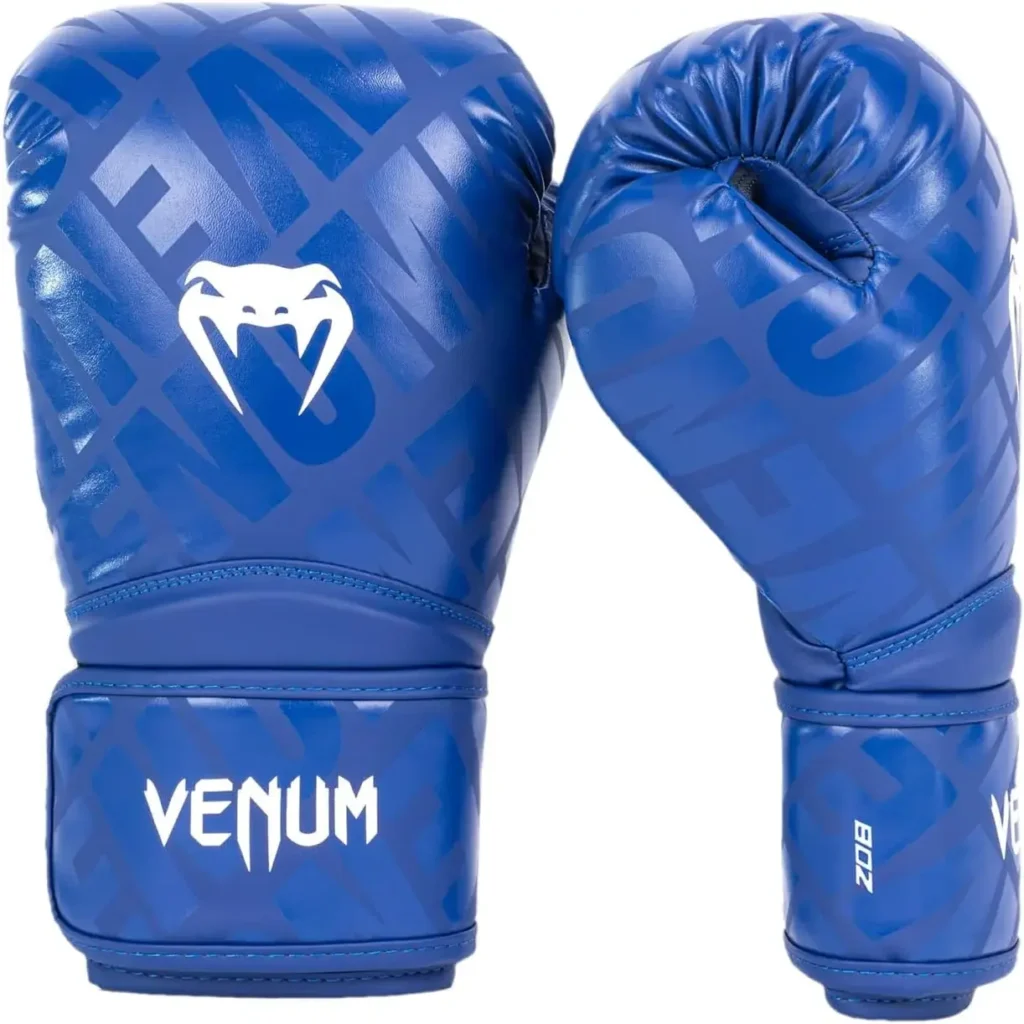
Best for: Regular beginner classes at a fair price
Available sizes: 4 oz, 6 oz and 8 oz
The Venum Contender 1.5 XT is a youth training glove for children who attend boxing, Muay Thai or kickboxing classes several times each week. There is a small hand pocket, multi-density foam, an attached thumb and a wide wrist strap.
The foam gives the front of the glove enough depth for mitt drills and moderate bag work. The 4 oz, 6 oz and 8 oz choices also make it easier to find a suitable starting point for different hand and body sizes.
The large hook-and-loop closure spreads pressure across the wrist and is simple to adjust. It also leaves room for wraps when the correct size is chosen. The attached thumb reduces unwanted thumb movement and helps the child keep a closed fist.
The synthetic shell keeps the glove light and easy to clean. It should handle several classes a week when used and dried correctly.
Compared with the Challenger 2.0, the Contender has a simpler build. It does not have the same breathable inner mesh or reinforced palm setup. Choose the Contender when price and basic function matter most. Choose the Challenger when ventilation and a slightly more complete training design are worth paying for.
Pros: Three youth sizes, solid padding, wide wrist strap, attached thumb, light synthetic shell, suitable for regular beginner classes
Cons: Simpler ventilation than the Challenger 2.0, synthetic material, fit varies between children, not a dedicated sparring model
6. Everlast Prospect 2 Youth Boxing Gloves
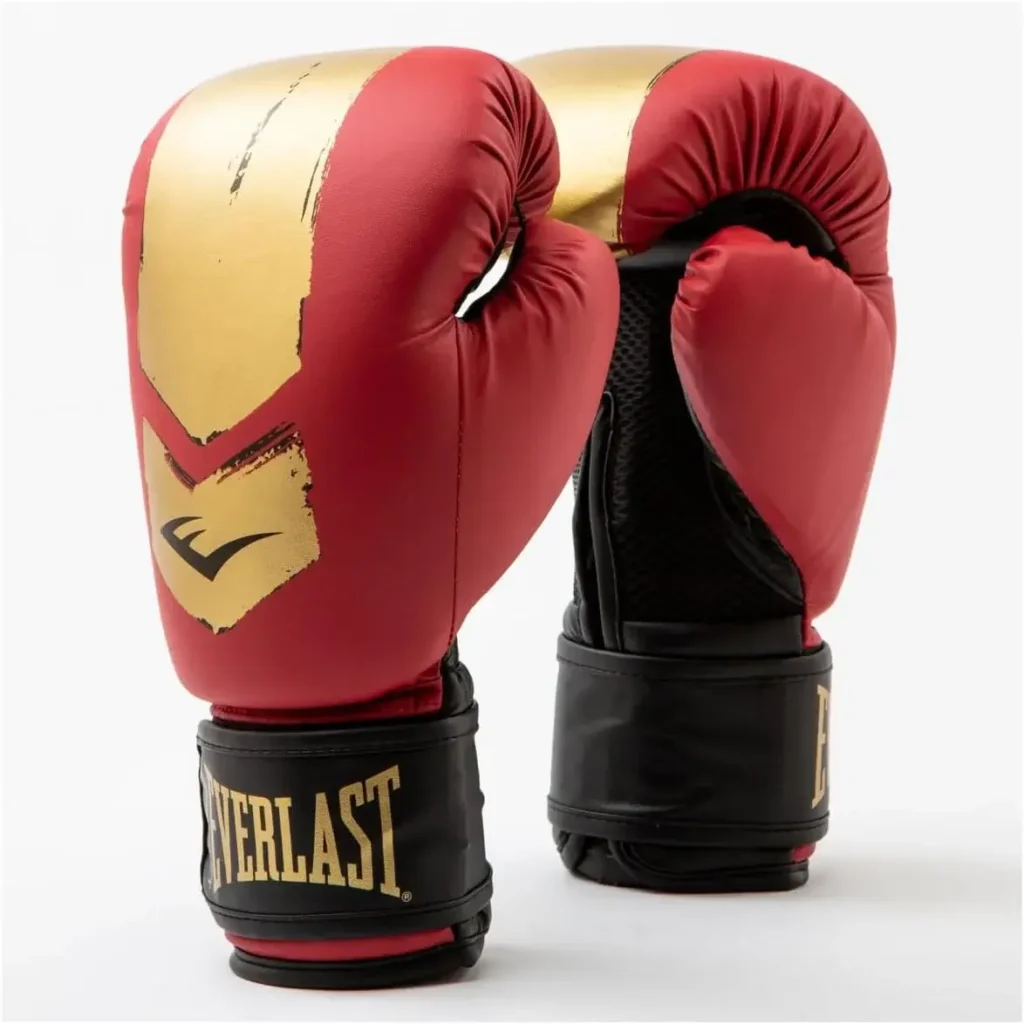
Best for: Children aged 8 to 12 who need an affordable 8 oz glove
Available size: 8 oz
The Everlast Prospect 2 is a focused option for older children rather than a full youth size range. It comes only in 8 oz and is aimed at children from about 8 to 12 years old.
The youth-shaped hand pocket is the main reason to choose it over a basic adult 8 oz glove. It keeps a smaller hand from moving too freely inside the glove. Multilayer foam protects the knuckles, while the thumb lock keeps the thumb near the fist.
A full wraparound wrist strap closes across the cuff and gives better adjustment than a small tab closure. The soft lining feels comfortable against the hand, and the ventilated mesh palm helps reduce trapped heat. These features make the Prospect 2 easy to use for mitts, light to moderate bag work and normal youth classes.
The fit is fairly compact. That is good when a child has narrow hands, but it can feel tight once wraps are added. Check the inner fit carefully.
The synthetic outer material keeps the price low. It should last well for beginner use when it is wiped and dried properly, but it will not have the same long-term shell strength as the all-leather Ringside glove.
Pros: Good price, youth-sized 8 oz fit, multilayer padding, full wrist strap, soft lining, ventilated palm, easy to put on
Cons: Only available in 8 oz, may feel tight with wraps, synthetic shell, unsuitable for many younger children, not a specialist sparring glove
7. Ringside Youth Safety Sparring Gloves
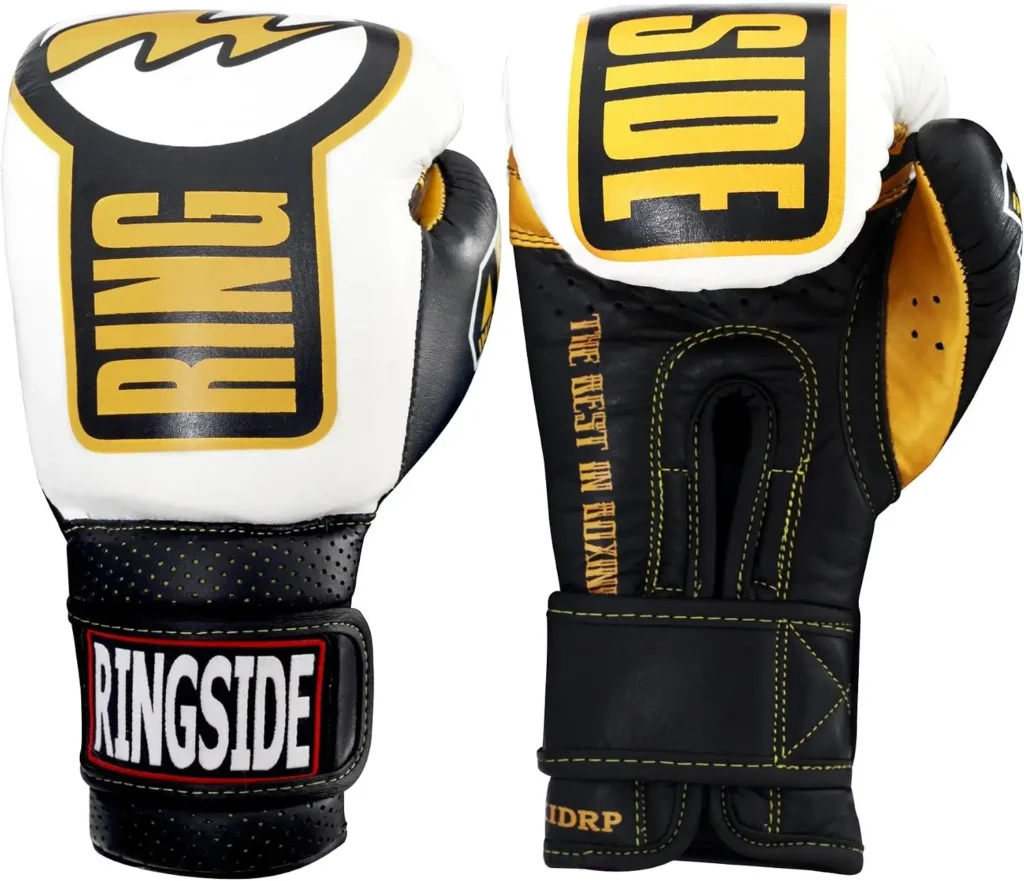
Best for: Serious youth sparring and parents who prefer leather
Available sizes: 10 oz and 12 oz
The Ringside Youth Safety Sparring Gloves are made for children who have moved beyond basic bag and mitt drills. They use a true youth hand pocket but come in 10 oz and 12 oz, giving young boxers more padding without forcing them into an oversized adult glove.
The all-leather shell is the best material for long-term use. It costs more than synthetic leather, but it should cope better with repeated gym sessions when it is cleaned and dried correctly. The full wraparound hook-and-loop cuff also gives a secure wrist fit and makes the gloves easier to manage than lace-up sparring gloves.
Four foam layers cover the striking area. The aim is to spread contact across more padding during partner work. An attached thumb keeps the thumb close to the glove, while holes in the palm and thumb allow some air to pass through.
These gloves make little sense for a toddler hitting soft mitts. They make much more sense for a child who has started controlled sparring and needs a compact glove with more padding.
Keep a separate bag glove when possible, since repeated heavy-bag use can harden or flatten sparring foam over time.
Pros: Genuine leather shell, youth-sized 10 oz and 12 oz options, four-layer padding, full wrist closure, attached thumb, made for sparring
Cons: Higher price, fit may be close with wraps, padding can feel firm, pair weight should be checked, excessive bag use may shorten foam life
8. Rival RS-FTR Future Sparring Gloves
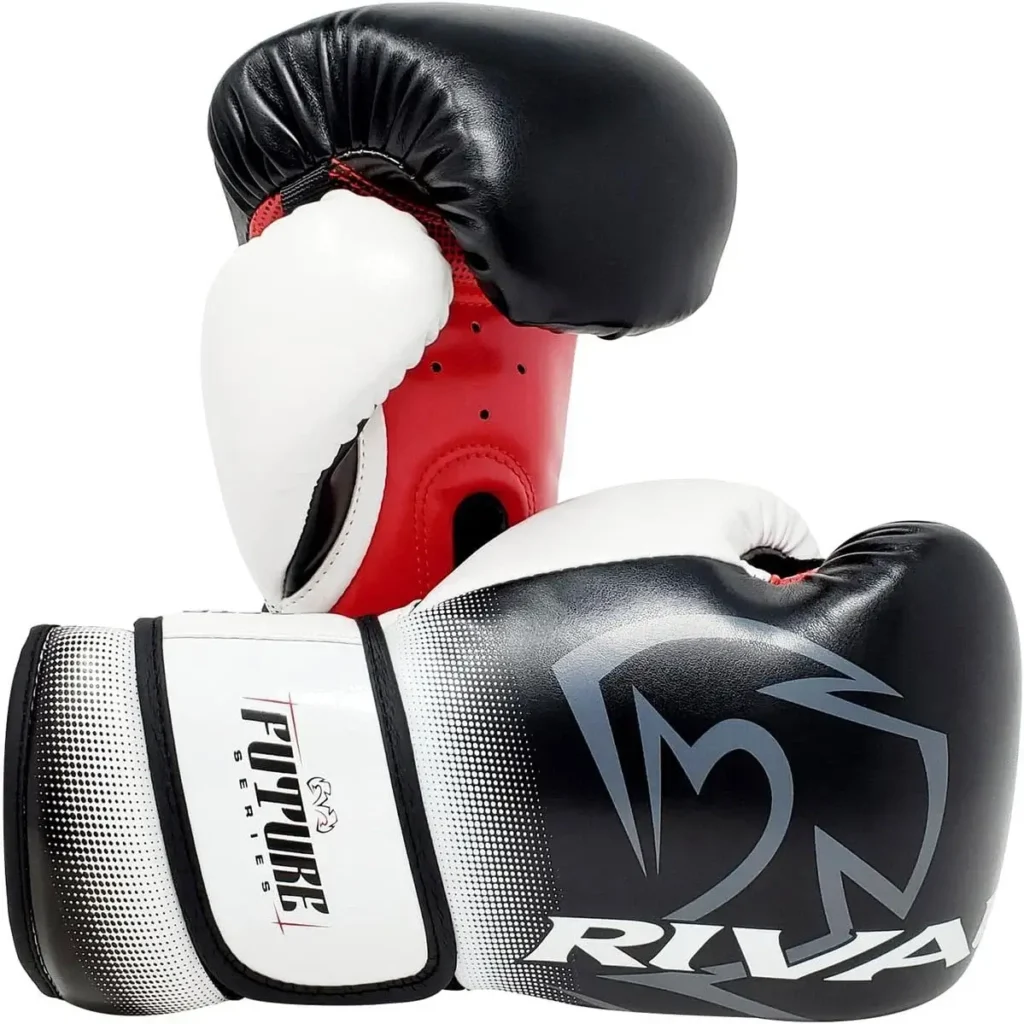
Best for: Compact youth sparring fit and lower-weight boxers
Available sizes: 8 oz and 10 oz
The Rival RS-FTR Future is the better choice when a child needs a true sparring glove but finds most adult gloves too large inside. Its shape is made for smaller hands and lighter boxers, so the glove does not hang heavily from a small wrist or leave excess space around the fist.
Moulded foam gives the glove an even striking surface. The padding holds its shape better than loose or uneven foam found in cheap gloves, while the PU outer shell keeps the glove lighter and less expensive than the all-leather Ringside model.
The angled wrist strap pulls across the cuff and closes with hook-and-loop material. It is easy to use and holds a smaller wrist more securely than a basic straight tab. The inner polyester lining feels smooth and helps the hand slide into place without the fingers catching.
This glove is built for sparring, so it is the better pick over the Rival youth bag models when partner work is the main need. Do not confuse it with the RB-FTR1 or RB-FTR2, which are bag gloves.
The 8 oz and 10 oz range suits younger or lighter boxers, but it may not meet a gym that requires 12 oz or more for youth sparring. Ask the coach before ordering.
Pros: Compact youth hand pocket, clear weight and hand-size chart, even molded foam, secure angled strap, easy to put on, made for sparring
Cons: Only 8 oz and 10 oz, synthetic outer shell, may not meet gyms that require heavier sparring gloves
Are Kids Boxing Gloves Different from Adult Gloves?
Yes. A youth glove should have a smaller hand pocket, shorter finger space and a wrist closure that can secure a smaller wrist.
Boxing gloves are usually sold by total weight in ounces, not by hand size in the way shoes are sold by length. Two 8 oz gloves from different brands can feel quite different inside.
Use hand circumference as part of sizing, and follow youth charts that combine body weight, hand circumference and glove weight.
A youth glove is usually the better first choice when:
- The child’s fingers do not reach the correct position in a small adult glove.
- The wrist strap closes but still leaves the wrist loose.
- The glove turns or shifts during a punch.
- The child has to fight the glove to close a fist.
- The glove feels front-heavy and affects basic form.
An older or larger child may fit a compact adult glove, but that should be confirmed by trying it on with wraps and having a coach check the fit.
How to Measure a Child’s Hand for Boxing Gloves
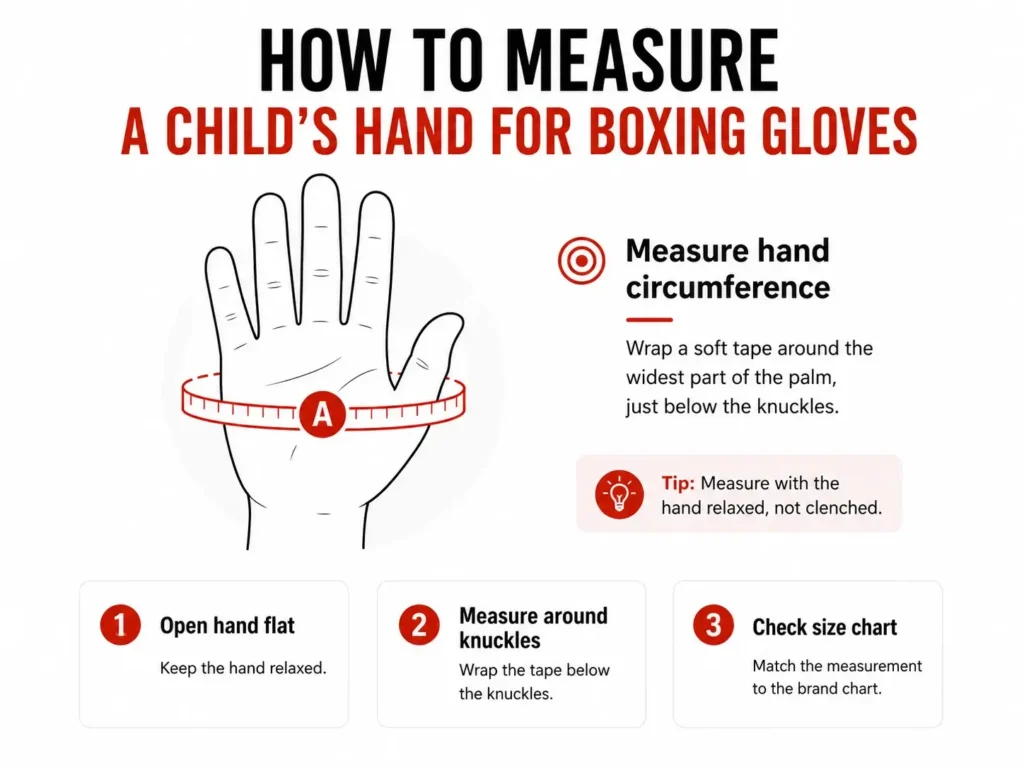
Use a soft tape measure and take the measurement around the palm across the knuckles. Keep the thumb outside the tape. Measure the dominant hand, since it may be slightly larger.
Write down four things:
- Hand circumference.
- Body weight.
- Age.
- Training type, such as pads, bag work, sparring or competition.
Then check the exact model’s chart. Do not assume another glove from the same brand will fit in the same way.
The At-Home Fit Check
Try the gloves with the hand wraps your child will use in class. A good fit should pass these checks:
- The fingers sit naturally without being crushed at the tips.
- The child can close a fist without pain or a forced grip.
- The knuckles sit behind the main padded area.
- The attached thumb follows the child’s thumb without pulling it outward.
- The wrist strap closes firmly and the glove does not rotate.
- There is no numbness, tingling or loss of colour in the fingers.
- The hand does not slide out when the strap is fastened.
- There is enough room for wraps, but no empty space around the fist.
New gloves can feel firm, but they should not hurt. A child should never be told to train through pinching, numbness or wrist movement.
Training Gloves, Bag Gloves, Sparring Gloves and Competition Gloves
Training Gloves
Training gloves are the simplest choice for a beginner who does pads, light bag work and general drills. They offer a middle ground between a firm bag glove and a softer sparring glove.
A training glove is not automatically suitable for sparring. The coach needs to check its padding, surface and weight.
Bag Gloves
Bag gloves are made for bags and pads. Some use firmer foam to give a more direct feel. Rival youth Future bag gloves are for smaller hands and bag use.
A child who trains on a punching bag needs proper instruction. Even a well-padded glove cannot correct a bent wrist or poor punch placement.
Sparring Gloves
Sparring gloves need enough padding and a surface that the coach accepts for partner work. They also need a secure wrist and no exposed hard edges.
Do not let children spar in bag gloves, worn-out gloves or a cheap starter glove that a coach has not checked.
Competition Gloves
Competition gloves are controlled by the event rules. The glove weight may depend on body weight, and the brand may need approval. England Boxing’s 2026 rules require 10 oz or 12 oz gloves based on body weight and list approved brands for bouts.
Competition gloves are not the pair to buy first for a child who is only learning stance and pad work.
MMA Gloves
Open-palm MMA gloves are not a replacement for boxing gloves. They expose more of the fingers and carry far less padded coverage over the hand. Use the glove type set by the class.
Muay Thai and Kickboxing Gloves for Kids
Many youth boxing gloves are also sold for kickboxing and Muay Thai. Hayabusa S4 youth glove is for boxing, kickboxing, Muay Thai and other striking classes, while Everlast Prospect 2 is good for boxing, kickboxing, MMA and martial arts training.
Muay Thai gloves can have a different cuff and palm feel because the sport includes clinch work.
Hook-and-Loop or Lace-Up Gloves for Kids?
For most children, hook-and-loop gloves are the practical choice. They are quicker to put on, easier to remove and can be tightened without another person tying laces.
Lace-up gloves can give a close wrist fit, but a child cannot safely tie them alone. They also need lace covers or tape for partner work so no hard or loose part can catch another person.
For regular children’s classes, a wide strap that closes firmly around a small wrist is usually the better option.
Features That Matter in Kids Boxing Gloves
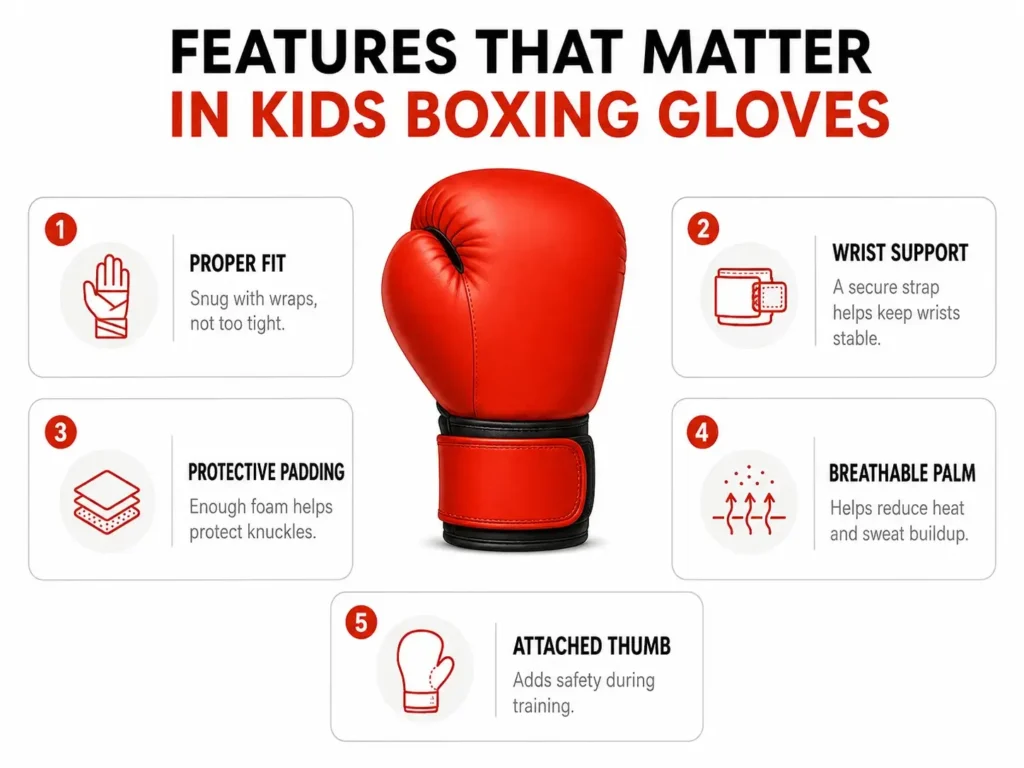
1. A Youth-Sized Hand Pocket
It matters more than bright graphics or a famous logo. The glove should hold the hand in place without crushing it.
2. Wrist Support
Look for a strap that sits around the wrist rather than only across the lower hand. The glove should resist twisting when the child gently moves the fist side to side.
3. Knuckle Padding
Padding should sit evenly over the knuckles, with no thin spots, lumps or movement inside the shell. More ounces do not guarantee better fit or better foam.
4. An Attached Thumb
An attached thumb limits how far the thumb can move away from the glove. It is common on current children’s models from Venum and Everlast.
5. A Grip Bar
A small grip bar can help the child close the fist without squeezing empty space. It should sit naturally under the fingers.
6. Breathable Palm and Comfortable Lining
Mesh or perforated palms can help moisture leave the glove, while a smooth lining reduces rubbing
7. Shell Material
Synthetic leather is common in beginner gloves because it costs less and is easy to wipe. Genuine leather often lasts longer with frequent use, but a good fit matters more than the material name.
8. Stitching and Strap Quality
Check the thumb seam, palm seam and edge of the wrist strap. Loose thread, open seams or a strap that lifts during use are reasons to return the glove.
Do Kids Need Hand Wraps?
For bag work, pads, sparring and competition, hand wraps are a sensible part of the setup. They add support around the hand and wrist, absorb sweat and help the glove fit more consistently.
Use youth-length wraps and learn the method from the coach. Wraps should feel secure, not tight enough to cause numbness or color change.
Wash wraps after use and let them dry fully before putting them back in the gym bag.
Kids Boxing Gloves, Pads and Mitt Sets
A glove and mitt set can be a simple home option for supervised practice. The adult holding the pads should know how to keep the target stable and should not ask the child to hit hard before form is sound.
Check the glove separately from the mitts. A set is poor value if the gloves do not fit. Everlast Prospect 2 youth kit is with 8 oz gloves, punch mitts and headgear, while Century youth glove bundles and bag sets are also well-reputed.
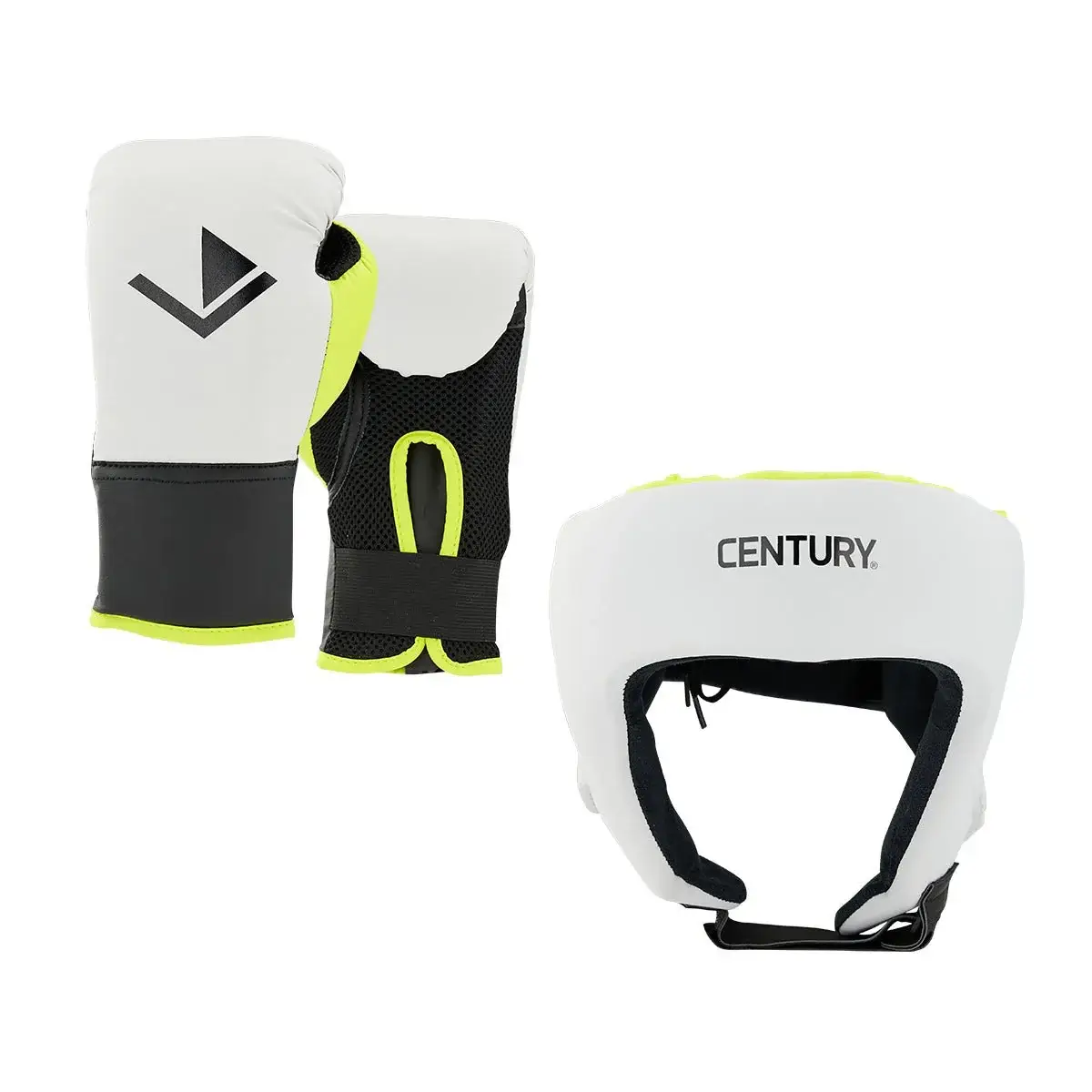
Century Youth Headgear Glove Combo
It gives young beginners child-sized headgear and boxing gloves in one set. The gloves have simple hook-and-loop closures, while Youth S/M and Youth L/XL options help parents find a closer fit. It works quite well for supervised drills.
How Much Should You Spend?
Do not pay only for a logo, but do not buy the cheapest pair without checking the inside, wrist and padding.
A good first pair should give you:
- A child-sized hand pocket.
- Even padding.
- A secure strap.
- An attached thumb.
- Clean stitching.
- A return option in case the fit is wrong.
Synthetic youth gloves are often enough for one or two beginner sessions each week. A child training several times a week may get better value from a higher-grade shell, stronger lining and more stable wrist design.
Bundles can save money when every item fits. They waste money when the gloves are poor and the extra pieces stay unused.
How to Clean Kids Boxing Gloves
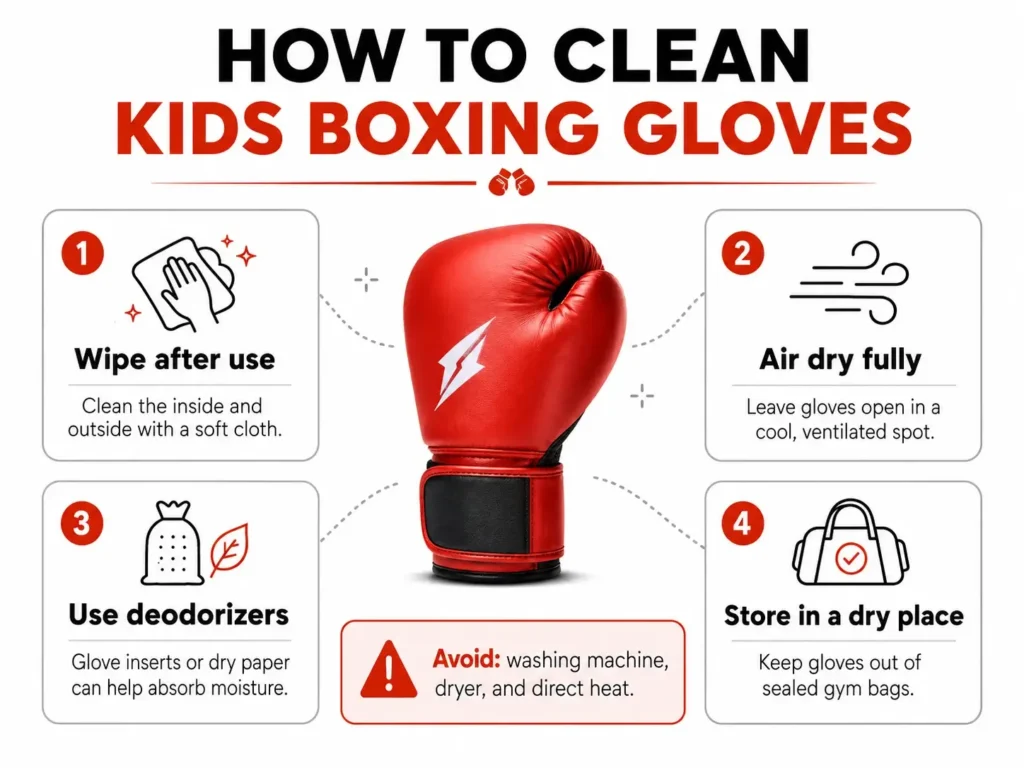
Clean gloves soon after each session:
- Open the wrist strap fully.
- Wipe the outer shell with a soft, slightly damp cloth.
- Wipe reachable parts of the lining without soaking the foam.
- Leave the gloves open in a dry place with moving air.
- Wash the hand wraps separately.
- Put the gloves back in the bag only when dry.
Wipe the glove exterior, air the gloves out and keep wraps clean.
Do not put boxing gloves in a washing machine or tumble dryer unless the manufacturer clearly says the model allows it. Do not place them on a radiator or use strong household chemicals. Heat and soaking can affect the shell, adhesive and foam.
Glove deodorisers can help manage moisture after training, but they do not replace drying and cleaning.
How to Stop Boxing Gloves Smelling
Odour usually starts when sweat stays trapped in a closed glove.
The simple routine is:
- Wear clean wraps.
- Air the gloves after every session.
- Never leave them zipped inside a gym bag overnight.
- Wipe the lining after heavy sessions.
- Use dry glove inserts only after wiping.
- Wash the gym bag from time to time.
Do not cover a strong smell with perfume spray. If the lining remains wet, sticky or damaged after drying, the glove may need replacing.
What Other Gear Does a Child Need?
For basic non-contact training, the usual starting items are gloves, wraps, sports clothing and suitable training shoes.
For sparring or competition, the club may also require a mouthguard, headguard, groin or chest protection, and equipment approved by its governing body.
Do not buy the full set before speaking to the coach. Clubs often have exact rules and may supply some competition equipment.
Final Checklist for Parents
Before paying, confirm:
- The gloves match the class type.
- The coach agrees with the glove weight.
- The brand chart matches the child’s hand and body weight.
- The fit has been checked with wraps.
- The wrist stays fixed.
- The child can form a fist without pain.
- The thumb sits naturally.
- The padding is even.
- The seller allows a fit return.
- The child understands that gloves do not make head contact harmless.
The best boxing gloves for kids are not simply the lightest, most expensive or most colourful pair. They are the pair that fits the child’s hands, suits the training and meets the coach’s rules.
Also Read:
Frequently Asked Questions
What size boxing gloves should a 4-year-old use?
A 4 oz youth glove is a common starting point, but only for age-suitable, supervised drills. The hand pocket must fit, and the coach should approve the glove.
What size boxing gloves should a 5-year-old use?
Many 5-year-olds start with 4 oz, while a larger child may fit 6 oz in some brands. Try the glove with wraps and check wrist security rather than relying on age alone.
Are 6 oz gloves good for kids?
They can suit many children aged around 6 to 8 for pads and general training. They may be too small for a larger child or wrong for sparring. Hayabusa and Venum both sell current youth models in 6 oz.
Can a child use adult boxing gloves?
Yes, but only when the hand pocket and wrist fit correctly. A light adult glove can still be too roomy for a child’s hand.
Do children need wraps under boxing gloves?
Wraps are advised for bags, pads, sparring and competition. They support the hand and wrist, absorb sweat and affect how the glove fits.
Can children use boxing gloves on a punching bag at home?
For a child using a punching bag, choose gloves made for training or bag work, add wraps, and keep the first sessions short and technical. The bag should suit the child’s size and should not be so heavy or hard that every punch stops the arm suddenly.
How often should children’s boxing gloves be cleaned?
Air and wipe them after every use. Wash wraps regularly and never leave damp gloves closed in a bag.