
Do your hands feel a step behind your eyes? Do you lose focus during training, miss quick movements, or feel slow when you need to react fast? It can happen to anyone because coordination, speed, and focus are not just natural skills, and you can train to improve them.
A reflex boxing ball helps build that mind-body connection. It teaches your eyes to track movement, your brain to respond quickly, and your hands to move with better timing.
At first, it may feel awkward. The ball may swing too fast, miss your target, or break your rhythm. But with the right steps, that messy start turns into smoother control, sharper reactions, and stronger focus.
Stay with me, and you will learn how to properly use a reflex ball, from basic setup and beginner drills to better timing, faster hand speed, and more controlled movement. Train safely, avoid common mistakes, and build a rhythm that feels natural and confident.
Table of Contents
What Is a Reflex Ball and Why Should You Use It?
A reflex ball is a small training tool used to improve hand-eye coordination, reaction time, timing, speed, and focus.
It usually has three basic parts: a lightweight ball, an elastic string, and a headband. You wear the headband, the ball hangs in front of you, and each punch sends it bouncing back in a new direction.
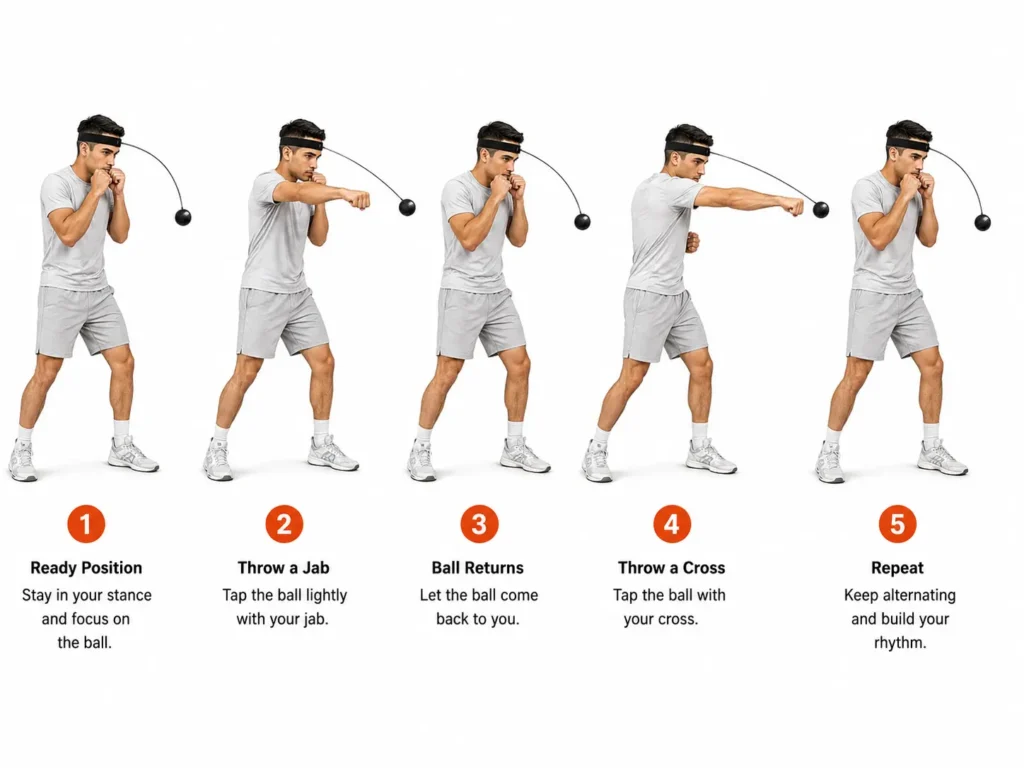
That sounds simple, but the ball does not move in a fixed pattern. It swings, rebounds, changes angle, and forces you to react quickly. Your eyes track the ball, your brain reads its movement, and your hands respond.
This is why reflex ball training is not only about punching a moving target, but teaching your brain and body to work together faster and with better control.
When you miss the ball, you are not failing. You are learning. Each miss gives your brain feedback. Where was the ball? Was your punch too early? Did your eyes lose track? Over time, this repeated practice helps improve timing, visual tracking, body awareness, and quick decision-making.
It also sharpens your reaction time, improve punch accuracy, build smoother rhythm, and increase hand speed. Because you are constantly moving, adjusting, and staying alert, it can also raise your heart rate and add a light cardio effect to your workout.
Also, reflex ball training demands focus. You cannot overthink or lose attention while the ball is coming back toward you. That makes it useful for building concentration and staying present.
You should try:
TEKXYZ Reflex Ball with Counter App
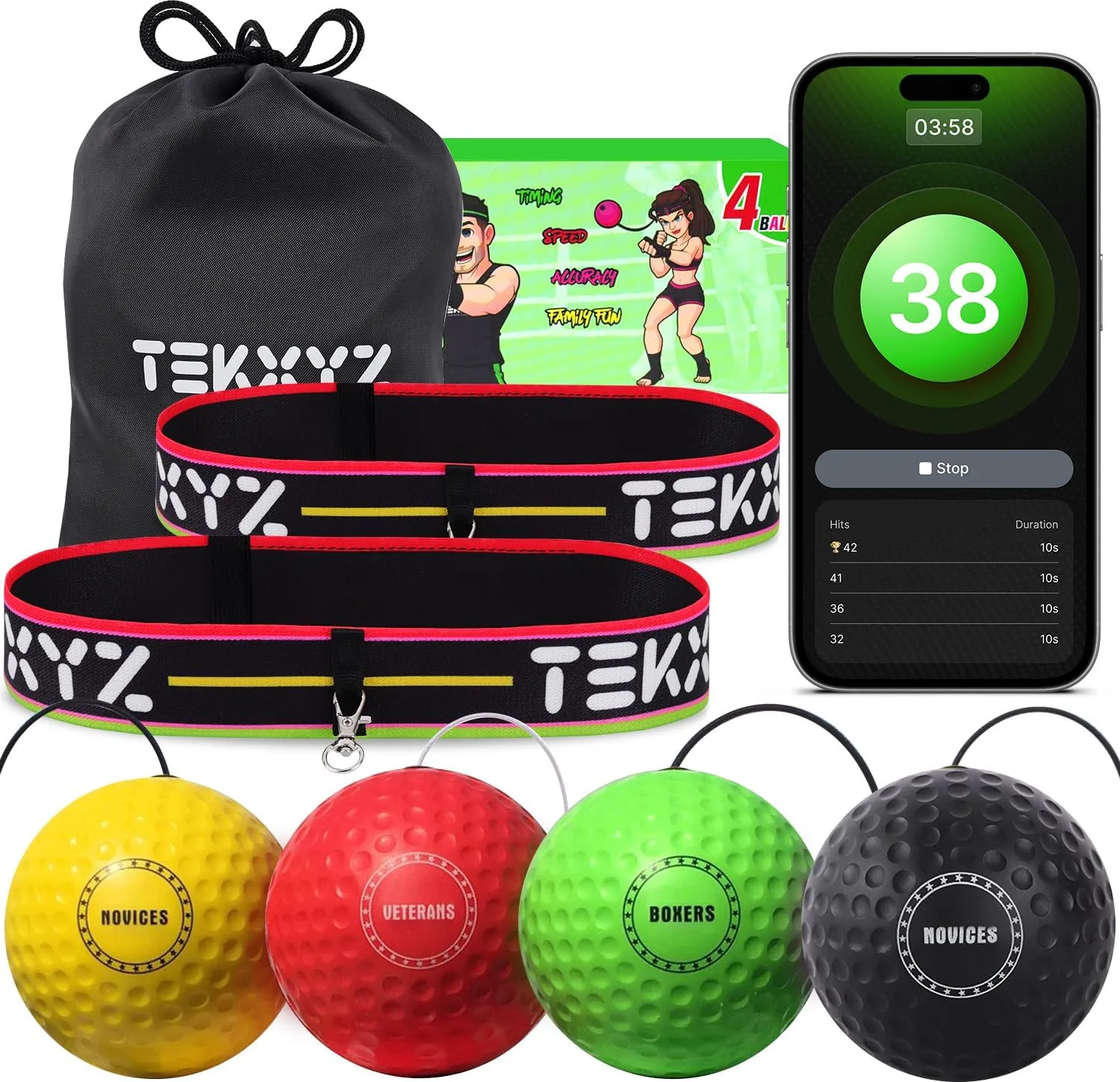
Features:
- Brand: TEKXYZ
- Material: Polyurethane (PU)
- Pack Includes: 4 Reflex Balls
- App Support: Punch Counter App + Online Community
- Age Range: Great for Kids, Teens, and Adults
The TEKXYZ reflex ball is a fun and simple way to improve hand-eye coordination, reaction speed, focus, and light fitness at home. With 4 soft reflex balls and a counter app, users can track hits, join challenges, and enjoy active family training without needing boxing gloves or wraps.
How to Use a Reflex Boxing Ball: Setup, Stance, and First Hits
Before you start hitting the reflex ball, get the setup right. A poor setup will make the ball feel too wild, too slow, or hard to control. You need a cleaner rebound, safer movement, and a better chance to build rhythm from the first session.
1. Adjust the String Length First
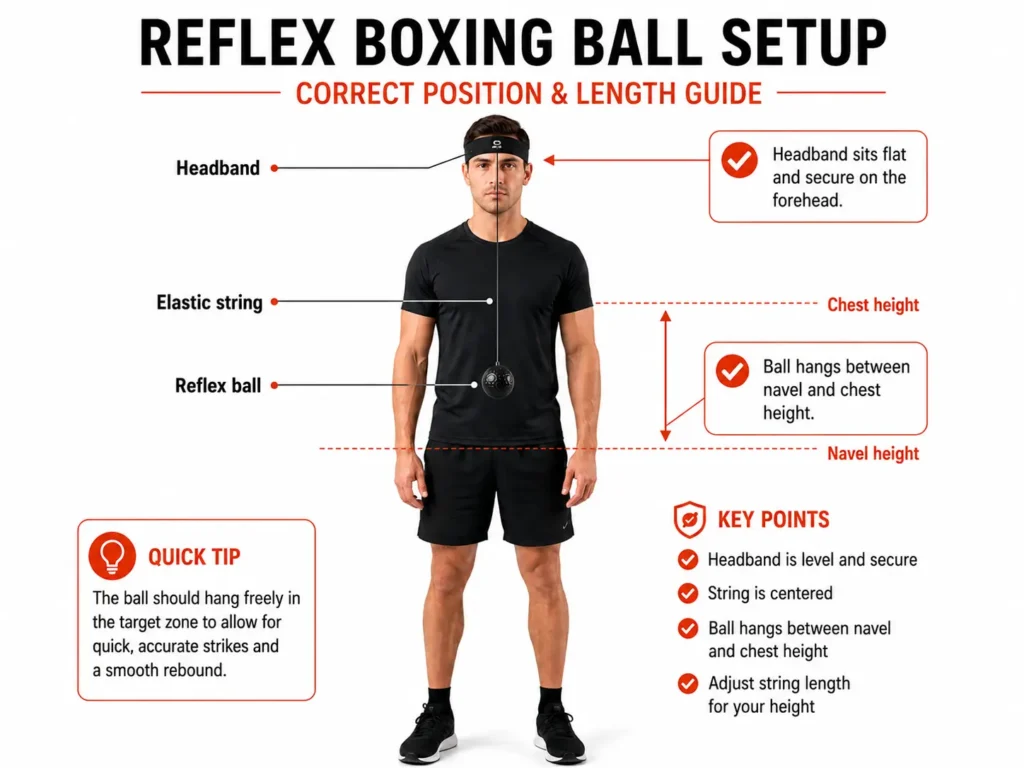
Start by wearing the headband and letting the ball hang naturally in front of you. As a simple starting point, the bottom of the ball should sit around your navel to nipple line. It gives most beginners enough time to see the ball, react, and make light contact.
Now test it. Tap the ball gently and watch how it comes back. If the ball drops too low, hits the ground, or feels lazy, shorten the string a little. If it comes back too fast and you cannot control it, lengthen the string slightly.
Do not chase the perfect length in one try. Small changes work best. Beginners usually do better with a slightly longer string because it gives more reaction time. Once your control improves, you can shorten the string for a faster rebound and a tougher drill.
2. Fit the Headband Properly
The headband should feel snug, not tight. It needs to sit securely on your forehead without slipping when you move. If it slides around, the ball will rebound at odd angles and break your rhythm. If it feels too tight, it can cause discomfort and make training annoying.
A good fit lets you focus on the ball, not the headband.
3. Start With a Stable Stance
Your stance controls everything. If your feet are too close, you will feel off balance. If your body is stiff, your punches will feel late. A proper boxing stance keeps you balanced, protected, and ready to move. Try shoulder-width foot placement, a lead foot forward, relaxed knees, hands up, elbows in, and chin tucked for better control.
Stand with your feet shoulder-width apart. Put one foot slightly forward. If you are right-handed, your left foot usually goes forward. Keep your knees slightly bent so your body can move with the ball instead of freezing.
Keep your core active, but do not tense your whole body. Your shoulders should stay relaxed. Tuck your chin slightly. Keep your back straight, but avoid standing tall and stiff like a statue.
Stay light on the balls of your feet. Do not plant your heels flat into the floor. You are not trying to jump around, but you should feel ready to shift, turn, or adjust at any moment.
4. Keep Your Hands in Guard
Hold both hands up in a loose guard. Keep your elbows down and your fists relaxed. Do not squeeze your fists hard before punching. That creates tension and slows you down.
After every strike, bring your hand back to guard. It matters because reflex ball training is not just about touching the ball, but learning clean contact, quick recovery, and steady control.

5. Start With Light Taps, Not Power Punches
The biggest beginner mistake is trying to hit the ball hard. Do not do that. The goal is not power but control.
Start with a light jab or straight punch. Use the front knuckle area to touch the ball. Keep your eyes locked on it as it comes toward you. Tap it just enough to send it away and let it rebound.
Consider it like guiding the ball, not fighting it. If you hit too hard, the ball becomes harder to read. If you tap with control, the rebound becomes easier to follow.
6. Bring Your Hand Back Quickly
After contact, return your hand to guard right away. Make it a habit and punch, touch, return. Punch, touch, return.
Do this slowly at first. Speed comes later. Your first goal is to create a repeatable pattern where the ball comes back and you are ready for it.
7. Alternate Hands to Build Rhythm
Once you can hit the ball with one hand, start alternating. Tap with the left, let it return, then tap with the right. Keep the movement small and relaxed.
At first, you may miss often. That is normal. Missing is part of the drill. Each miss teaches your eyes, brain, and hands to adjust. Research on reaction ball training has linked these drills with improvements in hand-eye coordination and reaction time, which is exactly what you are trying to build here.
8. Breathe With Each Punch
Do not hold your breath. That makes your shoulders tight and your arms heavy. Exhale lightly when you punch, then inhale as your hand returns. It keeps movement controlled and reduces extra tension.
Your rhythm should feel simple. see the ball, tap the ball, breathe, return to guard.
9. Focus on Control Before Speed
In the beginning, consistency matters more than speed. Try to make steady contact for 15 to 30 seconds at a time. If the ball gets wild, pause, reset your stance, and start again.
The reflex ball rewards patience. Start slow, stay relaxed, and let the bounce teach you. Once your timing improves, the speed will come naturally.
Intermediate to Advanced Reflex Ball Drills
Once you’ve got a solid rhythm with the basics, challenge your timing and movement. Start mixing more varied motions and skills that test your reflexes, movement, and focus.
1. Add More Punch Types
Hooks:
After straight punches feel comfortable, start throwing short hooks. Turn your torso slightly and hit the ball from the side as it swings by. It teaches you to read sideways motion and react with rotation.
Uppercuts:
Uppercuts lift the ball from underneath. As the ball drops, drive your fist up with your elbow in and wrist straight. It is a different plane than jabs or crosses and helps train vertical timing as well as power delivery.
Combining Punches:
Start chaining strikes. Simple combos like jab‑cross feel good. Then add hooks or uppercuts into the pattern, creating fluid sequences instead of single shots. Combinations help you adjust timing mid‑flow and keep the rebound predictable rather than random.
2. Work in Head Movement and Footwork
Move With the Ball:
Don’t just stand still. As the ball returns, let your head and body move with it. Small slips to either side or slight dips help your center of gravity stay balanced and simulate defensive moves you’d use against a real opponent. Slipping and weaving drills are standard in boxing because they help you evade incoming strikes while staying in position.
Pivot and Shift:
Add light footwork to your reflex drills. Pivot on your lead foot, shift your weight, step side to side, or adjust your stance as you punch. It connects your upper and lower body, forcing better coordination and balance.
3. Test Speed, Accuracy, and Endurance
Timed Rounds:
Use a simple timer or stopwatch during drills. Try sets of 2–3 minutes with short rest breaks in between. The structure mimics how real training is paced and builds your ability to focus under time pressure.
Accuracy Challenges:
Start aiming for specific parts of the ball: top, bottom, or side. The tiny focus on impact point trains your control and precision rather than random contact.
Extend Your Sessions:
Once shorter sets feel easy, increase the duration little by little. Longer rounds help build endurance, so you’re not just reacting well for a few seconds but staying consistent over time.
Try out:
YMX Ultimate Reflex Ball Set

Features:
- Brand: YMX Boxing
- Material: Soft Foam / Polyurethane PU
- App Support: Punch Counter App + Global Challenges
- Training Use: Boxing, MMA, Krav Maga, and Home Fitness
The YMX boxing reflex ball set is a fun and effective training kit for improving hand-eye coordination, reaction time, focus, and timing. With 4 different reflex balls, 2 adjustable headbands, and a counter app, it is great for beginners, families, boxing practice, MMA warm-ups, and daily home workouts.
Quick Tips for Better Reflex Ball Training
Keep Punches Straight
Tangled string often comes from sweeping or angled punches. Consider your fist and the ball lined up like a laser beam from punch to target. It helps keep the string from wrapping up. Reduce power and focus on clean hits with good recoil.
Watch the Ball with Your Eyes
Don’t watch your hand or look away after punching. Keep your eyes on the ball’s path so you can predict its return and meet it more consistently. Bigger, slower balls help beginners get this right.
Use a Mirror or Record Yourself
Training in front of a mirror or with a phone lets you catch posture issues you might not feel in the moment. You can see if your knees are stiff, if you’re leaning too far, or if your hands drop after impact.
Stay Light and Balanced
If you feel awkward, it’s usually tension or poor weight distribution. Stay light on the balls of your feet with a slight knee bend so movement flows with the ball, not against it.
Set Short Daily Sessions
Five to ten minutes a few times a day builds muscle memory faster than one long session. Short training bursts help you stay focused without burnout.
Experiment With Different Balls
Different ball sizes and strand length change the rebound speed. Beginners can start with soft, slow balls. More advanced users can move to smaller, faster balls to refine timing and precision.
FAQs
Does a reflex ball help with boxing?
Yes, reflex ball training can help with boxing by improving your timing, hand-eye coordination, and reaction speed. It forces your senses and muscles to work together quickly, which translates well to reactive movement in the ring.
Are boxing reflex balls good?
Reflex balls are a useful tool when used with other boxing drills. They sharpen reflexes and coordination and can be a fun and effective warm‑up or supplemental drill, but they do not replace traditional boxing training like sparring or bag work.
Can reflex balls replace sparring or mitt work?
No. Reflex balls are a conditioning and coordination tool. They help your speed and tracking, but real sparring and partner drills train things reflex balls can’t replicate, like timing with a live opponent.
Do you need gloves with a reflex ball?
You can train bare‑handed because most reflex balls are soft. But if you feel discomfort, light hand wraps or gloves can make sessions more comfortable