
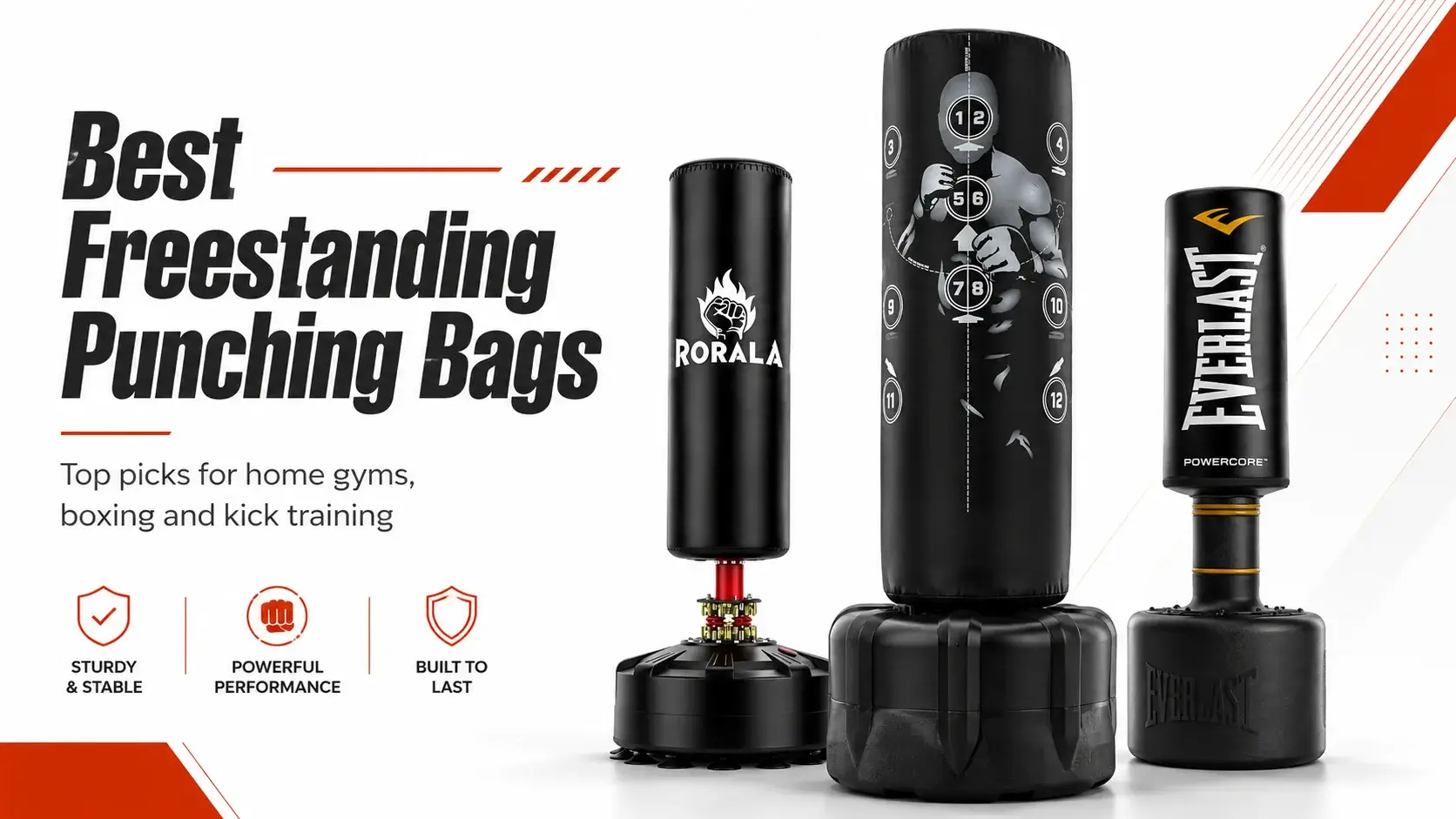
Finding a freestanding punching bag sounds simple until you throw a hard cross and watch the whole thing slide across the floor. A bag can feel solid at first, then start shifting once the pace picks up. On hardwood, it can get annoying. In an apartment, extra movement and noise can be an even bigger problem.
For this review, I assembled, filled, punched, and kicked some popular freestanding bags to see how they hold up in a real home gym. I paid close attention to stability, base movement, noise, striking feel, setup, and how each bag handled repeated combinations.
A good bag should let you focus on training, not stop every few minutes to drag it back into place. Some expensive models fell short in areas I expected them to handle well. A few cheaper bags did better than expected.
The guide breaks down what worked, what did not, and which bags make the most sense for different floors, spaces, and training styles.
Let’s start!
Key Takeaways
- Sand-filled bases usually give better stability than water-filled bases.
- Dripex and RORALA offer strong value for most home users.
- FITVEN works well for taller users and kick-focused training.
- Century Wavemaster XXL suits harder training and dedicated gym spaces.
- Ringside Elite is better for experienced strikers who want a larger, heavier setup.
- Check floor type, bag height, padded area, noise, and available space before buying.
Table of Contents
| Model | Filled Base Weight | Height | Cover Material | Best For |
|---|---|---|---|---|
| Century Wavemaster XXL | Up to 270 lb | 69″ fixed | 18 oz vinyl | Hard hitters, dedicated home gyms |
| FITVEN Freestanding Bag | Up to 205 lb with sand | 70″ fixed | Faux/PU leather | Tall users, punch and kick training |
| Dripex Freestanding Bag | About 182 lb with sand | 69″ fixed | 2 mm PU leather | Apartments, moderate home training |
| GIKPAL Freestanding Bag | About 180-182 lb depending on version | 70″ fixed | 2 mm PU leather | Beginners, cardio, lighter home use |
| RORALA Freestanding Bag | Up to 203 lb with sand | 70″ fixed | 3 mm PU leather | All-around home training |
| Everlast PowerCore | About 370 lb with sand, 250 lb with water | 54″-65″ adjustable | Synthetic outer shell | Boxing, cardio, adjustable-height use |
| Ringside Elite | Up to 270 lb | 76″ fixed | Synthetic leather | Experienced strikers, larger home gyms |
1. Century Wavemaster XXL
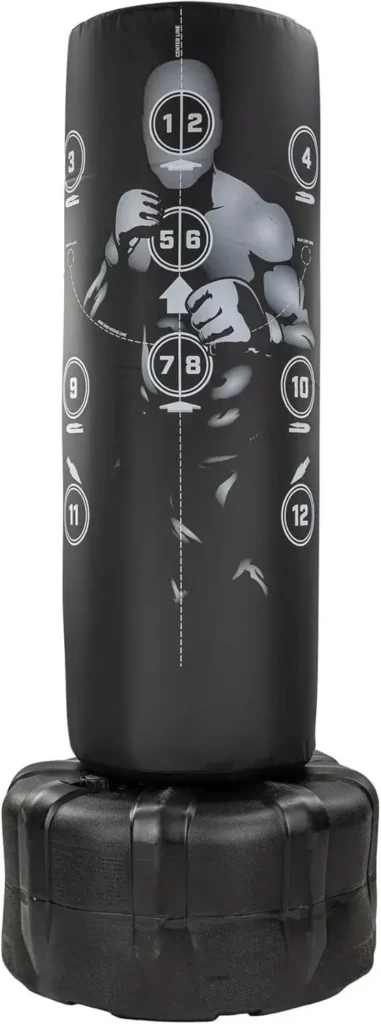
Verdict: The strongest all-around choice here for hard training, but it needs floor space and a decent budget.
The Wavemaster XXL feels like equipment you can train on seriously instead of something you have to protect from your own punches.
It stands 69″ tall, gives you a 52″ tall striking section, and uses dense foam under a vinyl cover. The base can reach about 270 lb when filled, so there is plenty of mass below the target.
On rubber gym flooring, the base barely moved during hard boxing combinations. Hardwood was different. Strong combinations pushed it roughly 2 to 3 inches, which is not terrible for a freestanding bag but still means the floor matters.
The base shape also does a good job resisting tip-up when kicks land higher on the bag. It moves, but it does not feel nervous under pressure.
The foam is firm. Punches land with a dense thud rather than sinking deeply into the surface. With gloves and wraps, the resistance feels good for repeated combinations. The 18″ diameter also gives you more target area than the narrow tube-style bags. High kicks have enough room, though the plastic base still limits how low you can strike compared with a long hanging Muay Thai bag.
Noise is more about impact than hardware. There are no exposed spring parts rattling beneath every combination, but hard shots still send a low thump through the floor.
After the initial test period, the vinyl picked up marks but did not crack or split, and the foam kept its shape. The bag is also easier to relocate than its filled weight suggests because Century designed the round base to tilt and roll. You still want to decide where it will live before filling it.
Pros: Very stable on rubber flooring, large striking area, firm padding, good height for punches and kicks, easy to roll once tilted.
Cons: Expensive, takes up more room than slimmer bags, can slide on smooth flooring.
Best for: Someone with a garage or dedicated workout room who hits hard and wants one bag for boxing, kickboxing, and Muay Thai drills.
Practical tip: Put it on dense rubber flooring before adding more fixes. The extra grip made a bigger difference in testing than trying to make an already heavy base even heavier.
2. FITVEN Freestanding Punching Bag
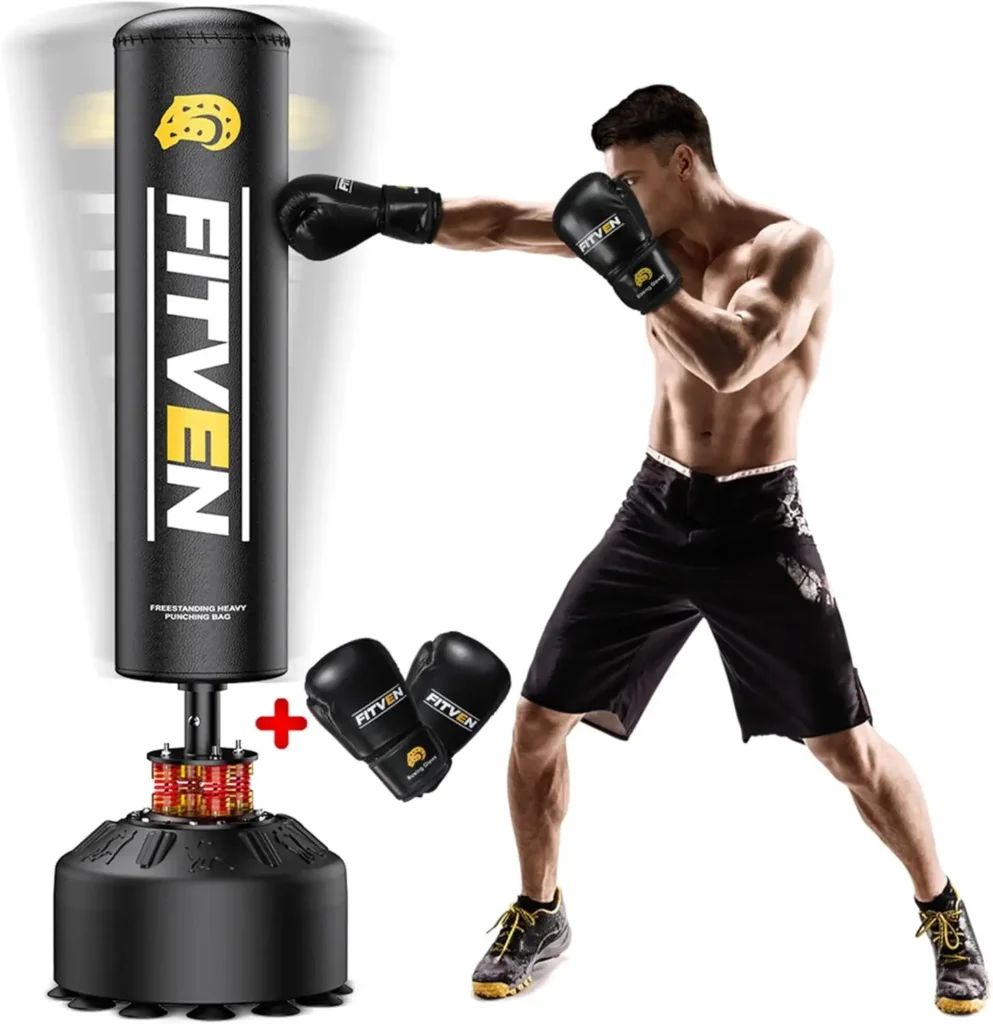
Verdict: A strong pick for kicks and full-body combinations, especially when you want a tall bag without paying Century prices.
It is a fixed 70″ bag for users from about 47″ to 73″ tall, and uses 12 suction cups and can reach about 205 lb when filled with sand. The water-filled weight is roughly 160 lb and sand is recommended for maximum stability.
The suction cups are made for smooth flooring, so carpet removes one of the main features of the base. The base holds better when every suction cup gets a clean contact point. Hard kicks can still make the whole unit shift, especially because you are striking a tall target mounted on a much narrower base. In harder kicking rounds, movement was more noticeable than on the Wavemaster.
The striking surface makes up for some of that. The tall body works well for moving between body punches, teeps, round kicks, and head-height strikes without constantly adjusting where you stand. The PU outer layer feels less slick than hard vinyl, and the EPE foam takes some sting out of repeated shots.
Four springs and dual absorbers give the bag more movement than the Century. That can feel good during combination work because the target reacts, but it also means you get more bounce after a hard strike.
You can remove the springs when you want less movement. The boxing gloves are also included, though I would treat those as starter gloves rather than the main reason to buy the bag.
Pros: 70″ overall height, useful for kicks, sand-filled base reaches about 205 lb, good target length, gloves included.
Cons: More rebound than some people will want, suction cups need a smooth floor, hard kicks can still shift it.
Best for: Taller users and anyone whose sessions include as many kicks as punches.
3. Dripex Freestanding Punching Bag
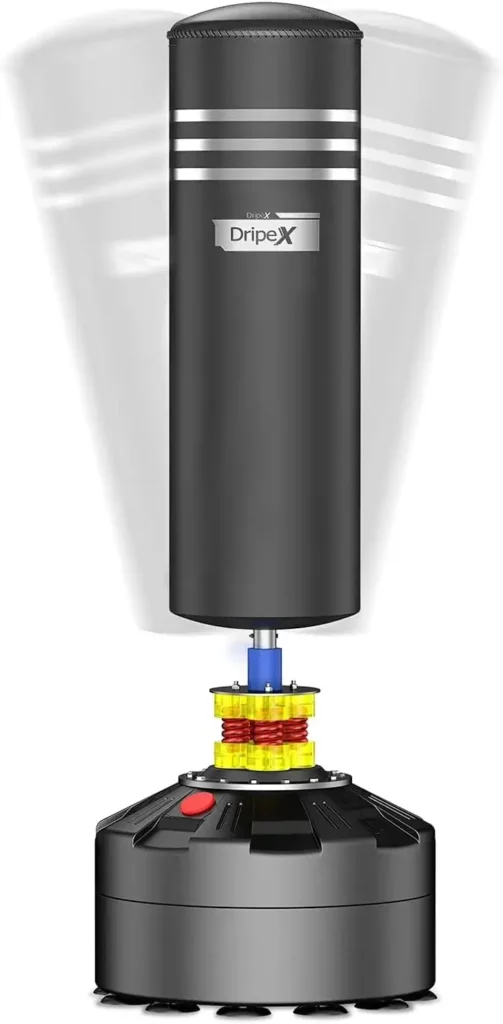
Verdict: One of the better choices for apartment training because it keeps movement and mechanical noise under control without costing much.
Dripex is 69″ freestanding bag, a roughly 19.7″ wide base, 12 suction cups, four springs, and dual TPU absorbers. The base is at about 182 lb with sand and 137 lb with water. Sand is the better choice when you care about stability.
The wide base gives it good resistance to tipping. In sessions, it stayed settled on carpet from its filled weight alone, though the suction cups obviously cannot grip carpet. On hard flooring, movement stayed around 1 to 2 inches, less than several other narrow freestanding bags.
Noise is where Dripex made the strongest case for itself. The recorded sound was 62 dB during the controlled impact test. That does not make punching quiet, but the sound was more of a dull thump than a sharp knock or mechanical rattle. The spring and absorber setup also keeps vibration from feeling harsh.
The padding sits in the middle. It is softer than the Wavemaster and easier on the hands during long cardio rounds. I like that for high-volume combinations. Someone training mainly for hard single-shot power may prefer a denser target.
After days of use, the PU shell stayed intact. The foam felt slightly softer, but there was no major dead spot or obvious breakdown.
The 69″ height gives you enough room for normal punches and higher kicks, though the actual padded tube is narrower than the Wavemaster XXL. Low kicks eventually run into the base area.
Pros: Quiet, limited slide, good tip resistance, affordable, useful shock system.
Cons: Suction cups do nothing on carpet, softer feel than heavier premium bags, narrow body gives less striking area.
Best for: Apartment users, beginners, and home workouts where controlling vibration matters as much as absorbing a hard shot.
4. GIKPAL Freestanding Punching Bag
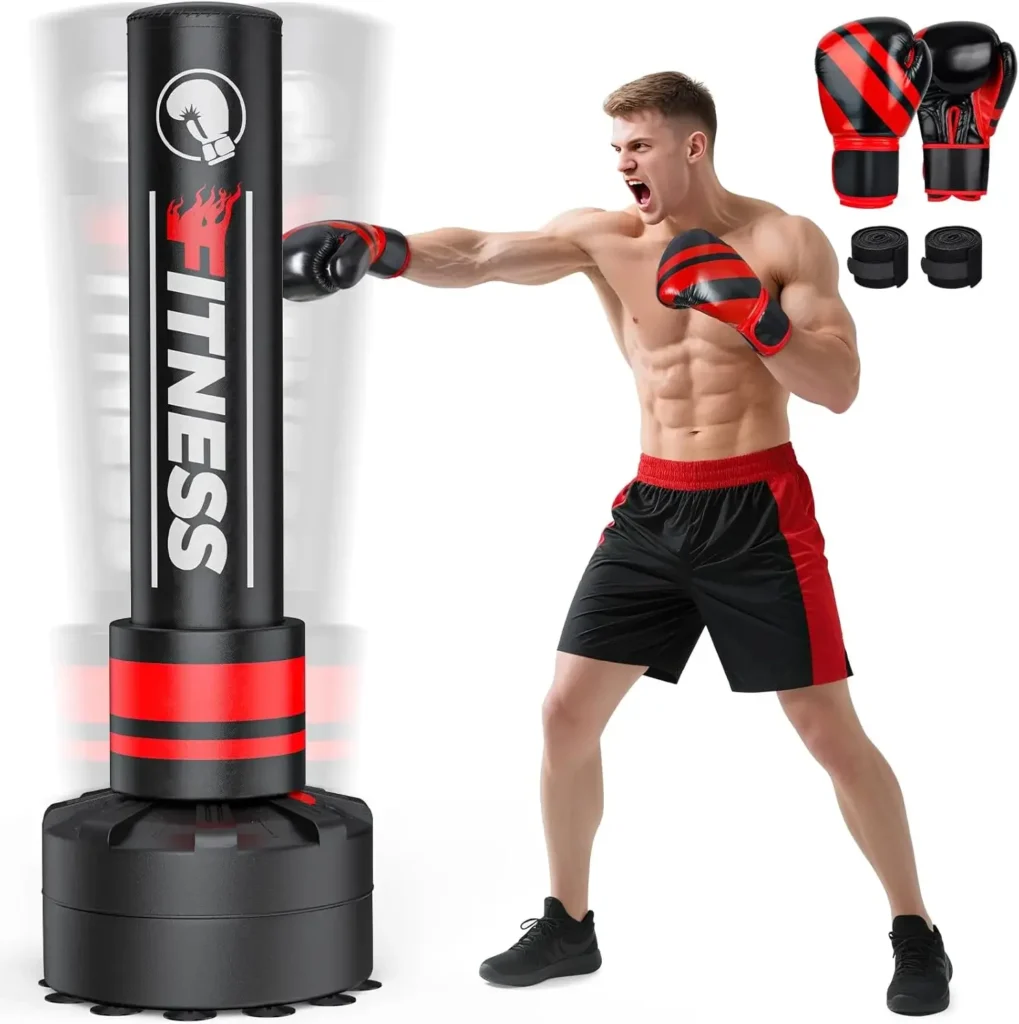
Verdict: A good entry-level setup at around $150, but I would buy it for cardio and technique before hard power work.
GIKPAL gives you a lot in the box for the money. The Pro set includes the 70″ bag, boxing gloves, and hand wraps. The target uses a 2 mm PU outer layer with EPE foam, while the base gets 12 suction cups for use on smooth floors.
It also skips metal springs. That matters in a bedroom or apartment because there is less hardware underneath the bag creating extra sound as it rocks back and forth.
Stability is more mixed. In testing, moderate straight punches were fine, especially on a grippy surface. Hard hooks and kicks made the bag travel more than the heavier models. On smooth hardwood, you may see roughly 4 to 6 inches of movement during harder rounds.
A rubber floor mat helps a lot.
Beginners may actually prefer it because punches do not meet the same dense resistance as the Wavemaster. The trade-off comes when you start throwing harder shots. The bag gives and moves more, so it does not provide the same planted heavy-bag feel.
Pros: Low price, gloves and wraps included, 70″ height, spring-free setup, comfortable padding.
Cons: More movement under hard strikes, less proven long-term record, filled-weight figures are not fully consistent.
Best for: Beginners, cardio sessions, technique work, and occasional home use.
5. RORALA Freestanding Punching Bag
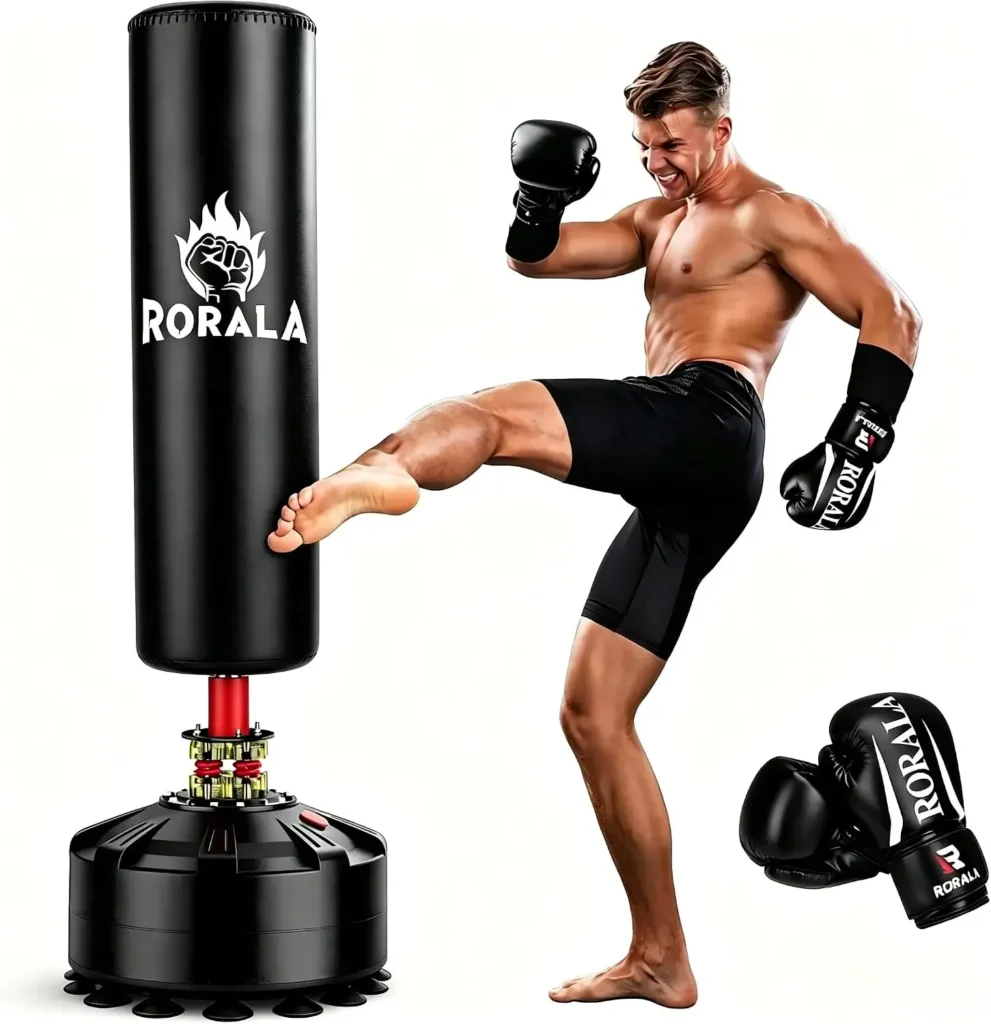
Verdict: The best value option in this group if you want firmer feedback than Dripex without spending much more.
RORALA costs around $130, yet the basic build is closer to the mid-range freestanding bags. It stands 70″ tall and uses a 3 mm PU shell over EPE foam with a steel support inside. The base has 12 suction cups and reaches up to about 203 lb with sand. A pair of 12 oz gloves comes with it.
The suction cups need smooth, clean flooring. They are useful on tile or similar surfaces but should not be treated as magic anchors. The filled base still does most of the work.
In floor test, RORALA stayed close to the Dripex for stability. Hard combinations created some movement, but it did not constantly force us to stop and reset the bag. Tip resistance was also good enough for normal low and body kicks.
The big difference from Dripex is the feel at impact. RORALA is firmer. Punches come back with clearer feedback instead of sinking into a softer target. I prefer that for boxing combinations because sloppy contact becomes easier to notice. It is still padded enough for normal glove work.
Four springs and two absorbers control the return. There is some mechanical movement, so it is not as quiet as a spring-free design, but the sound stayed reasonable during indoor testing. The springs can also be removed when you want less vibration.
The test period did not show tearing or major foam changes. That is encouraging, but it is still too early to make a multi-year durability claim.
Pros: Low price, 203 lb sand-filled base, firm striking feel, 70″ height, gloves included.
Cons: Suction cups depend on floor type, spring system adds movement.
Best for: Someone building a home gym on a budget who wants one bag for boxing, fitness rounds, and regular kicking.
6. Everlast PowerCore
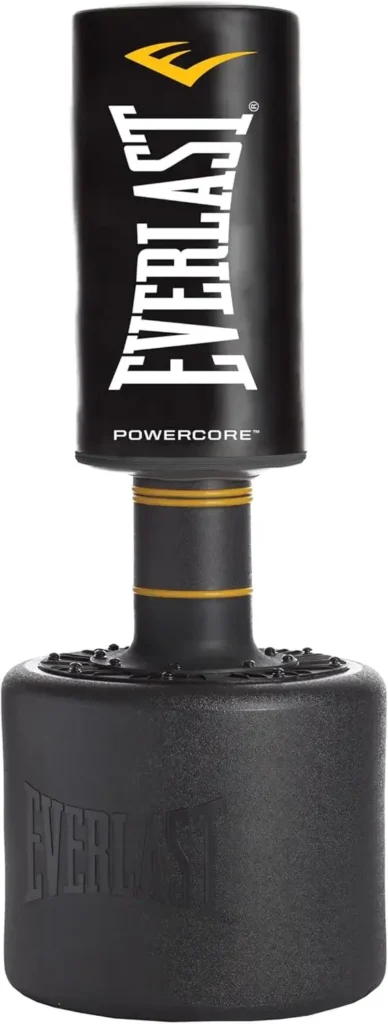
Verdict: Still useful for boxing and cardio, but its strongest feature is the adjustable height, not stability under serious power.
Everlast gets one important thing right that most of these bags do not. The PowerCore adjusts from 54″ to 65″. That makes it easier to share between users or lower the target for different drills.
The base is also heavier and about 250 lb with water and roughly 370 lb with sand, and recommends sand for better performance. The PowerCore uses a flexing connection and Power Transfer Ring, so the target moves under impact by design.
For normal jabs, crosses, hooks, and cardio combinations, that movement feels fine. Push the pace with heavier shots and the weaknesses become easier to notice. In smooth-floor test, the unit moved more than Dripex and RORALA, roughly 3 to 4 inches during harder combinations.
Sand makes a noticeable difference. Water is easier to put in and remove, but you may notice occasional leaking with water.
The 54″-65″ adjustment also means this is shorter at maximum height than every fixed 69″-76″ bag above. Taller kickboxers should keep that in mind.
Pros: 54″-65″ adjustment, very heavy sand-filled base, compact footprint, good for boxing and cardio.
Cons: Can move under power, shorter than full-height bags, water-fill issues.
Best for: Moderate boxing workouts, shared home gyms, and anyone who values adjustable height more than maximum striking area.
7. Ringside Elite Freestanding Bag
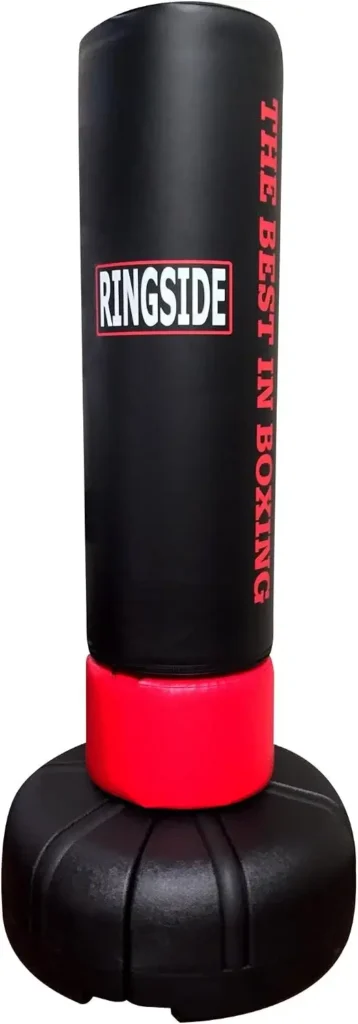
Verdict: The most serious bag here, but it only makes sense when you have the room and know you will use it hard.
The Ringside Elite is a different size class from the cheaper tube-style bags. It stands 76″ tall, uses a 32″ wide base, and has a spring-loaded target wrapped in synthetic leather over shock-absorbing foam.
The base holds up to 270 lb of sand or water. That 32″ footprint gives Ringside a stability advantage before you even fill it. In harder rounds, it handled full combinations and kicks with much less travel than the lighter bases. The unit still reacts to strikes because the upper section is spring loaded, but the base itself stays where you put it.
Ringside includes a removable foam collar around the spring area. Keeping it in place reduces movement. Removing it lets the target swing and return more freely. That gives you some control over how lively the bag feels without changing its height.
It matters during longer rounds. You get useful resistance from hooks and straight shots, while the taller target leaves plenty of room for kickboxing and MMA striking.
It is also big. A 32″ base takes up real floor space, and once you fill it, this is not something you will casually move between a bedroom and hallway after every workout.
Pros: 76″ height, wide 32″ base, strong stability, adjustable spring movement through the foam collar, good resistance for harder training.
Cons: Large footprint, heavy after filling, expensive at regular price, unnecessary for casual use.
Best for: Experienced boxers, kickboxers, MMA athletes, and serious home gyms that need a freestanding setup instead of a ceiling-mounted heavy bag.
How to Choose a Freestanding Punching Bag
A freestanding punching bag has to match your space before it matches your training style. Start with the base, floor type, total height, and padded area. Those four things decide if the bag feels useful at home or becomes something you keep pushing back into place.
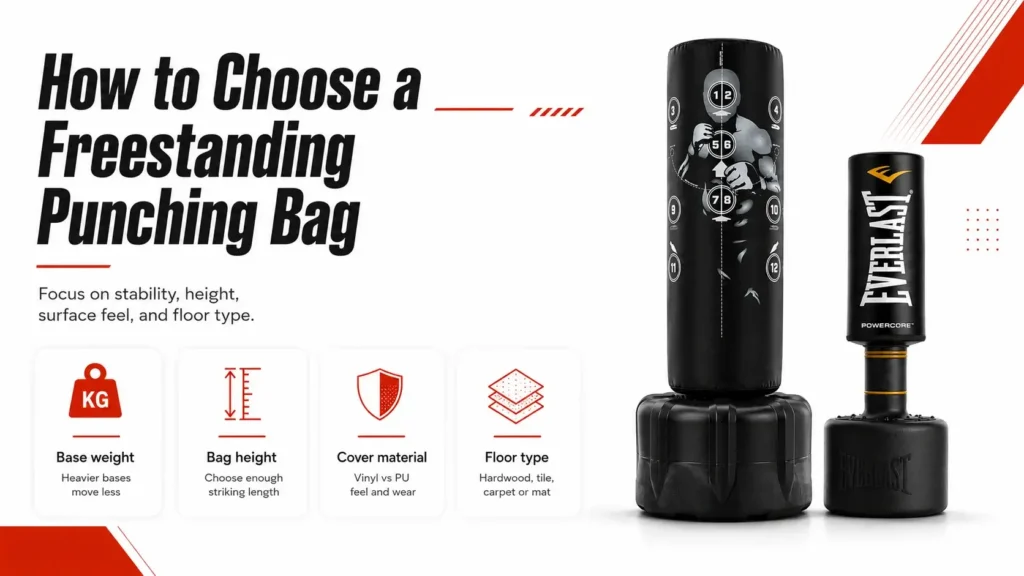
1. Base Type and Filling: Sand vs. Water
For stability, sand is usually the better fill.
The difference can be substantial. The Everlast PowerCore reaches about 370 lb with sand compared with 250 lb with water. FITVEN reaches about 205 lb with sand and 160 lb with water. Dripex comes in around 182 lb with sand and 137 lb with water. Sand is recommended when stability is the priority.
Water still has one clear benefit. It is much easier to add and remove. It matters when the bag needs to be relocated later. The trade-off is lower filled weight on many models and the possibility of leaks if the cap or base develops a problem.
Do not judge stability from base weight alone. Base width, shape, the connection between the base and bag, and the floor all matter.
Suction cups can help on smooth floors, but they need full contact with the surface. Choose sand when the bag will stay in one place. Water makes more sense when easy emptying matters more than maximum stability.
2. Height and Striking Surface
Do not confuse total bag height with adjustable height.
Most of the bags mentioned here are fixed. The Century Wavemaster XXL stands 69″, FITVEN about 70″, Dripex 69″, and Ringside Elite 76″. The Everlast PowerCore is the main exception, with adjustment from 54″ to 65″.
Also check the length of the padded section.
A 70″ product can still have a large section near the floor that you cannot comfortably use as a target. Century makes this easy to judge because the XXL has a 52″ padded bag section on top of its base.
For general punch-focused fitness, you do not necessarily need the tallest model. For workouts that include punches and kicks at different heights, a longer padded section gives you more usable target area.
Adjustability is useful when several people share the same bag, but a fixed bag has fewer moving parts to deal with.
3. Material and Padding Quality
Material affects feel, cleaning, and long-term wear.
The Century XXL uses 18 oz vinyl over high-density foam. Vinyl is simple to wipe clean and does not need the care associated with genuine leather.
FITVEN and Dripex use 2 mm PU striking surfaces with high-density EPE foam underneath. GIKPAL also uses a 2 mm PU surface on the versions checked.
Foam feel matters just as much as the cover. Firmer padding gives clearer feedback, while softer padding can feel more comfortable during longer fitness sessions.
Use proper gloves and hand protection when training. A bag surface that feels soft at first can still put a lot of stress on the hands after repeated contact.
4. Stability and Noise for Different Floors
Your floor can change how the same bag behaves.
Smooth hardwood or tile: Suction-cup models make the most sense here because the cups can form proper contact. FITVEN uses 12 suction cups and is designed for smooth surfaces such as tile and wood. Dripex uses the same basic approach.
Carpet: Suction cups lose their main benefit. Filled base weight and base shape become more important.
Rubber gym flooring: It is usually the easiest setup for a freestanding bag because the surface adds grip and can reduce some movement and vibration. Use a mat when bag movement creates extra noise.
Apartments: Think about vibration as much as sound. A bag may not sound especially loud in the room but can still send impact through the floor. A dense rubber mat is a sensible starting point, especially upstairs.
Do not pile loose weight plates or other objects on a base unless the product is designed for them. A stable setup should come from the filled base and suitable flooring.
5. Match the Bag to How You Train
For punch-focused home workouts, prioritize a firm padded section, controlled movement, and a footprint that fits your room. The Everlast PowerCore is compact and adjustable, while the Century XXL gives you a much larger target.
For punch and kick training, target length becomes more important. FITVEN stands about 70″, Century gives you a 52″ padded section, and Ringside reaches 76″ overall.
For general cardio and home fitness, you probably do not need the largest premium bag. Dripex, RORALA, FITVEN, and similar mid-priced models cover the basics without taking over the room.
For shared home use, adjustment can be useful. The PowerCore moves from 54″ to 65″, while most of the other models here stay at one height.
Freestanding vs. Hanging Heavy Bag: Which Is Better?
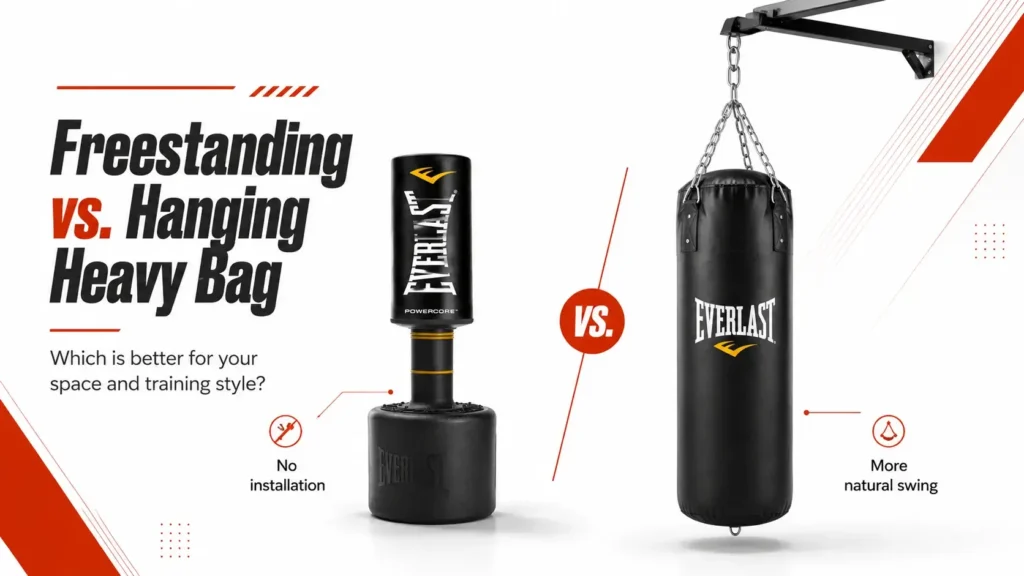
A hanging bag and a freestanding bag do not move the same way.
- A hanging heavy bag swings from above. That movement gives you a more traditional heavy-bag feel and lets the target move through space after impact. It also needs a proper ceiling mount, wall mount, or heavy-bag stand. Installation and permanent placement are two of the main drawbacks.
- A freestanding bag rocks from the bottom instead. Setup is simpler because there is no ceiling hardware, and the bag can usually be moved or stored more easily. That makes it practical for rentals, apartments, garages, and rooms where permanent mounting is not possible.
Hanging bags also need room to swing. Freestanding bags need floor space for the base, so neither option is automatically more compact.
Noise depends on the setup. Chains, swivels, stands, floor vibration, and wall or ceiling mounts can all transmit sound. A freestanding bag removes the ceiling hardware, but the base can still send vibration into the floor.
My Take
Choose a hanging heavy bag when you have a suitable mounting point, enough clearance, and prefer traditional bag movement. Choose freestanding when installation, rental restrictions, or room setup make a hanging bag impractical.
For most home setups, convenience is the main reason to buy freestanding. The better models give you a useful target without turning installation into a separate project.
Assembly and Maintenance Tips
A freestanding bag is simple to set up, but the order matters. Once a base holds 180 to 270 pounds of sand or water, fixing an assembly mistake becomes much harder.
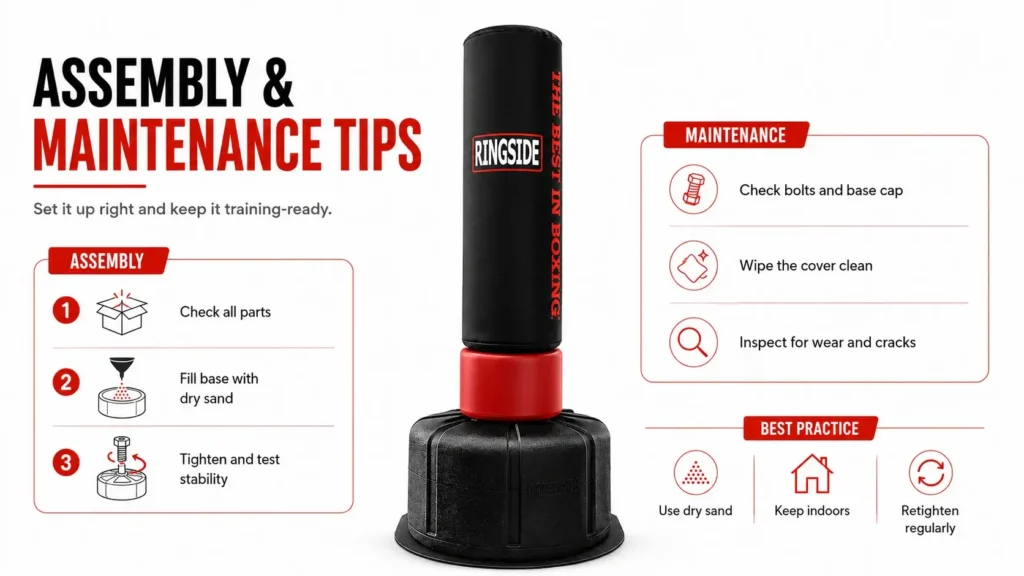
Step-by-Step Assembly Guide
1. Check every part before filling anything.
Lay out the base, bag section, pole or connector, hardware, suction cups, and tools. Some models arrive in two boxes, so make sure both packages are there before you start. FITVEN and Dripex both use separate bag and base sections.
2. Put the base where you plan to train.
Do this before adding sand. A Dripex base reaches about 182 lb with sand, FITVEN reaches about 205 lb, and the Ringside Elite holds up to 270 lb. Moving one afterward is possible, but it is not fun.
3. Install the base hardware and suction cups first, when required.
Suction cups need a clean, dry, smooth floor to work properly. Dripex limits them to smooth surfaces, and FITVEN is designed around smooth flooring such as tile and wood. Do not put a mat between suction cups and the floor, or you lose their main benefit.
4. Attach the support section exactly as the manual shows.
Seat the connectors fully and tighten the supplied hardware evenly. Do not force bolts that are sitting at an angle.
5. Fill the base.
Dry sand is usually the better choice when the bag will stay in one spot. Water is easier when you expect to empty or relocate it later.
6. Finish the upper assembly.
Attach the padded body, collars, springs, or covers required by your model. Height adjustment only applies to bags designed for it. The Everlast PowerCore adjusts from 54″ to 65″, while models such as the Century Wavemaster XXL and FITVEN are fixed height.
7. Check the whole unit before training.
Push the bag lightly from several directions. Check that the base sits flat, fasteners are secure, and no connector feels loose.
Maintenance Checklist
Before regular sessions
Check the connection between the bag and base. Look for loose fasteners, cracks around mounting points, damaged springs, or a cap that has started backing out.
On suction-cup models, wipe dirt and dust from both the cups and floor. Go for clean, dry suction cups and a smooth surface for proper grip.
Every few weeks
Run your hands over the striking surface and check for splits, worn seams, soft spots, or areas where the padding feels different.
Wipe the outside clean rather than letting sweat and dust build up. Inspect the base. Small cracks around connectors or fill openings deserve attention before they get worse.
For storage
Keep the bag in a dry indoor area unless its instructions clearly approve outdoor storage. The PowerCore is specifically not recommended for outside use.
Do not leave a water-filled base where the water could freeze. Expansion inside a sealed plastic base can put unnecessary pressure on it.
Also Read: Can a Punching Bag Build Muscle?
Frequently Asked Questions
Can I use water instead of sand in the base?
Yes, most models are designed for both. Sand usually gives better stability because it produces a heavier filled base. Water is easier to remove when you need to move the bag.
Which freestanding punching bag is best for kicks?
The Century Wavemaster XXL is one of the strongest choices because its padded section alone measures 52″ tall and 18″ wide, with a total height of 69″. That gives you a large target for working at different heights.
FITVEN is a cheaper 70″ option with a 205 lb sand-filled base. Ringside Elite is much larger at 76″ tall with a base that holds up to 270 lb, making it better suited to buyers who want a bigger, heavier setup.
Can I use a freestanding punching bag outdoors?
I would not store one outdoors unless that specific model permits it. Sun, temperature changes, moisture, and dirt add wear that an indoor home gym does not. A garage is a much better home than an exposed patio.
How do I stop a freestanding bag from sliding on hardwood?
First check how the base is meant to grip. Clean and dry the suction cups and put the base directly on a smooth floor. Adding a rubber mat underneath a suction-cup base can actually make things worse because the cups can no longer seal against the floor.
For a bag without suction cups, a grippy rubber gym surface can help reduce movement. Filling with sand can also make a major difference when the model supports it.
Is a freestanding bag good for boxing workouts?
Yes. It works well when you cannot install a hanging bag or need equipment that can be moved.
The main difference is movement. A hanging bag swings from its mounting point. A freestanding bag rocks from the base and may shift across the floor when struck hard.
For home fitness, combinations, accuracy work, and general boxing practice, a good freestanding bag is a practical option.
How long does a freestanding punching bag last?
There is no honest fixed number.
Life depends on construction, training frequency, impact level, storage, floor setup, and if small problems get fixed early. Check the cover, base, connectors, and padding regularly. Condition matters more than the age printed on a receipt.
Can I use knee strikes on a freestanding bag?
Use only the padded striking section and stay clear of exposed connectors or the hard plastic base.
A long padded target gives you more usable room. The Century XXL has a 52″ padded section and is designed for training that includes knee strikes.
Before using any bag this way, make sure its base and upper section are fully secured and the striking surface is in good condition.
Final Verdict
The best freestanding punching bag is the one that stays stable, fits your space, and matches how hard you train.
For most home users, the Dripex and RORALA offer the best balance of price, stability, and everyday usability. FITVEN makes more sense if kicks are a big part of your training, while the Century Wavemaster XXL is the stronger choice for harder sessions and a dedicated gym setup. Ringside Elite is the pick for experienced strikers who want a heavier, larger bag and do not mind paying more.
Everlast PowerCore still works well for moderate boxing and cardio, especially if adjustable height matters. GIKPAL is better suited to beginners and lighter workouts where price matters more than maximum stability.
Before buying, check your floor, available space, fill method, and how much power you actually throw. A good bag should let you train without constantly stopping to move, tighten, or reset it.